Donald Trump Is Using ICE Raids to Tear Parents From Their Children.
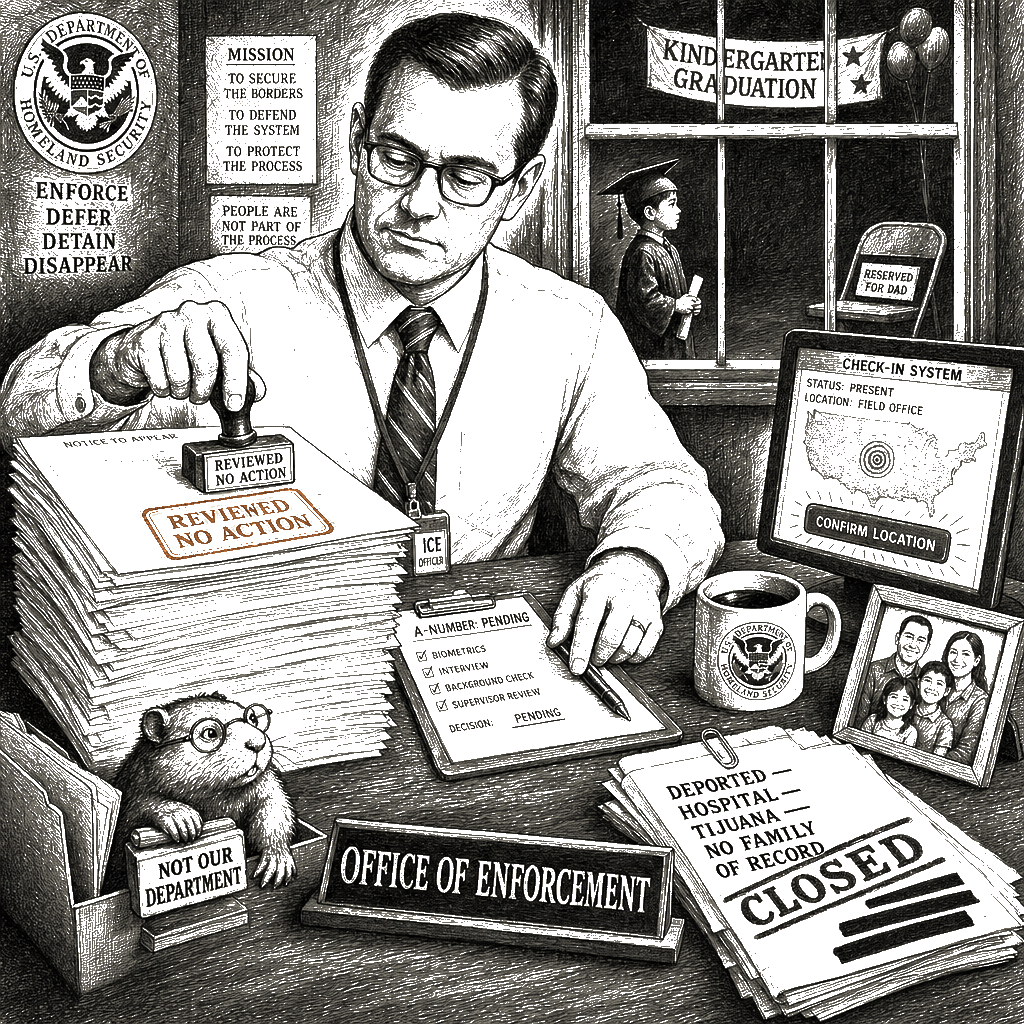
A year ago this month, federal agents in unmarked vehicles swept through Los Angeles neighborhoods and car washes, snatching breadwinners off sidewalks and out of break rooms. The agents were armed, masked, and answered to no local authority. The city has spent the year since trying to absorb what was done to it, and the families have spent the year trying to put their lives back together without the people who used to be in them. Among those they took: Jesús, who had worked at the same car wash for ten years, deported to Mexico after being pressured to sign a document he could not read because he did not have his glasses; Daniel, a man with significant cognitive disabilities under his family’s conservatorship, picked up while walking his neighborhood, lost in a system that dropped him across a border into a country where he had no family, eventually found in a hospital in Tijuana with no idea where he was; Mario, the provider for his wife and elderly parents, held on a freezing floor he called the ice box for six nights and two more months at Adelanto, awaiting a deportation hearing one year later while his son pays his rent. The administration calls what was done to them enforcement. The families who wake up missing someone call it what it is: cruelty, by another name — and they call it by its paperwork too. The A-number never assigned. The form signed without reading it. The check-in app that turns a father into a parolee in his own home.
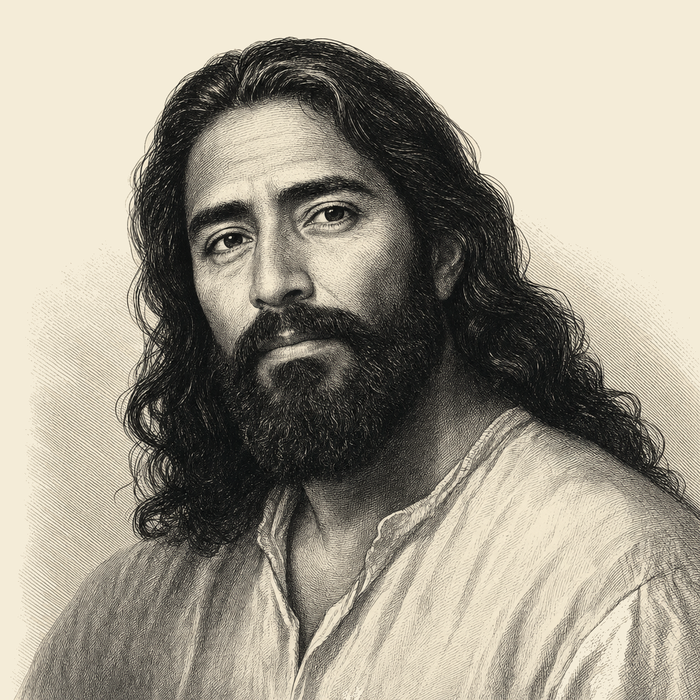
The violence of the arrest is only the opening act. The true cruelty is the long, bureaucratic purgatory that follows, a deliberate machinery of separation documented again and again in the wreckage left behind. To look at Gabriel, a six-year-old boy waiting for a father who cannot attend his kindergarten graduation, is to look at the exact people Christ identified himself with. I was a stranger and you did not welcome me, Jesus says in the twenty-fifth chapter of Matthew, in the same breath in which he says the nations will be judged by what they did to the hungry, the thirsty, the naked, the sick, the imprisoned. Truly I tell you, just as you did it to one of the least of these who are members of my family, you did it to me. The men taken last June in Los Angeles were not abstractions to the policy that took them. They were fathers of US-citizen children. They were breadwinners for elderly parents. They were neighbors whose names the dog-walkers on their block knew by heart. The tradition does not call what was done to them unfortunate. It calls it a refusal to recognize Christ in the person standing in front of the badge — the person without his glasses, without his identification number, without the strength to leave the bathroom stall.
The law of Moses is even more plain. When an alien resides with you in your land, you shall not oppress the alien, the Lord says through Leviticus. The alien who resides with you shall be to you as the citizen among you; you shall love the alien as yourself, for you were aliens in the land of Egypt: I am the Lord your God. The commandment appears more than thirty times in the Torah, more often than any other, and its mechanism is memory: every family that has ever arrived in this country knows what it was to be the stranger, and the memory is supposed to be the precondition of welcoming the stranger. The administration that tore parents from their children in Los Angeles has declared itself uninterested in the memory. The cruelty is older than this administration — built into the law as it has been written since 1996, when Congress expanded the grounds for deportation to include offenses that were not deportable when they were committed, the same law that made a man’s signature without his glasses an actionable admission, that tied a disabled man’s freedom to an A-number he never had. But the cruelty is being administered now, in this city, against these children, by officers with these badges, and the people who set the policy above those officers are the ones who answer for it.
A machinery that treats a cognitively disabled man with conservators as disposable cargo to be dumped across a border is not law. It is state violence dressed in procedure. One hears the inevitable defense: the law was followed, the procedures were respected. The law that authorizes this does not distinguish between the cruelty of one administration and the neglect of another; it is a blade forged by many hands. The deportation machine has been running for a century, fueled by both political coalitions who needed a scapegoat for the economy’s failures, and we who stayed silent when the rhetoric turned to raids share in the architecture of this harm.
The trauma loops in the bodies of the survivors. Alejandra drags her husband to the shower because the cold of Adelanto still lives in his bones. Christopher drove into the high desert with a first-aid kit, looking for an uncle the government erased from its own tracking system for lacking an A-number — a man who would endure nine months of bureaucratic purgatory just to be paroled back to the family that raised him. Mario, released only after his lawyers filed a habeas corpus petition, now checks in via a mobile app, trapped in administrative limbo while awaiting a hearing he dreads. These are the people Christ was talking about, and these are the people the policymakers who sign the funding for their cages are doing it to.
The bishops of the United States and Mexico wrote the template for what should be done. In 2003, in a joint pastoral letter called Strangers No Longer, they named the human dignity of undocumented migrants as a matter of binding Christian teaching rather than political preference, and they named the children and the workers and the families that the present regime refuses to name. The same teaching runs through the pews of the parishes from which the families were taken — and through the homes of the Catholic voters who elected the officials who shuttered the doors. The deportations that have ripped these families apart did not begin last June; the machine that produced them is older than any president now living, administered by every administration that has spoken “secure the border” and meant it. The current administration has chosen to run it at a higher speed, with less due process, and with a cruelty that is its own signature. The teaching of the bishops has not changed. The people conducting the deportations know which document they are violating when they violate it. The harm being done is not a difference of opinion. It is the difference between what the tradition requires and what the policy does.
The climate this administration is exploiting, meanwhile, is one our own communities helped to build. We who came up in the parish-life tradition let “illegal” do the moral work the catechism was supposed to do. We let the parish welcome the migrant on Sunday and look away on Monday. We sat in the pews while the priests who taught us about the Holy Family fleeing into Egypt let us treat the family next door as a class of suspects. The confession is not a way of letting the perpetrators off. It is the only way of earning the right to name them.
The Holy Father, the year after the Lampedusa shipwreck, named what is happening in plain language. In this globalized world, Pope Francis said, we have fallen into globalized indifference. We have become used to the suffering of others: it does not affect me; it does not concern me; it is none of my business. He was speaking of shipwrecked migrants in the Mediterranean. He was also speaking of the families one year later in Los Angeles whose lives have been broken by the same indifference, expressed in a different language, by different officials, in a different body of water. When a nation treats a father with cognitive disabilities as disposable refuse to be dropped across a border in Tijuana, it has crossed from policy into the territory of the wicked. The cure Francis named is the recovery of the ability to weep, the refusal to be “unnamed” before the suffering we have agreed not to see. The families in Inglewood and the San Fernando Valley and east Los Angeles are not unnamed. Their names are Jesús and Noémi, Christopher and Daniel, Mario and Alejandra. They know exactly where their fathers are. The indifference is not the product of ignorance; it is the product of a system that makes a father check in with an app every time he leaves the parking lot of the house his son pays for.
A humane immigration policy is not a mystery. It would let a man who has lived here for thirty-three years finish his working life without the terror of a phone call that will not come at the right time. It would not pressure a man without his glasses into signing away a right he did not know he was giving up. It would not pick up a man with significant cognitive disability off a residential sidewalk and drop him in a country where he has no family and no language to ask for help. It would not strand a disabled man in a Tijuana hospital with no identification number to trace him by. It would treat asylum at the border as the legal right it is, not a loophole to be closed. It would read Matthew 25 in the chamber where the laws are written. The work of writing such a policy is not the work of one more commission. It is the work of the people who now hold the pens, when they stop deciding that the men and women in their custody are abstractions of policy rather than persons of the kind the Creator makes.
A humane policy is not what the country is getting. The country is getting the ice box, and the unmarked vehicles, and the disappeared, and the children who learn to ask why their father is not at the kindergarten graduation. Archbishop Romero, in the last homily of his life, said: I beg you, I beseech you, I order you in the name of God: stop the repression. The order is the same. The repression has changed its name and its geography and its operators. The persons on the receiving end have not changed. They are still someone. The door of return remains open — a return to the basic recognition that the man washing your car is your brother. The empty chairs at our tables will remain a quiet, enduring judgment until the country walks through that door. Until they stop, the command Óscar Romero gave to the soldiers ordered to kill their own people must be spoken to every agent and every official operating this machinery: Stop the repression.