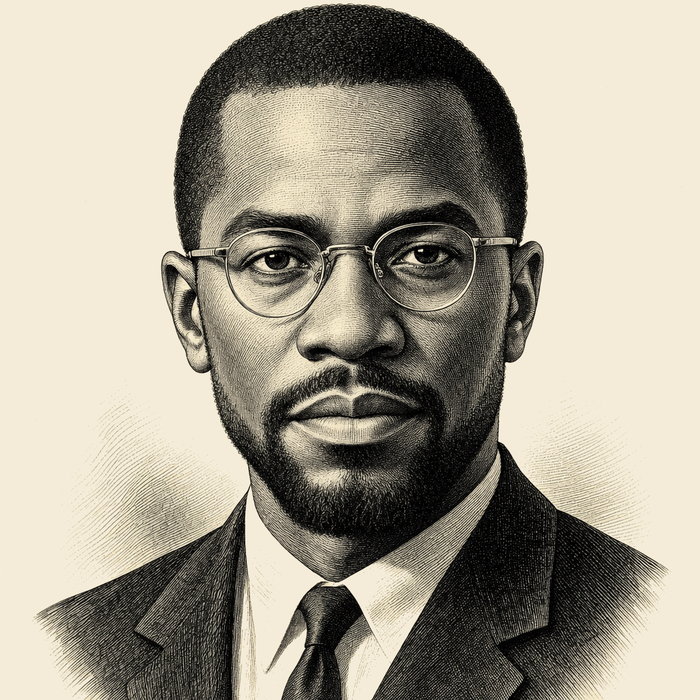
The Supreme Court struck down a majority-Black congressional district in Louisiana for “relying too heavily on race,” and the Legislature redrew the map to hand the seat to Republicans.
Cleo Fields — the man who held that seat — sat through a great deal of prayer and reflection before telling Louisiana on Tuesday that he would not seek reelection. A longtime fixture in Louisiana politics, Fields is now running for the state Senate. Not because he lost an election. Because the Court and the Legislature, working in the same structural rhythm, dismantled the political instrument Black Louisianans had fought to create — a congressional district that gave them representation in a state where the structure of power has denied it for generations.
Ask the question this column always asks: who benefits from calling a majority-Black congressional district an “unconstitutional gerrymander”?
The Louisiana Legislature benefited. Controlled by Republicans, the Legislature used the Court’s ruling as the prompt to redraw the map in exactly the way the ruling enabled — stripping the majority-Black district of the demographic composition that gave Black voters the ability to elect a candidate of their choice. The redraw was designed to advantage the GOP in November’s midterms. The Legislature did what legislatures do when the judiciary hands them cover: it executed the partisan project the ruling made possible.
The Supreme Court created the cover. The majority held that a congressional district drawn to comply with the Voting Rights Act — a statute Congress passed to remedy the historical exclusion of Black voters from political power — was unconstitutional because it classified voters by race. The logic is a trap: draw a district that accounts for the racial patterns of residential segregation and political behavior that structure Louisiana’s electorate, and the Court says you are engaging in impermissible racial classification. Ignore those patterns, and the district elects white candidates because the structure of power still sorts voters by race across every other axis of American life. The Court has built a standard that punishes Black voters whether they are counted or not — a jurisprudential machine for producing white-majority districts in states where the Voting Rights Act forced the opposite.
The cost-bearers are named. Black Louisianans, who fought through the courts to win a congressional district that gave them a political voice proportional to their presence in the electorate. Cleo Fields — a man who has served Louisiana in various capacities for decades, driven out of a seat not by his constituents’ judgment but by a structural operation carried out above them. And the Voting Rights Act itself, which the Court has now treated as the problem it was built to correct.
And then there is the asymmetry. In the same term, the same Supreme Court struck down Louisiana’s majority-Black district while ruling that Alabama could use a map that favored Republicans. Two states. Two maps. One standard invoked to produce opposite outcomes — one map preserved because it served the coalition the Court’s majority belongs to; the other dismantled because it served the coalition the Court’s majority was built to restrain. The discipline the Court calls “anti-racial-gerrymandering” is applied with the precision of a referee who calls fouls only on one team. What the Court frames as racial neutrality looks, from the side bearing the cost, exactly like what it produces: fewer Black representatives, more Republican seats, and a constitutional framework that forbids the remedy while preserving the disease.
The technique is documented. The catalog’s frame-engineered relabeling pattern describes the deliberate substitution of one term for another where the new term carries different connotations, shifting the frame within which the issue is processed. In Louisiana, the relabeling runs through the Court’s own language: the Voting Rights Act remedy — a district drawn to give Black voters political power proportional to their share of the electorate — is relabeled as “racial classification,” carrying the connotation of impermissible discrimination. The substance is the same: a district drawn to account for racial patterns in a state where those patterns are structurally produced and maintained. The frame shifts from “political representation for a historically excluded group” to “the government sorting citizens by race,” and the conclusion inverts. The motte-and-bailey runs alongside: the defensible claim that “racial gerrymandering is wrong” serves as the retreat position while the actual project — dismantling Black political power — advances underneath it. Alito’s majority opinion states the principle; the Legislature’s redraw delivers the result. Under challenge, the argument returns to the motte: “We oppose racial classification.” When resistance subsides, the bailey resumes: the map is redrawn to elect Republicans.
This is not a Louisiana story. The Supreme Court’s decision escalated a nationwide redistricting battle driven by efforts to protect Republican incumbents in the midterms. Louisiana is one execution in a coordinated national operation: the Court provides the legal architecture; the state legislatures execute the map-drawing; the result is a congressional map of the country with fewer competitive districts and fewer Black representatives than the population warrants.
King named the interlocking system from Riverside — racism, materialism, and militarism bound in a single structure whose heads feed each other. The Louisiana redistricting is that diagnosis made concrete: racial exclusion executed through the Court’s institutional channels for partisan gain, the function and the justification fused, each head feeding the next. He was right, and Louisiana proves the point with the precision of a receipt: the value of a Republican House seat in November, measured against the cost of Black political power in Louisiana, calculated by people for whom the arithmetic never runs the other direction. The value exceeds the cost. The district dies.
Lucas — the filmmaker who mapped in his prequels how republics die, how a Senate votes away its own authority while the crowd cheers — said democracies aren’t overthrown, they’re given away. The Louisiana redistricting confirms the principle. A court issued a ruling. A legislature held a vote. A map was redrawn. A seat Black Louisianans had won through decades of litigation was transferred to the Republican Party through the regular order of business. No one stormed the capitol. The procedure was immaculate. The result was dispossession.
Cleo Fields is running for the state Senate. That is not surrender — it is a man who knows the district he held was not taken by his constituents but by an apparatus that decided his seat was worth more to the structure of power in someone else’s hands. The work continues in the state Senate, in the next round of litigation, in the organizing that makes the Voting Rights Act’s promise operational rather than ceremonial. The Court has built a machine that produces white-majority districts by forbidding the remedy for white-majority power. The machine is not permanent. It is made of specific opinions, issued by specific justices, at a specific moment when the Court’s composition was determined by specific political operations. Machines built by people can be dismantled by people. The arc does not bend. People bend it.