Summary
- The Trump administration petitions the U.S. Supreme Court to overturn a Sixth Circuit ruling and authorize mandatory no-bond detention for non-citizens residing in the United States.
- The Department of Homeland Security reinterpreted the 1996 Illegal Immigration Reform and Immigrant Responsibility Act to classify long-term residents as “applicants for admission” subject to mandatory detention.
- The Board of Immigration Appeals adopted this reinterpretation in September, converting the executive policy into binding directives for immigration judges nationwide.
- A fractured federal appellate landscape has emerged, with three appeals courts and hundreds of lower-court judges rejecting the practice while two appeals courts have endorsed it.
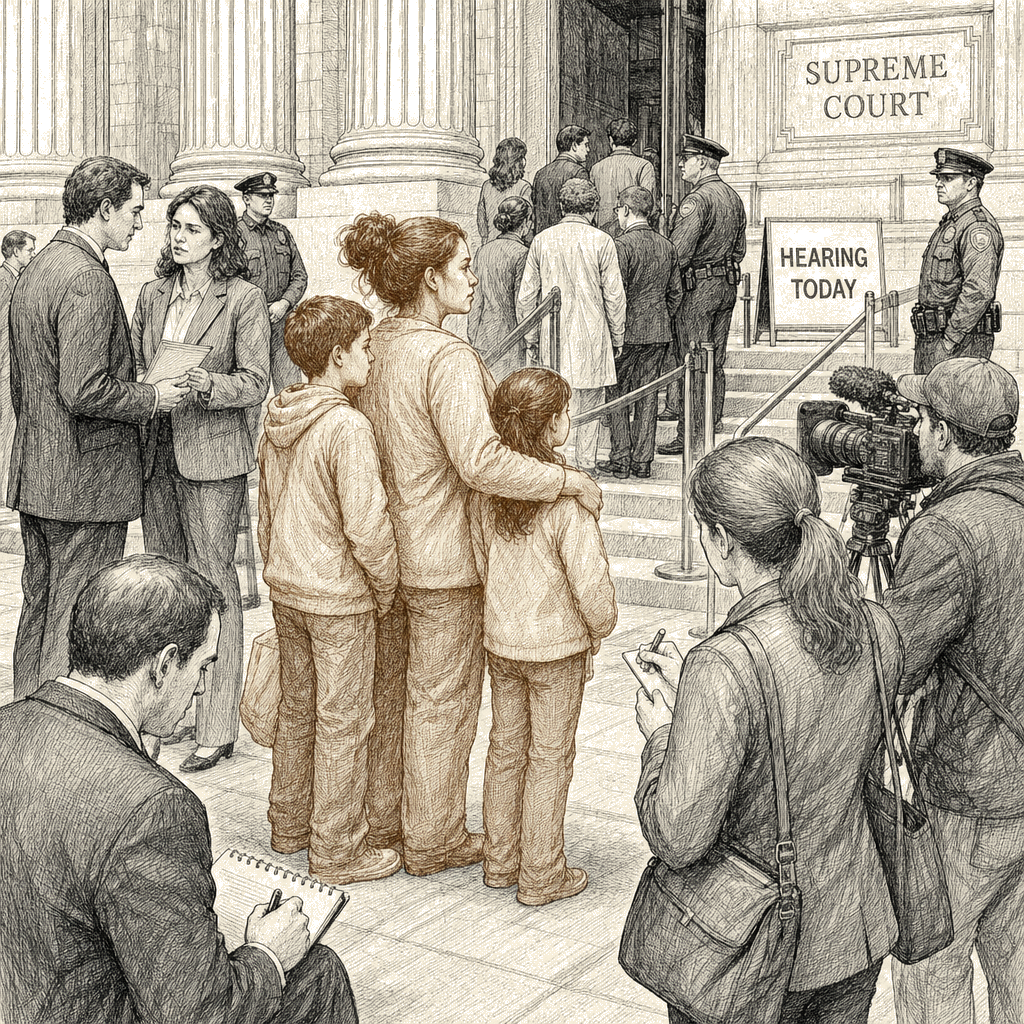
The Trump administration has petitioned the U.S. Supreme Court to authorize the mandatory, no-bond detention of non-citizens already residing in the United States, seeking to overturn a May Sixth Circuit ruling that found the policy violates Fifth Amendment due process rights. The dispute centers on the Department of Homeland Security’s reinterpretation of the 1996 Illegal Immigration Reform and Immigrant Responsibility Act, which expanded the definition of “applicant for admission” to include long-term residents rather than only border arrivals. By asking the high court to resolve a deepening circuit split, the administration aims to solidify a detention regime that operates without bond-hearing interruptions, a structural shift that has prompted thousands of habeas corpus petitions and placed the procedural boundaries of immigration enforcement for long-term residents under intense judicial scrutiny.
Statutory and constitutional terrain
The legal domain encompasses administrative law, constitutional due process under the Fifth Amendment, and federal appellate jurisdiction. The established core of the framework relies on the statutory text of the 1996 law; the live frontier is the Department of Homeland Security’s directive extending mandatory no-bond detention to non-citizens already residing in the United States. The source article reports, “Bucking a longstanding interpretation, the Department of Homeland Security last year took the position that non-citizens already living in the United States — not just people arriving at the border — fall into that category and are therefore subject to mandatory detention without bond while their removal proceedings are pending.” According to the source reporting, this represents a departure from a longstanding interpretation that had limited the designation primarily to individuals arriving at the border.
The 6th Circuit’s 2-1 panel majority held that the administration misinterpreted the 1996 provision and that the migrants involved — citizens of Mexico, El Salvador, Venezuela, Nicaragua, and Guatemala who had lived in the U.S. for years — were denied bond hearings in violation of their Fifth Amendment due process rights. The central nodes on which the litigation depends are the statutory definition of “applicant for admission,” the scope of the mandatory-detention provision, and the availability of bond hearings as a procedural safeguard. Without the statutory definition, the DHS interpretation collapses; without the constitutional layer, the circuit split would be purely statutory; without the bond-hearing safeguard, the due-process question becomes academic.
Administrative execution and institutional roles
Federal agencies engaged in the dispute include the Department of Homeland Security, which authored the reinterpretation; Immigration and Customs Enforcement and Customs and Border Protection, which execute the physical detention; and the Justice Department’s Board of Immigration Appeals, which adopted the reinterpretation and converted it into binding directives. The federal judiciary includes district courts, three federal appeals courts that have rejected the policy, two appeals courts that have endorsed it, and the Supreme Court.
Outside the federal apparatus, legal-aid organizations and private counsel represent detainees, with the source article’s reference to “thousands of lawsuits” indicating a litigation volume that strains the relative resources of the federal government. Immigrant-rights advocacy groups, journalists covering enforcement, and the detainees themselves and their families are also engaged. The substrate does not document the scale of counsel representation relative to the federal side. Several functional roles are visible across the institutional landscape. Legal-aid organizations and private counsel represent detainees. Know-your-rights training for immigrant communities falls to advocacy groups not documented in the article’s record. Journalists and courts document the policy and its effects.
The Board of Immigration Appeals, a Justice Department component, issued a decision in September adopting the DHS interpretation, after which immigration judges nationwide began ordering mandatory detention as a result. The BIA’s September decision acted as the operational pivot that converted the executive reinterpretation into binding directives for immigration judges. The most consequential institutional gap is at the rule-interpretation level: the BIA’s September decision adopted the administration’s interpretation while multiple circuits have rejected it, leaving immigration judges to operate under instructions that vary by venue.
Who benefits and structural consequences
The administration’s documented rationale for the policy is set out in the petition: Solicitor General D. John Sauer argued that “detaining aliens who are living in the country after an illegal entry while their removal proceedings unfold prevents those aliens from evading hearings and helps ensure their removal from the United States.” The administration frames the underlying question as a “critically important question of immigration law” that has generated thousands of lawsuits. The administration’s interest is in preserving a detention regime that operates without bond-hearing interruption. Detained non-citizens and their families have an immediate interest in custody release. Counsel representing detainees act as a partial counterweight to the federal government’s litigation resources, though the substrate does not document the scale of that representation relative to the federal side.
The structural mechanism for contesting the state’s detention authority is the filing of habeas corpus petitions by thousands of detained immigrants, through which, the source article reports, “thousands of detained immigrants challenge their custody.” The litigation itself makes the scope of the detention policy visible and subject to judicial scrutiny. Three federal appeals courts have “joined with hundreds of lower-court judges in rejecting the administration’s detention practice, while two other appeals courts have endorsed it.” Sauer noted the split in asking the Court to take up the matter. The federal appellate courts are simultaneously evaluating the statutory and constitutional boundaries of the directive, resulting in a fractured judicial review process. The Supreme Court is being asked to resolve this split, which will determine the uniform application of the 1996 statute and the procedural boundaries of immigration enforcement for long-term residents.
The administration filed its appeal earlier in the week, before the Supreme Court handed down two rulings on Thursday that favored the administration on related immigration matters, including the termination of temporary protections for hundreds of thousands of Haitian and Syrian immigrants.
How this is being framed
Sauer frames the question as a “critically important question of immigration law” and characterizes detention as a mechanism that “prevents those aliens from evading hearings and helps ensure their removal from the United States.” The 6th Circuit’s contrary holding rested on its reading of the same statute and on the Fifth Amendment’s due process clause. The article presents these as a documented rationale and a documented conclusion in tension.
The limits of non-judicial intervention are visible in the substrate. Where the dispute concerns the meaning of a federal statute and the constitutional minimum of due process, mediation among affected parties cannot substitute for judicial interpretation. The procedural sequence — petition filed before the Court’s Thursday rulings on Haitian and Syrian TPS — constrains the space for negotiated resolution. The conflict is, at its core, a question of law on which a binding judicial ruling is the structural prerequisite for any subsequent work to address the broader consequences of the policy.
Analytical techniques used in this piece
This analysis applies the methods below. Each links to a short, plain-English explainer you can read and reuse.
- Domain Induction
- Builds a working mental model of a domain from the ground up.
- Quick Orientation
- A fast lay-of-the-land read of an unfamiliar domain.
- The Third Side
- Takes the vantage of the surrounding community that has a stake in resolving a conflict (Ury).