Summary
- The Congressional Budget Office documented in a Sept. 16, 2026 report that the Iran conflict has left the United States with a “reduced inventory” of missile defense interceptors “for several years,” a finding that sits in direct tension with Trump administration assertions, as reported in UPI’s originating wire, that U.S. munitions stockpiles remain high.
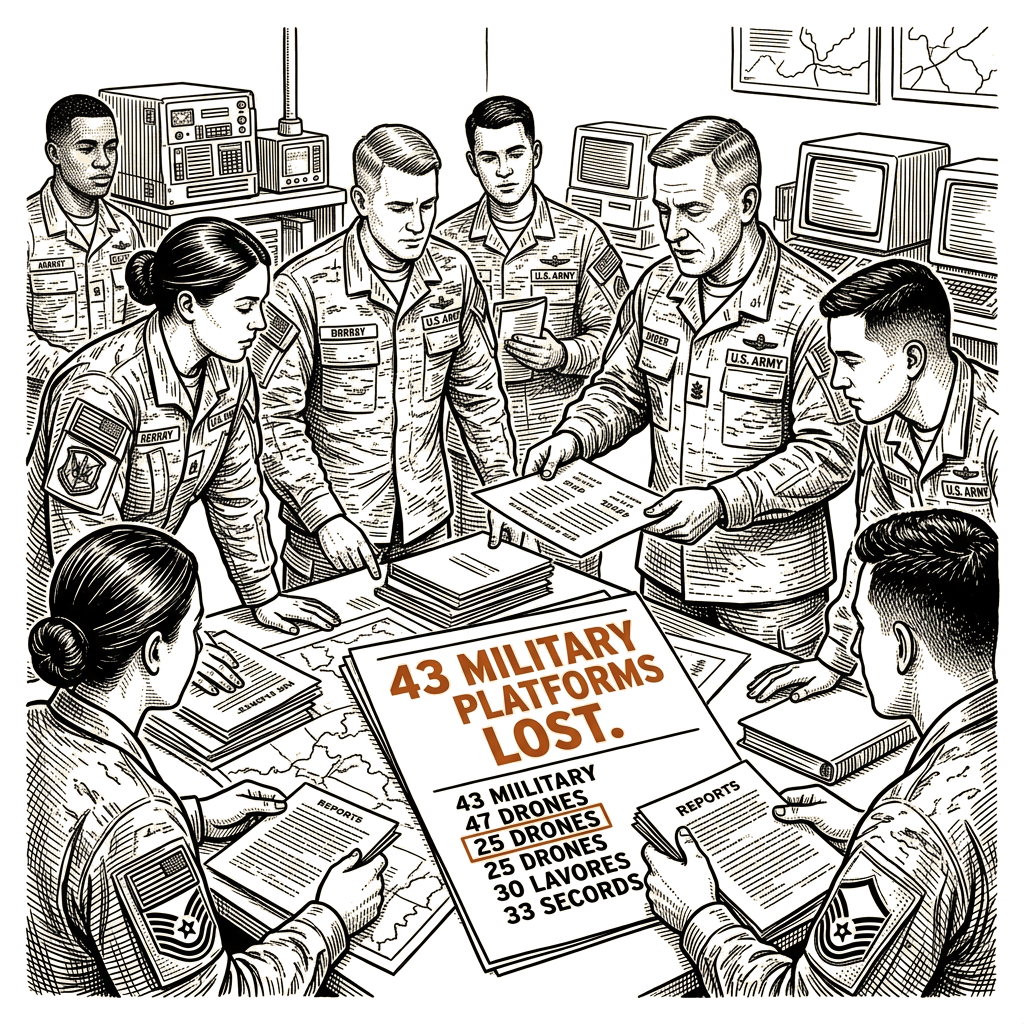
- CBO placed cumulative Defense Department costs in the conflict at approximately $38 billion through Aug. 1, 2026, with replacement costs for 43 lost platforms — 11 fixed-wing crewed aircraft, 25 drones and a THAAD radar — estimated between $1.9 billion and $3.3 billion.
- CBO projected continued monthly Defense Department costs of roughly $2 billion at May-June intensity and $3 billion at July’s intensity, with the $38 billion figure described as excluding costs incurred by other parts of the federal government.
- CBO estimated the conflict added 2.3 percentage points to annualized inflation in the second quarter through higher energy costs, and projected first-quarter inflation next year to be 0.5 percentage points above CBO’s prior forecast.
- CBO warned the interceptor shortfall would be “especially problematic” in a conflict with a country such as China, “which is believed to maintain a large arsenal of ballistic and cruise missiles,” particularly in a scenario involving Taiwan, “described in the report as a longstanding objective of the Chinese Communist Party.”
- The UPI wire reports the administration’s stockpile assertions without an on-record administration response to CBO’s interceptor-specific findings, leaving the inventory-versus-rhetoric contradiction unresolved in the public record presented.
A Congressional Budget Office report published Tuesday documents that the Pentagon has lost 43 military platforms since the United States entered the conflict with Iran on Feb. 28, 2026, through the report’s Aug. 1, 2026 cutoff. CBO placed cumulative Defense Department costs at approximately $38 billion over that period and identified heavy expenditure of missile defense interceptors as the war’s “main opportunity cost.” That finding sits in direct tension with Trump administration public assertions that U.S. munitions stockpiles remain high — a tension the originating UPI wire does not resolve because it reports no on-record administration response to CBO’s interceptor-specific language. CBO’s own framing of the shortfall as a multi-year reduction with consequences for a China-Taiwan scenario makes the absence of an administration rebuttal analytically consequential rather than a routine omission.
The CBO accounting
The Sept. 16, 2026 CBO report is the document on which the analytical chain rests. CBO placed cumulative Defense Department costs in the conflict at approximately $38 billion through Aug. 1, 2026, covering munitions and equipment replacement, flying hours, other operational costs, and increased fuel; CBO stated the figure excludes costs incurred by other parts of the federal government. The 43 lost platforms — 11 fixed-wing crewed aircraft, 25 drones, and a THAAD radar — carry a CBO-estimated replacement cost of $1.9 billion to $3.3 billion, a range that spans roughly 70 percent and indicates substantial uncertainty in CBO’s unit-cost assumptions for the platform mix.
CBO projected continued monthly Defense Department costs of roughly $2 billion if combat returns to the lower-intensity levels observed in May and June, and $3 billion at July’s intensity. CBO’s forward projection assumes combat intensity within the range it has already observed; the article’s reported CBO scenarios do not appear to include a de-escalation case in which costs decline sharply. The endpoint of the conflict, as characterized in UPI’s reporting, “appears to be at an impasse with no resolution visible on the horizon” — language that implies a continued draw on interceptor stocks without a defined endpoint.
The replacement-cost range of $1.9 billion to $3.3 billion for 43 platforms implies CBO believes the platforms are not equally expensive. The originating wire does not break out implied unit costs, leaving the reader without a basis for determining whether drone losses or crewed-aircraft losses drive the lower or upper bound. The omission is methodologically significant: a reader cannot from this reporting alone evaluate which platform category carries the largest share of the replacement bill.
The inventory-versus-rhetoric contradiction
The analytical center of the CBO report, as reported in the wire, is the missile defense interceptor finding. CBO identified heavy expenditure of interceptors as the war’s “main opportunity cost” and concluded the conflict will leave the United States at a “reduced inventory” of interceptors “for several years” — language the wire reproduces verbatim from the CBO report. CBO warned that the interceptor shortfall would be “especially problematic” in a conflict with a country such as China, “which is believed to maintain a large arsenal of ballistic and cruise missiles,” and named Taiwan, “described in the report as a longstanding objective of the Chinese Communist Party,” as the illustrative contingency.
That finding sits in direct tension with Trump administration public assertions, as reported in the wire, that U.S. munitions stockpiles remain high. The two claims cannot both be true in the same sense: interceptor stockpiles either support multiple contingencies simultaneously or they do not, and CBO has documented a multi-year reduction that the administration’s public position in this reporting does not address. CBO’s “reduced inventory” finding enters the public record without an on-record administration rebuttal or a clarifying procurement schedule in this reporting.
The contradiction is reconcilable in the substrate only if the two claims refer to different inventory categories — aggregate munitions stocks in one case, the subset of interceptors relevant to peer-competition scenarios in the other. CBO makes its operational definition explicit in the report; the administration has not, on the record presented in this reporting, specified which inventory measure its claims reference. Two facts, if established, would resolve whether the administration’s claims and CBO’s findings actually diverge: whether the administration distinguishes total munitions stocks from the interceptor subset relevant to peer-competition scenarios, and whether the interceptor-specific figure supports CBO’s “reduced inventory” finding. Until those two facts are established, the contradiction stands in the public record.
The omission is analytically significant because CBO’s framing of the Taiwan scenario is itself a defense-policy claim rather than a partisan one. A non-response leaves the policy claim uncontested on the public record presented.
Sourcing and reporting gaps
The originating UPI wire carries several reporting limitations that constrain the analytical scope of what can be said from it. The $1.9 billion–$3.3 billion replacement-cost range spans roughly 70 percent, indicating substantial uncertainty in CBO’s unit-cost assumptions for the 43 lost platforms, and the wire does not specify the breakdown by platform type. The $38 billion cumulative figure explicitly excludes costs incurred by other parts of the federal government; the wire does not identify which federal departments fall inside and outside the figure. CBO’s 2.3-percentage-point inflation attribution depends on the share of energy-price increases correctly assigned to the conflict rather than to other supply or demand factors — an attribution the wire does not subject to outside verification.
The June 2026 Trump administration request for $87.6 billion in supplemental appropriations, of which $67.1 billion was designated for the Pentagon, is reported in the wire without reconciliation to CBO’s multi-year interceptor shortfall. The wire does not report what the $67.1 billion Pentagon-designated supplemental has been spent on, nor whether CBO has assessed the supplemental request against its own inventory findings. The 18 service-member death toll and “hundreds more” injuries cited from UPI reporting do not include long-term veterans’ care costs, an omission the wire leaves unaddressed.
The wire foregrounds two Senate Democrats — Sen. Elizabeth Warren, D-Mass., and Sen. Dick Durbin, D-Ill. — whose statements are political positions rather than measurements. Warren characterized the war as “a one-two punch burning a hole in Americans’ pockets and burning a hole in our munitions supply” and said “this war is a betrayal of the American people, and it needs to end.” Durbin said President Trump has “no idea” how to end the war and that “[h]is hubris is costing America billions and forcing families to pay more for everyday essentials.” Neither senator appears in this reporting in a defense-policy specialist capacity. The empirical layer (CBO) and the political layer (Democratic critics) are presented sequentially without a Republican or administration response to CBO’s specific findings on interceptor inventories. A reader cannot, from this wire alone, evaluate whether the administration contests CBO’s interceptor finding or accepts it.
Consequences: the multi-year condition
CBO’s projection of continued monthly costs of $2 billion to $3 billion for as long as combat continues means the “several years” inventory reduction is a continuing condition rather than a one-time drawdown. The endpoint of the inventory reduction depends on variables — duration of the conflict, intensity of combat, interceptor production rates — that the public record does not name.
One reading that preserves what is true in each position notes both can co-exist if the administration’s planning assumption is that production is funded but slow, and that public discussion of stockpiles has been calibrated to avoid telegraphing depletion to adversaries. Under that reading, CBO’s findings surface a depletion through the budgetary office, and the question becomes whether the depletion is being filtered into public discourse through CBO rather than the Pentagon — and whether disclosure through CBO rather than the Pentagon reflects a deliberate disclosure choice. The UPI characterization that the conflict “appears to be at an impasse with no resolution visible on the horizon” implies a continued draw on interceptor stocks without a defined endpoint.
The analytical question that remains under-examined is whether the interceptor reduction documented by CBO is being treated by the administration as a temporary, fully-funded condition or as a structural constraint on future contingencies. A related question is whether Congress has the information needed to make that determination on the public record presented in this reporting. CBO’s own framing supplies the policy stakes; the administration has not addressed them on the record in this reporting. The congressional critics named in the wire addressed household costs and presidential judgment but did not address the inventory-versus-rhetoric contradiction CBO surfaced. On the evidence currently in the public record, the contradiction remains unresolved. CBO’s selection of the Taiwan scenario as the illustrative contingency is itself a substantive policy choice with assumptions about adversary capability and intent built in; the inventory-versus-rhetoric contradiction stands independently of which scenario CBO chose to highlight.
Competing analytical readings
The wire’s evidence supports several coherent analytical readings, each of which selects a different metric as decisive. A balance-of-power reading treats interceptor expenditure as the predictable cost of degrading an adversary’s capabilities and weighs material costs against strategic gains not denominated in dollars. A congressional-oversight reading treats CBO’s role as precisely the disclosure mechanism that prevents wartime expenditure from escaping democratic accountability, and treats the absence of an administration rebuttal as itself a finding. A strategic-restraint reading treats the multi-year interceptor reduction as evidence of overextension.
A realist international-relations frame treats munition stocks as inputs to a power-projection calculus and judges adequacy against peer-competitor arsenals — the China scenario CBO invokes. A fiscal-conservative frame treats $38 billion in Defense Department costs, rising household energy prices, and a multi-year interceptor shortfall as the relevant measurements, regardless of strategic objective. A progressive reading treats the same figures as evidence that the costs of military action are externalized onto consumers and service members while benefits accrue elsewhere. The administration’s frame, to the extent it is documented in this reporting, treats munition adequacy as a question of total stockpile rather than interceptor-specific availability, and treats the war’s continuation as a function of negotiation rather than of budgetary constraint.
Each frame selects a different metric as decisive: the realist sees the China scenario; the fiscal conservative sees the $38 billion; the progressive sees the 2.3-percentage-point inflation impact and the 18 service-member deaths; the administration sees a security objective whose achievement would render these costs bearable. None of these readings is internally incoherent. They differ on which measurement ought to determine policy: CBO specifies one measurement (interceptor availability for several years); the administration’s public statements in this reporting do not specify the inventory definition. The readings converge on a shared observation — the cost data carries strategic consequences extending past the war’s end date — and diverge on whether those consequences warrant continuation, modification, or termination of the conflict.
Analytical techniques used in this piece
This analysis applies the methods below. Each links to a short, plain-English explainer you can read and reuse.
- Dialectical Analysis
- Holds thesis against antithesis and works toward a higher synthesis.
- Red-Team Assessment
- Models a capable adversary probing a plan for the seams they would exploit.
- Worldview Cartography
- Maps the clashing worldviews underlying a dispute.
- Bayesian Reasoning
- Starting from base rates and updating beliefs proportionally as evidence arrives.