Summary
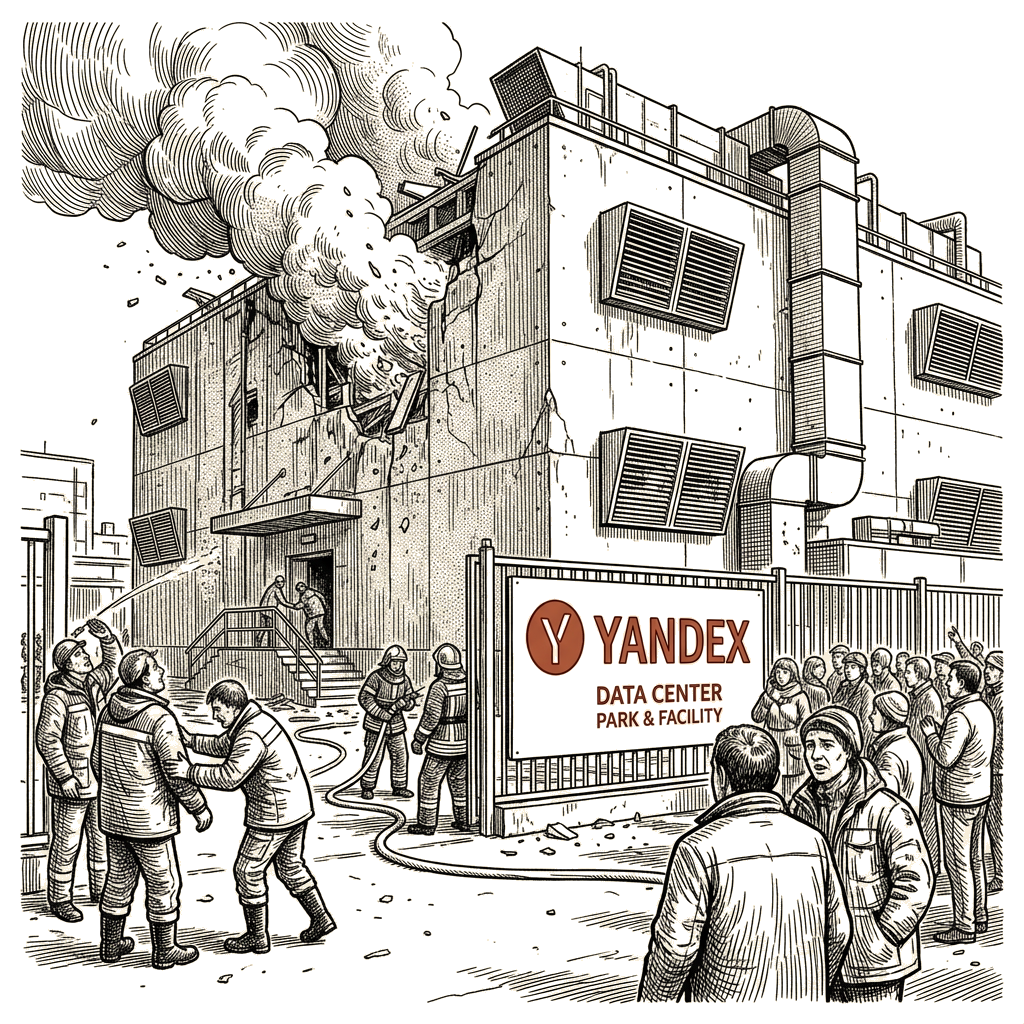
- The article documents President Donald Trump’s Sunday social-media announcement of an “energy ceasefire” tested the same day, with the Ukrainian presidential office confirming a Russian strike on a Kharkiv power plant followed Trump’s post and Moscow declining to comment, while three Ukrainian drone strikes on Yandex data centers in four days degraded Russian civilian digital infrastructure.
- That same-day timing recasts a documented September 14 precedent the article cites as “nothing came of,” weighing against the hypothesis that Sunday’s announcement reflects an operational bilateral agreement in progress.
- Differential diagnosis ranks three candidates — unilateral U.S. announcement (H2), Washington-Moscow coordination excluding Kyiv (H3), and a midterm-elections-timed post consistent with Trump’s prior framing of U.S. diesel prices (H4) — as best supported by the article’s documented sequence across Friday’s diesel deal, Saturday’s “new president” comment, and Sunday’s post.
- Per Ury’s ten-role third-side catalog, the article reports mediation being executed in partisan-broker mode rather than facilitative mode, with bridge-building contacts named (Canadian Prime Minister Mark Carney, Finnish President Alexander Stubb, NATO Secretary-General Mark Rutte), and no provider, healer, arbiter, equalizer, or peacekeeper role reported as filled.
Lede
President Donald Trump used social media Sunday to announce that Russia and Ukraine had agreed to an “energy ceasefire” in the war that the article dates as four-and-a-half years old, adding “Do not break it!” and offering no details, per the article. The article reports Moscow “did not immediately comment”; the Ukrainian presidential office confirmed a strike on a Kharkiv power plant came after the post. The article reports President Volodymyr Zelenskyy “welcomed” the announcement as “good news for everyone” in an evening address, while describing the day as one in which “Ukrainian skies have been infested with Russian ‘shaheds’ all day today” and reporting strikes on energy infrastructure in Kyiv and Kharkiv, including “A power plant in Kharkiv was attacked this evening.” The article simultaneously records three Ukrainian drone strikes on Yandex data centers in four days — Ryazan Thursday, Kaluga Friday, Vladimir Sunday, per the article — that left users across Russia and parts of Kazakhstan, Belarus and Armenia “unable to order taxis or access banking services,” according to the Russian independent outlet Astra cited in the article. The article documents Saturday Russian bombing casualties in Zaporizhzhia as 23 killed, including four children, with more than 30 wounded and eight hospitalized per former regional head Ivan Fedorov.
The test the announcement faced on the day of the announcement
The article reports the timing the diagnostic must weigh. Trump’s social-media post announced an “energy ceasefire” that, per the article, “took effect immediately.” The article reports Zelenskyy stating Ukraine was “ready to refrain from striking Russian energy infrastructure — and we count on the same readiness from Russia,” and asking on ABC’s “This Week,” per the article, that Trump “give them (a) signal, not (to) attack energy infrastructure of Ukraine.” But the Ukrainian presidential office, per the article, confirmed a Russian strike on the Kharkiv power plant “came after Trump’s ceasefire post,” and the article records Zelenskyy’s characterization of Putin — “had one answer to all of them — ‘nyet.’” That same-day inversion of the announcement’s premise is what the article documents; coverage gaps the article does not resolve are listed at the close.
How the affected places read
Vladimir, two hundred kilometers east of Moscow, carries two identities in the article: twelfth-century medieval capital of the Grand Principality of Vladimir-Suzdal, with its white-stone Dormition Cathedral and Golden Gate, and present-day host of the Sunday Ukrainian drone strike on a Yandex data center. The article quotes the Yandex Cloud Telegram channel: “Operations at the data center have been completely halted. There were no injuries.” Zaporizhzhia, on the Dnieper above the former Kakhovka reservoir and partly held by Russia since 2022 per the article, is the documented site of the Saturday Russian bombing. Kharkiv, Ukraine’s second-largest city and, per the article, one of the places most consistently targeted since the 2022 invasion, is the article’s documented site of the power-plant strike that the presidential office confirmed followed Trump’s post. Bryansk, identified in the article as a Russian border region that has absorbed cross-border strikes throughout the war, is the documented site of a Sunday strike the article reports killed one man and wounded two women.
Under Alexander’s Pattern 30 (Activity Nodes), the article’s description of Yandex as “often described as Russia’s Google,” running “the country’s most popular search engine and a wide range of digital services, and … heavily involved in Russia’s artificial intelligence development,” supplies a civilian-side activity node for daily Russian life: taxis, banking, shopping. The article records the Vladimir outage’s consequences through inhabitant Pavel Belyavskiy, a Yandex Taxi driver, who said per the article: “There’s nothing I can do, so I’m just forced to cancel.” Igor Mann, attempting to check an order on Yandex Market, summarized the failure to the article as: “Nothing worked.” Eduard Malyavko, a Muscovite, characterized the outages to the article as not about “convenience” but “direct impact” extending to “healthcare, and everything else.” The three-in-four-days sequence — Ryazan Thursday, Kaluga Friday, Vladimir Sunday — registers, under the pattern, as degradation of the network as an activity node rather than as discrete facility damage. The article’s announced “energy ceasefire” does not, on the article’s reporting, extend to a node-protection principle for civilian digital infrastructure.
Under Appleton’s prospect-refuge frame, Kharkiv’s power plant is pure-prospect infrastructure on the article’s description: visible, distributed, limited shelter, struck while the announced pause was nominally active. The article’s Zaporizhzhia reporting inverts the refuge function inside the spatial enclosure; shelter becomes the location of harm. The article’s separate framing — that “Russia has sought to deny Ukrainian civilians power, heat and running water during the war,” a strategy the article attributes to Ukrainian officials as “‘weaponizing winter’” — names in policy register what the pattern-language reading treats as deliberate degradation of the winter-activity node.
Under Kaplan’s attention-restoration frame, war-affected places score near zero on being-away, extent, compatibility, and soft fascination; the article reports them net-depleting for inhabitants. A genuine energy pause, under the frame, restores compatibility: predictability of infrastructure. The article’s same-day Kharkiv strike extends the depletion. At inhabitant scale, the article’s “including four children” detail in the Zaporizhzhia casualty count locates documented vulnerability on those least able to relocate or self-protect.
Three-day conduct sequence per the article
Friday per article. Trump “struck a deal with Putin to buy diesel from Moscow in an attempt to address high fuel prices ahead of U.S. midterm elections.”
Saturday per article. Trump “said it was time for Ukraine to get a new president,” blamed Zelenskyy “for high diesel prices in the U.S.,” and “has been urging Zelenskyy for weeks to stop striking Russian energy infrastructure,” per the article. The article records Zelenskyy’s response: “Give us two months, 60 days off. Total ceasefire, 60 days, and we will organize elections.” The article states Ukraine “has been under martial law since Putin launched the full-scale invasion in February 2022”; that “the Ukrainian Constitution bars elections while it remains in force”; that Zelenskyy’s term “formally expired in May 2024, but the constitution allows him to remain in office until a new president is sworn in.” Per the article, Ukrainian and European officials reacted to the diesel deal “with dismay, saying it will help pay for Russia’s war effort.”
Sunday per article. Trump posted the “energy ceasefire,” adding “Do not break it!” and per the article “offered no details on the agreement.” The article reports Zelenskyy “welcomed” the announcement, stated Ukraine was “ready to refrain from striking Russian energy infrastructure — and we count on the same readiness from Russia,” and characterized Putin’s record as “‘nyet.’” The article reports Zelenskyy said he had spoken with Canadian Prime Minister Mark Carney, Finnish President Alexander Stubb, and NATO Secretary-General Mark Rutte.
Differential diagnosis of the announcement
Under ACH-lineage procedure, the article’s documented record supports the following candidate ranking:
H1 — Operational bilateral agreement in progress. Evidence against per the article: same-day Russian strikes on Ukrainian energy infrastructure after the post; the article’s “Moscow did not immediately comment”; the September 14 precedent in which, per the article, “nothing came of” an earlier verbal-only “not to hit” claim.
H2 — Unilateral U.S. announcement not yet accepted by Moscow. Evidence for per the article: the September 14 precedent; the article’s “Moscow did not immediately comment”; continued Russian strikes after the post.
H3 — Coordination between Washington and Moscow that excludes Kyiv. Evidence for per the article: Friday’s diesel deal; Zelenskyy’s ABC interview request that Trump “give them (a) signal, not (to) attack energy infrastructure of Ukraine,” per the article; the recurring announcement pattern.
H4 — Announcement issued ahead of U.S. midterm elections that coincides with Trump’s prior framing attributing U.S. diesel prices to Ukraine. Evidence for per the article: Friday’s diesel deal; the article’s documentation that Trump “has sought to blame record U.S. diesel prices on Ukraine rather than the U.S.-led war in Iran, which has driven up world energy prices”; the absence of operational detail in both the September 14 and Sunday announcements per the article.
H5 — Test balloon by both sides gauging compliance. Evidence for per the article: Zelenskyy’s earlier reciprocal refinery-strike offer; both sides’ stated interest in protecting energy infrastructure.
H0 — Null; benign self-resolution. Rejected per the article: the Kharkiv strike the article documents is too specific a coincidence; the September 14 precedent per the article establishes a recurring pattern.
The single observation cutting most strongly against H1 per the article is the Kharkiv strike after Trump’s post, confirmed by the Ukrainian presidential office as documented in the article. H5 is harder to separate from H1 on the article’s available record. The article’s documented Friday-Saturday-Sunday sequence supplies evidence per the article for H3 and H4 over H1, with H2 the closest supporting reading where Washington-Moscow coordination is not the primary documented vector.
Third-side audit per Ury
Prevention roles. Per Ury’s catalog, the article does not report provider or teacher roles as filled by any actor named. The bridge-builder role is reported as active: the article documents Zelenskyy’s contacts with Canadian Prime Minister Mark Carney, Finnish President Alexander Stubb, and NATO Secretary-General Mark Rutte.
Resolution roles. Per the article, mediation is being filled by Trump. Per Ury’s framework as cited, mediation requires perceived impartiality, and the article documents asymmetry: Friday’s diesel deal, weeks of urging Ukraine to stop striking Russian infrastructure, and Zelenskyy’s election-conditional offer. Per Ury’s failure-mode taxonomy as cited, the documented sequence fits the arbiter-substitution-for-mediator pattern: external judgment applied where facilitated agreement was on the table. The arbiter role is absent from the article; no binding third party both sides accept is named. The equalizer role is partial: the article documents European “dismay” at the diesel deal but names no actor working to address the asymmetry between Russia and Ukraine’s strategic positions. The healer role is absent; the article does not name a functioning international mechanism for war injuries.
Containment roles. Witness is present and active per the article: The Associated Press, Astra, and the Yandex Cloud Telegram channel. Referee is attempted by Trump per the article through the “energy ceasefire” post; the article does not document enforcement. Peacekeeper is absent.
Three-ring mapping per the article. Intimate ring (Putin and Zelenskyy’s circles): no third-party penetration documented. Mid-ring (U.S. administration, NATO allies, EU institutions): a fragmented third side per the article, with Washington in partisan-broker mode and European allies documenting “dismay.” Outer ring (UN, international media, broader publics): functioning primarily as witness per the article.
Escalation signals per the article. Third-party recruitment to one side: Trump’s Putin engagement versus Zelenskyy’s signal request. Rhetoric hardening: the article records Zelenskyy’s “had one answer to all of them — ‘nyet.’” Breakdown of communication channels: the article documents the September 14 verbal-only claim “nothing came of.” Emergence of public symbolic markers: the announcement itself, per the article, as a marker both sides test by conduct.
Limits of the third-side frame per the article
Mediation can function as cover for coercion when the mediator is also a party with interests; the article documents the diesel deal and Zelenskyy’s conditional offer in the same week. Parties retain the right to refuse outside intervention; the article reports Ukraine’s martial law and constitutional bar on wartime elections. Some situations require confrontation rather than mediation; the article records twenty-three dead in Zaporizhzhia including four children.
Sourcing symmetry per the article
The article reports Ukrainian-side sourcing on Russian energy infrastructure (Zelenskyy’s enumeration of “shaheds,” glide bombs, and the Kharkiv strike per the article) and Russian-side sourcing on Ukrainian digital infrastructure (Astra’s coverage of the Yandex outages and the Yandex Cloud Telegram channel per article). The article does not report Russian-side sourcing on Russian strikes against Ukrainian energy infrastructure; reporting on those strikes comes via Ukrainian sources — Zelenskyy, the presidential office, Fedorov. This sourcing asymmetry is what the article presents.
What would distinguish the candidates
Continued strikes on each side’s energy infrastructure in the days following the announcement, together with whether Moscow issues a confirming statement per subsequent reporting not in this article, would narrow which of H2, H3, or H4 best fits the record. The third-side audit shows per the article that the surrounding international community is missing the roles on which the resolution trajectory depends; the mediator role is being executed in partisan-broker mode. The place-readings show per the article the war degrading the activity-node, prospect-refuge, and attention-restoration functions of affected places on a documented timeline the same-day Kharkiv strike extends.
Coverage gaps the article did not resolve
The article does not specify the operational meaning of the “energy ceasefire” — which infrastructure, what verification, what duration — beyond noting the post “offered no details on the agreement.” The article reports “Moscow did not immediately comment”; subsequent Russian government statements are not in the article. Yandex service-by-region detail is reported only at the level of “dozens of Russian cities and in Kazakhstan, Belarus and Armenia.” Status of the “energy ceasefire” beyond the announcement day is not in the article. These are gaps on which, per subsequent reporting, the diagnostic distinction between H2, H3, and H4 would resolve.
Analytical techniques used in this piece
This analysis applies the methods below. Each links to a short, plain-English explainer you can read and reuse.
- Differential Diagnosis
- Lists the candidate explanations for a symptom and rules them out one by one.
- Genius Loci — Sense of Place
- Reads the character and felt quality of a place.
- The Third Side
- Takes the vantage of the surrounding community that has a stake in resolving a conflict (Ury).