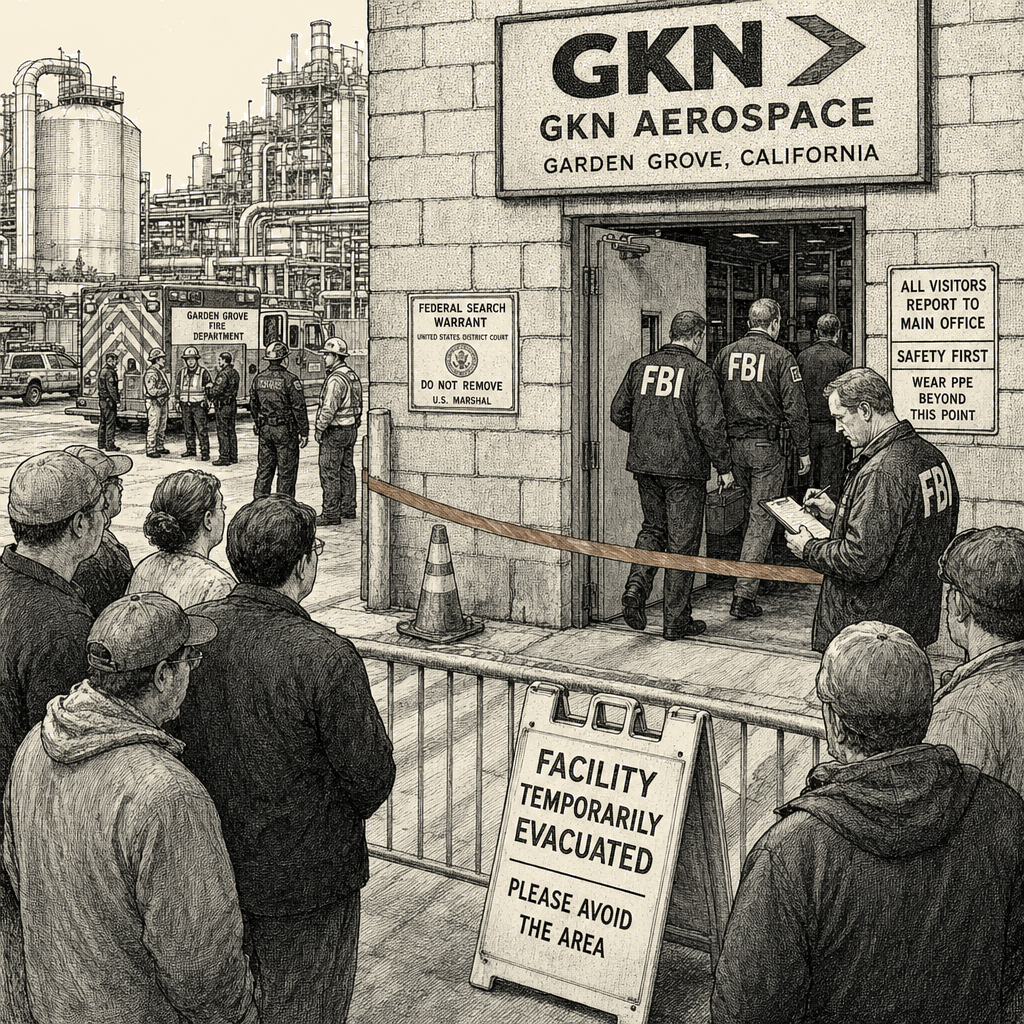
The FBI on Wednesday served a federal search warrant at a GKN Aerospace facility in Garden Grove, California, where an overheated chemical tank in late May forced the evacuation of about 50,000 residents amid fears of an explosion. The warrant, signed by a federal judge last week, authorizes agents to seize records related to the “storage, use or disposal” of methyl methacrylate, the chemical stored inside the tank that authorities feared could explode.
The Orange County district attorney’s office is conducting a separate criminal investigation into the aerospace plant and has ordered the company “not to modify or destroy any evidence,” spokesperson Kimberly Edds told the Associated Press.
The facility, GKN Aerospace Transparency Systems, is a UK-based company that manufactures cockpit windows, canopies and windshields. The tank that overheated in late May contained 6,000 to 7,000 gallons of methyl methacrylate, which is highly flammable. The liquid is used in the manufacturing of plastics and coatings, such as Plexiglas and dental prosthetics.
Exposure to the chemical can cause serious respiratory problems, neurological issues and irritation to the skin, eyes and throat, according to the Environmental Protection Agency.
The federal warrant also seeks “samples of the substance within any tank, tote, drum, vat, vessel, or container suspected of containing or having previously contained methyl methacrylate and/or any hazardous substance,” as well as records related to “any cooling equipment or other equipment used to control or regulate the temperature of methyl methacrylate.”
“We are cooperating with authorities at our Garden Grove facility and will continue to do so,” a GKN spokesperson told the AP on Wednesday morning.
Speaking at a community meeting on Tuesday, GKN senior vice president Steve Carlin thanked the firefighters and local leaders who responded to the May incident and apologized to the Garden Grove community.
“On behalf of GKN and the Garden Grove plant, I want to say that I’m sorry that this event and this incident occurred. I understand and I realized sitting here tonight what a disruptive event it was and how unsettling it is to the greater community. Particularly unsettling to us at GKN because of the long history that we have with Garden Grove and how connected we are to this community,” he said.
At the meeting, city leaders and residents asked GKN to consider relocating the tanks of methyl methacrylate, but Carlin said it was too early in the investigation for the company to make such a determination.
Reports of the overheating tank emerged on May 21, and residents of Garden Grove were evacuated the following day. Most evacuees were able to return home over the Memorial Day weekend after a crack in the tank formed, relieving pressure and avoiding an explosion. About a dozen evacuated people and businesses have filed lawsuits against GKN since the incident occurred, and some locals reported strong odors, respiratory irritation, headaches and dizziness.
Orange County health officials said no contamination or fumes were released and that they would monitor the air for several months and check the sewer and storm drains.
The California incident was the first of two major hazardous chemical emergencies on the West Coast within a week of each other. Five days after the GKN incident began, a large tank containing a corrosive chemical at a Longview, Washington, paper mill ruptured and imploded, killing 11 people.