
- U.S. stock futures fell Wednesday ahead of May inflation data that could shape the Federal Reserve’s policy decision under new Chair Kevin Warsh.
- Brent crude rose 0.4% to $91.84 a barrel after the U.S. conducted three waves of airstrikes against Iranian air defense and radar sites, escalating Middle East tensions.
- Asian equities retreated, with South Korea’s Kospi falling 4.5% and Japan’s Nikkei down 1.9%, as investors pulled capital from risk assets.
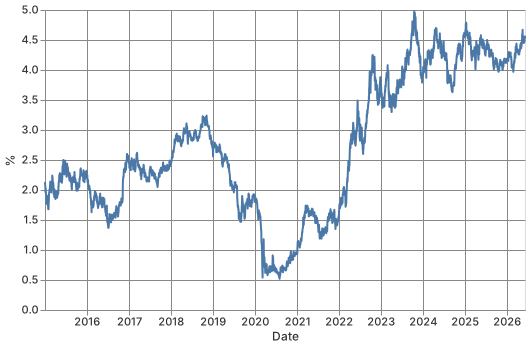
- The 10-year Treasury yield stood at 4.56% and the dollar dipped slightly as markets priced in a quarter-point rate hike by year-end.
U.S. stock futures declined Wednesday as investors turned their focus to May consumer price data that will give the Federal Reserve its last major economic reading before a policy meeting next week. Futures for the S&P 500 were down 0.3%, futures for the Dow Jones Industrial Average declined 0.2%, and the tech-heavy Nasdaq slipped 0.5%.
The market is pricing in a quarter-point rate increase by year-end and another hike in 2026, according to LSEG data, as speculation about a Fed move has intensified following three consecutive stronger-than-expected jobs reports. Deutsche Bank analysts said in a note that the labor market side of the Fed’s mandate appears increasingly secure, allowing the central bank to focus on inflation.
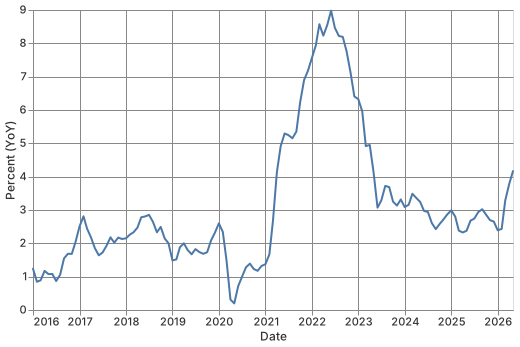
Consumer prices rose 3.8% year-over-year in May, according to FRED data available Wednesday, as markets awaited the official Bureau of Labor Statistics release at 8:30 a.m. Eastern. A hotter-than-expected print could bolster the case for a rate hike at Kevin Warsh’s first meeting as Fed Chair next week.
“The uncertainty about how the Federal Reserve will act with new leadership under Kevin Warsh increases the uncertainty,” SEB macro strategist Gustav Helgesson said in a note. A high inflation outcome could lead to a new surge in market rates, a stronger dollar and continued pressure on global stock markets, he added.
The two-year Treasury yield rose to 4.135% in Asian trade, while the 10-year yield stood at 4.56%, according to Tradeweb. The yield curve spread between two- and ten-year notes measured 0.4 percentage points.
Oil prices edged higher after the U.S. military carried out three waves of attacks against Iranian air defense and radar sites, retaliating for the downing of a U.S. Apache helicopter. In early European trading, Brent crude was up 0.4% to $91.84 a barrel, while West Texas Intermediate futures rose 0.2% to $88.38 a barrel.
“The latest escalation threatens to prolong restrictions on traffic through the Strait of Hormuz, a critical route for global oil and gas exports, while declining U.S. crude inventories underscore tightening supply conditions,” analysts at MUFG said. “Going forward, developments in US-Iran negotiations, security conditions around Hormuz, and the pace of inventory drawdown will be key drivers of oil market sentiment.”
The dollar fell against major currencies, with the DXY dollar index down 0.1% to 99.854.
Asian equities mostly retreated as renewed U.S.-Iran tensions stoked fears of supply disruptions. South Korea’s Kospi led losses, falling 4.5%. Japan’s Nikkei Stock Average dropped 1.9%, and China’s Shanghai Composite Index slipped 0.4%.
European indexes edged higher in cautious trade, with the Stoxx 600 up 0.2%. London’s FTSE 100 rose 0.2% as grocery stocks advanced, though HSBC Holdings weighed on the index with a 1.9% decline. The French CAC 40 gained 0.3% and Germany’s DAX added 0.2%.
Technology stocks looked set to extend Tuesday’s losses after artificial-intelligence-linked companies fell in Asia trading. Investors will parse fourth-quarter earnings from Oracle after market close Wednesday.
Precious metals slipped in early European trade. New York gold contracts fell 1.7% to $4,212.00 a troy ounce, while silver contracts declined 1% to $64.58 an ounce.
Bitcoin dropped 1.2% to $61,372, after hitting a 20-month low of $59,125 on Friday. Renewed geopolitical tensions can trigger selling in bitcoin as traders move into cash and traditional safe-haven assets, Zaye Capital Markets analyst Naeem Aslam said in a note.