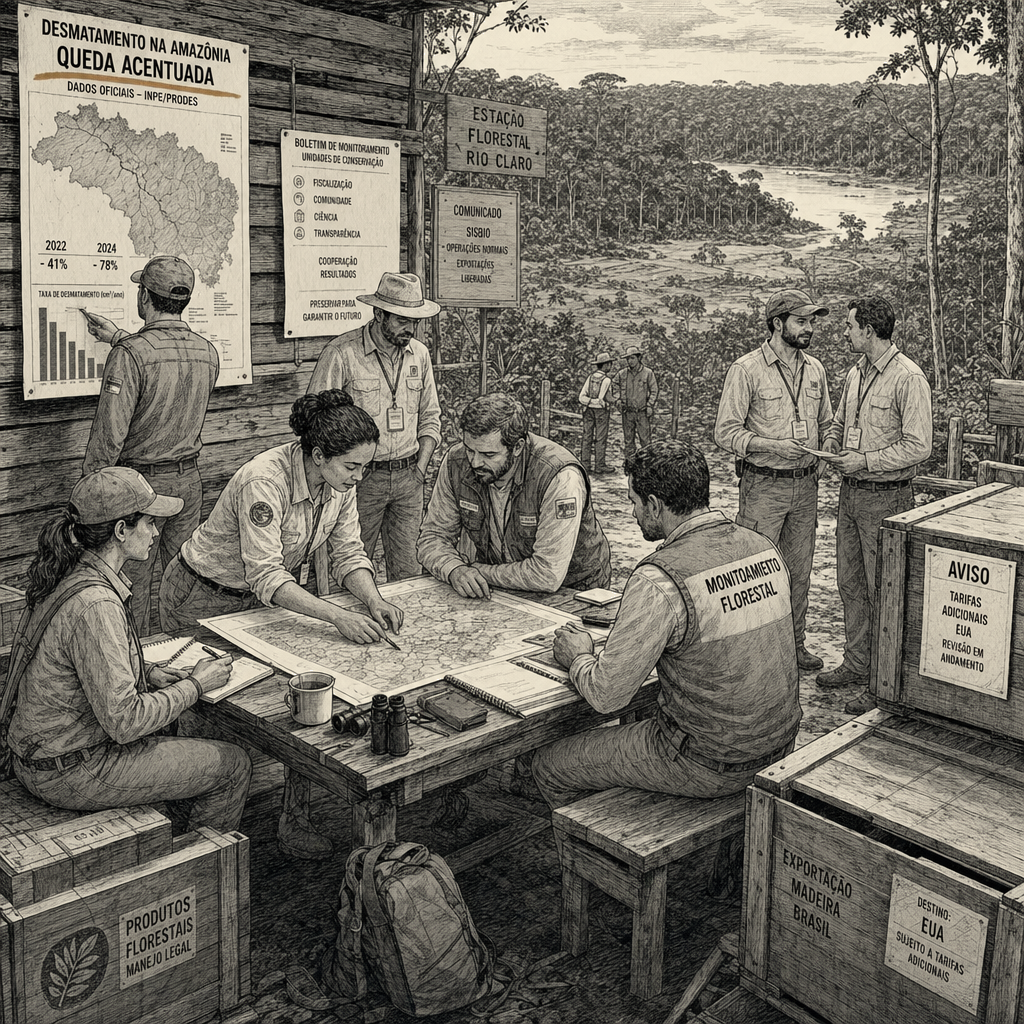
Brazil reports sharp drop in Amazon deforestation amid US tariff dispute
SAO PAULO — Brazilian officials announced Thursday that Amazon deforestation declined sharply in May, pushing back against assertions used by the Trump administration to justify newly imposed tariffs on the South American country.
Amazon deforestation last month was 61.4% lower than in the same period in 2025, according to data from the National Institute for Space Research and the Ministry of Environment. Officials noted that the decline aligns with broader conservation efforts, even as clearing continues.
Despite the drop, 370 square kilometers of the rainforest were cleared in May, an area encompassing nearly 143 square miles. Deforestation in Brazil’s Cerrado savanna, a vast ecosystem in central Brazil that has faced sustained pressure from the agribusiness sector, fell 12% over the same timeframe.
Environment Minister João Paulo Capobianco characterized the latest figures as a historic low. He said the data represents the lowest amount of deforestation ever recorded for May and that Brazil remains on track to post the lowest annual levels once final data is consolidated later this year.
The disclosure arrives amid heightened trade tensions between Brazil and the United States. The Trump administration last week cited environmental destruction in the Amazon as one of the primary justifications for levying additional tariffs on Brazilian imports. By releasing the latest satellite data, Brazilian leadership sought to directly counter American accusations and demonstrate that environmental protections are holding.
International trade and climate diplomacy remain heavily intertwined, with conservation metrics increasingly serving as flashpoints in diplomatic negotiations. Brazil’s government maintains that current policies are effectively curbing forest loss, though the continued clearing of hundreds of square kilometers monthly indicates ongoing challenges.
The latest figures build on broader trends showing slowing deforestation rates in the region since 2023, following years of accelerated clearing under former President Jair Bolsonaro. Current data indicates that enforcement actions and satellite monitoring continue to drive reductions in the Amazon basin.
As trade disputes escalate, the economic impact of the tariffs and the environmental reality on the ground will continue to shape relations between Washington and Brasília. Brazil’s administration faces the dual challenge of maintaining export markets while sustaining aggressive environmental policies in one of the world’s most critical ecosystems.