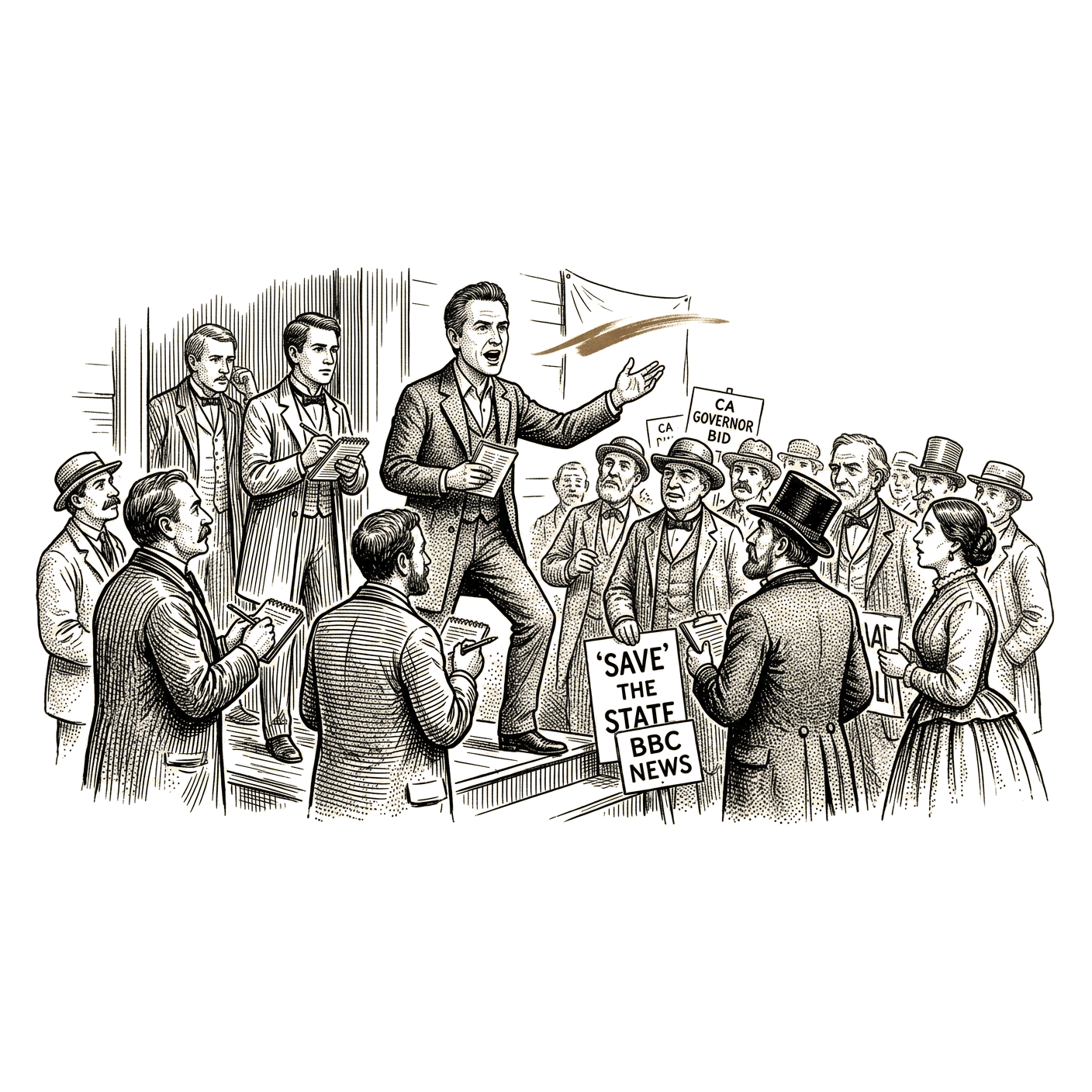
Steve Hilton, the former senior adviser to David Cameron who moved to California in 2012, told BBC Radio 4’s Today programme that his candidacy is rooted in what he called the state’s “rebel spirit.” He argued that California’s tradition of innovation and economic dynamism had been undermined by 16 years of Democratic control, and said his platform is based on “common sense” rather than party ideology.
“The quickest way we can get more money into people’s pockets is for government to take less out,” Hilton said. His policy pledges include a tax-free threshold on the first $100,000 of income, which he said would amount to about £74,485, as well as steps to lower energy prices and housing costs. He blamed environmental restrictions for forcing California to import much of its oil despite domestic reserves, and said he would “work co-operatively to expand energy production.”
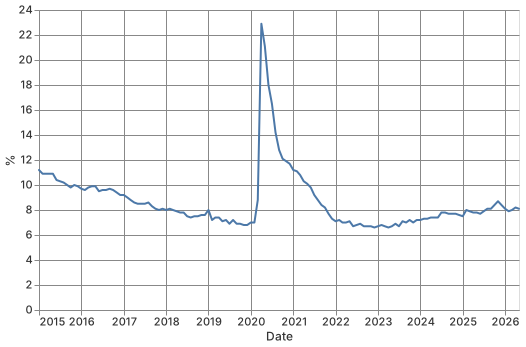
Nationally, the broader underemployment rate — which includes discouraged workers and involuntary part-time employees — stood at 8.1% in May, according to the Bureau of Labor Statistics’ U-6 measure. Hilton pointed to what he described as California’s highest poverty rate, unemployment, and cost of living in the US as evidence that Democratic policies have failed.
Hilton has had an unusual political journey, from architect of the UK Conservative Party’s “Big Society” agenda under Cameron to an early supporter of Trump in 2015. Asked where he now sits on a spectrum between Cameron-era conservatism and Trump-era populism, Hilton rejected the framing, arguing that both were political movements that did not define him “personally.” He linked his positions to a broader critique of stagnating wages and inequality, citing decades of flat real earnings for most US workers as a driver of populist politics on both left and right.
President Trump has endorsed Hilton, saying he would work with his administration. Asked whether that backing might be a liability in a heavily Democratic state, Hilton insisted it was an “asset for Californians,” arguing co-operation with Washington could help deliver policy changes — particularly on energy and fuel prices.
On immigration, Hilton — the son of Hungarian immigrants — said he opposes California’s “sanctuary state” policies, which limit co-operation with federal enforcement. As governor, he said he would not obstruct federal immigration authorities and favored a return to what he characterized as a more co-operative approach seen during the Obama administration. Pressed on civil liberties concerns, including cases where people without criminal records have been detained, Hilton argued such situations would be avoided through better co-ordination between state and federal authorities.
Hilton’s Democratic opponent, Xavier Becerra, served as secretary of health and human services under President Joe Biden. The Becerra campaign quickly pushed back on Hilton’s message. “Californians didn’t build the greatest state in the nation to hand it over to a Trump errand boy dead-set on throwing our progress into reverse,” Jonathan Underland, a spokesperson for the Becerra campaign, told the BBC. “Voters know Steve Hilton means higher prices, rights stripped away, and an all-out attack on our values — and they don’t want anything to do with it.”
Hilton advanced through a crowded primary field in part because of a split Democratic vote. He acknowledged the scale of the challenge ahead in a state where Democrats hold every statewide office and dominate the legislature. But he argued that polling showing a majority of Californians believes the state is “going in the wrong direction” has opened an opportunity for a change candidate. He also pointed to the size of the Republican vote in presidential elections — more than six million in California in 2024 — suggesting that mobilizing those voters, combined with appealing to independents frustrated with the status quo, could be enough to secure victory.
A proposed ballot measure on voter ID, popular with Republican voters, could help drive turnout, he added. Hilton said he has not seen evidence of voter fraud in the state but called for ending the practice of mailing ballots to California’s 23 million registered voters, which he said contributes to the state’s slow ballot count.
The November contest will test whether a Republican can win in a state that has not elected a Republican governor since Arnold Schwarzenegger in 2006, and whether a figure once associated with Westminster politics can successfully complete a reinvention as a US conservative populist.