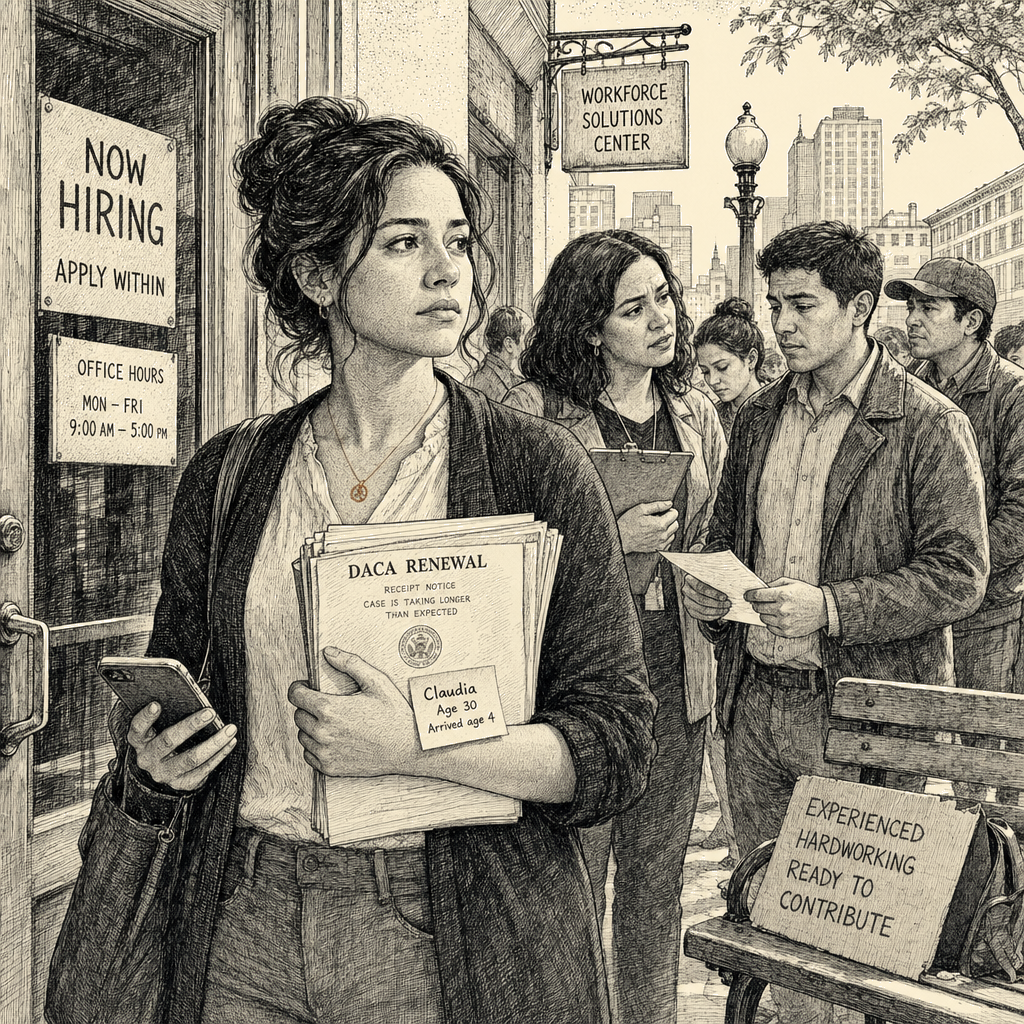
Claudia, a 30-year-old who moved to the United States at age four, has been waiting six months for her DACA renewal — a process that for 14 years took only a few weeks. The delay has cost her a job and placed her education and career in jeopardy.
“It feels like a personal attack,” Claudia said. She requested anonymity for fear of retaliation given her immigration status. “I renewed on time, completed my biometrics, followed every rule, but I’m still waiting to hear back.”
More than 500,000 active DACA recipients reside in the US from nearly 200 different countries, according to the Guardian. To be eligible for the program, an individual must have entered and resided in the US before June 15, 2007, be in school or have a high school or equivalent degree, and have no criminal record.
The processing delays come at a time when DACA holders face growing hostility from the Trump administration, the Guardian reported. Hundreds of DACA holders have been arrested by federal immigration enforcement and several have been deported over the last year amid the White House’s broader immigration crackdown. Though the White House has said it is targeting immigrants with criminal records, a Guardian analysis from earlier this year found that 77% of people who entered deportation proceedings in 2025 had no criminal conviction.
Cesar, who requested anonymity due to his immigration status, has also experienced a six-month limbo over his DACA renewal. After he lost his job in HR, he has been selling burritos on the street to make up for the lost income and has been sharing his story online.
“I feel like I lose everything. We grew up here, we built a community here, and we built our lives here. I lost my dream job,” said Cesar, who moved to the US when he was four. “It’s been very hard, especially since I’m not making enough. I’m barely scraping by.”
Donald Trump attempted to eliminate the DACA program during his first term but was ultimately blocked by the Supreme Court in 2020. Despite the ruling, litigation against DACA is ongoing, and the administration has remained focused on targeting program recipients through new work restrictions and processing delays, immigration advocates said.
Along with the processing delays, the Trump administration recently proposed a new rule that would impose new work authorization restrictions on DACA holders, including a requirement that their employer be enrolled in using E-Verify. It also implemented a rule that prohibits DACA holders from obtaining commercial driver’s licenses.
“Daca delays are pushing recipients out of the workforce, jeopardizing the stability of working families, employers and local economies,” said Juliana Macedo do Nascimento, deputy director of advocacy and campaigns at United We Dream, an immigrant advocacy non-profit. She said the new policies amount to a “quiet unraveling of temporary programs across the board,” from DACA to humanitarian parole, and described the effort as “a mass delegalization effort to push out millions of people who have built careers, families, and homes here, and contribute billions to the US economy year after year.”
In a statement, Zach Kahler, a spokesperson for US Citizenship and Immigration Services, said that “Daca does not confer any form of legal status in this country” and that the agency “is safeguarding the American people by more thoroughly screening and vetting all aliens.”
Immigration advocates pointed out that lawmakers in Congress can support DACA recipients by passing the Dream Act, a bipartisan bill that would grant recipients permanent residency status and a pathway to citizenship.
“The idea that people who have spent years contributing to their communities could lose everything because of bureaucratic delays and political attacks is both cruel and deeply damaging to America’s future,” said Gaby Pacheco, president and CEO of TheDream.US, a non-profit that offers scholarships to undocumented students. “What we are seeing right now is the slow unraveling of stability for hundreds of thousands of Dreamers who have done everything this country has asked of them.”
Cesar described the wait as an “emotional rollercoaster.”
“We have now lost our jobs, we have lost our security. We don’t feel safe being in public,” he said. “We had reached the American Dream, but suddenly it vanished.”