The war between the United States and Iran has entered a tragic new phase in which the fear, killing and upheaval have become normalised for millions of people across the Middle East, according to Guardian columnist Nesrine Malik.
In a column published Monday, Malik wrote that the conflict — now a matter of “low-grade strikes, hot and cold rhetoric, and near conclusions to the hostilities that never come” — has demonstrated how quickly war can shift from being shocking and intolerable to a matter of fact.
“It is bewildering how war — shocking and intolerable at first — quickly becomes a matter of fact,” Malik wrote. “Few conflicts have demonstrated that more vividly than the war on Iran.”
Malik wrote that over the past week alone, Trump announced strikes on Iran and expressed a desire to take Kharg Island, which handles 90% of Iran’s crude oil exports. He then declared that the US had ended the war on Iran in a “great settlement,” a promise Malik wrote he has made nearly 40 times.
“Just how not over it was can be traced by the strikes and counter-strikes across the region, the closure of the strait of Hormuz, general global economic upheaval, and specific Middle East destabilisation,” Malik wrote.
As the ceasefire between Iran and the US crumbled last week, Malik wrote that Jordan, Kuwait and Bahrain came under Iranian fire. This followed weeks of strikes on the UAE, Saudi Arabia and Qatar that claimed lives and damaged energy infrastructure.
The economic toll has been severe, Malik wrote. Seventeen percent of Qatar’s liquefied natural gas global supply is gone. The closure of the Strait of Hormuz has reshaped Saudi Arabia’s economic priorities, diverting money toward infrastructure such as ports and data centres. Dubai is under pressure, with major airlines continuing to suspend flights and a severe economic contraction anticipated.
Malik wrote that the very meaning of war is being redefined through what she called “absurdist ‘ceasefires’” across the region. In Gaza, nearly 1,000 people have been killed since the ceasefire in October of last year. In Lebanon, since the April ceasefire, Israel’s killings, ejection of hundreds of thousands of Lebanese from their homes and pummeling of parts of Beirut continue. Around 1 million remain displaced. In the last two months, the death toll of almost 1,500 amounts to a third of the total fatalities since the escalation of the conflict in early March, Malik wrote. More than one in four of those dead are children.
Since the ceasefire between the US and Iran in April, the two have traded strikes, including recent US attacks on cities in southern Iran, according to Malik.
A whole lexicon has emerged to describe this state of war denial, Malik wrote — truces and ceasefires are described as “fragile,” “tenuous,” being “tested” and “challenged,” all while missiles, drones and killings continue.
Even timings are never agreed upon, Malik wrote. The US, along with mediator Pakistan, suggested that a peace deal could be announced on Sunday, but the Iranians disagreed that everything had been ironed out, then threatened to pull out of talks altogether after Israel struck the outskirts of Beirut.
Malik wrote that Israel now occupies nearly 20% of Lebanon’s territory, and that Israeli Prime Minister Benjamin Netanyahu appears to defy Trump and strike Iran unilaterally.
“The problem with war is that, the longer it goes on, the more it creates new realities on the ground, and new, diverse agendas that cannot be wrested back to what preceded the conflict,” Malik wrote.
Malik wrote that Netanyahu will probably wish to press his advantage in Lebanon under the guise of vanquishing Hezbollah, while harbouring no interest in a peace deal with Iran that would stabilise a regime he had a chance to bring to its knees. Trump, she wrote, is “embarrassed and exposed” by the defiance and response of Iran, and promises peace while threatening to wipe out Iran’s “entire infrastructure.”
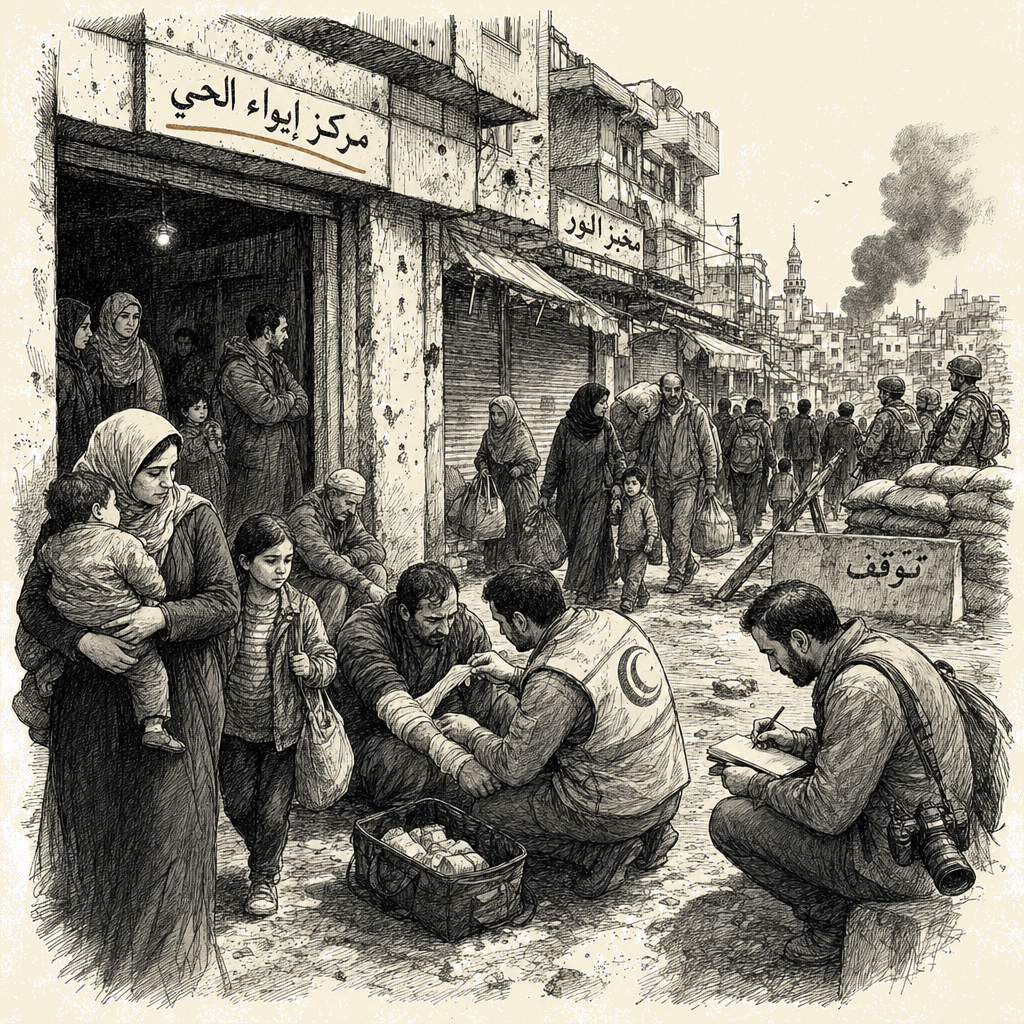
“Meanwhile, as we wait for rational outcomes from the most irrational of players, war has become the norm and a reality, whatever term you decide to choose to describe its intensity,” Malik wrote.
Malik concluded that Lebanon will not be resolved overnight, its millions of displaced citizens will not return and rebuild the moment a deal is signed, and that Gaza remains an open wound. The Iranians still retain the power to seize up the region and the global economy with strikes and control of the Strait of Hormuz, she wrote. Arab countries remain in a holding pattern of insecurity, hostage to the impossible balance between Tehran, Tel Aviv and Washington.
“And the sense that this is how it is, and how it always has been, will settle, as people continue to try to make lives during the biggest regional conflict in the Middle East in contemporary history,” Malik wrote. “Because humans take a lot of killing.”