Body
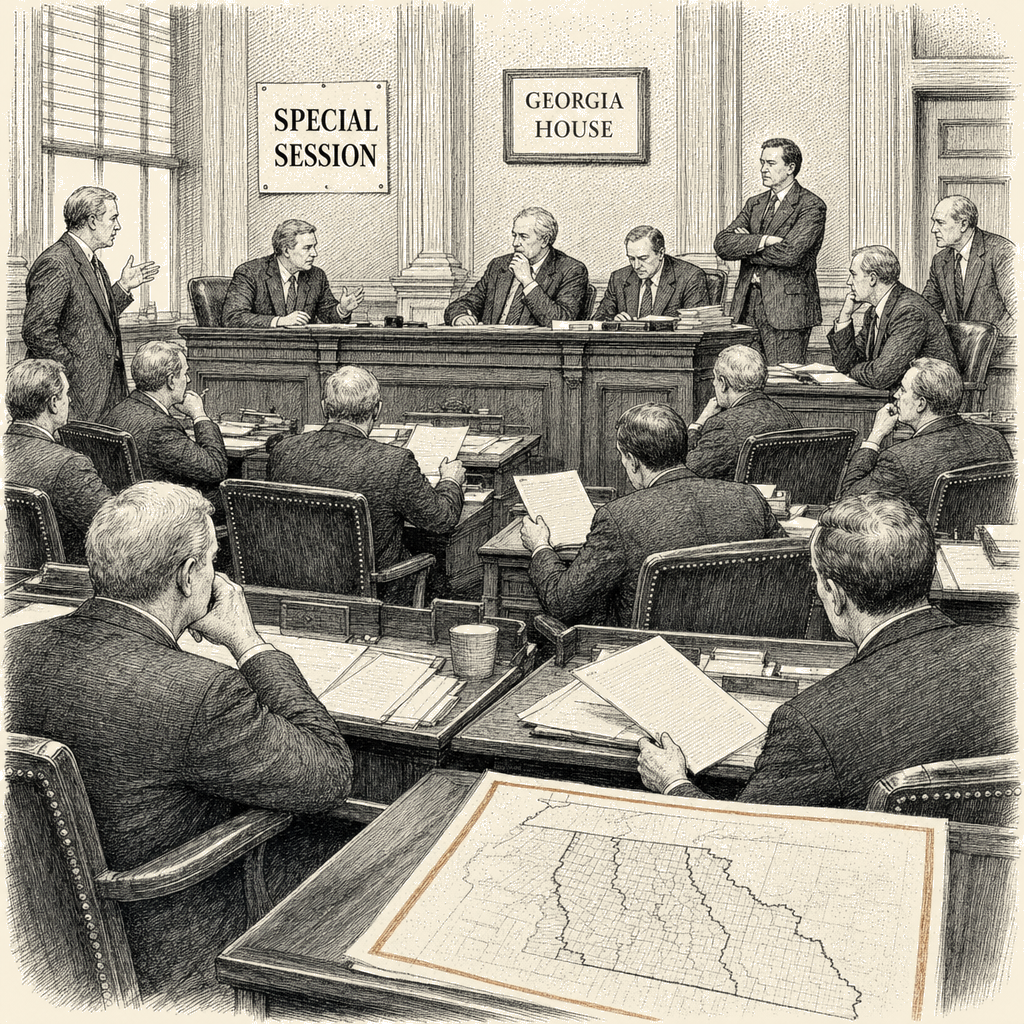
Georgia House Speaker Jon Burns (R) informed Gov. Brian Kemp in a letter Wednesday that Republican lawmakers would not take up redistricting during the special session Kemp had called for the purpose. Burns said the state’s more pressing cost-of-living issues and unresolved litigation over redistricting in other states made the timing inappropriate.
“Changes to Georgia’s maps should take place only when members of the General Assembly and citizens have been given ample opportunity to gather the facts, provide input and engage in meaningful discussion,” Burns wrote in the letter. “For this reason, we will not be taking up congressional or legislative redistricting for the 2028 election cycle during this special session.”
Kemp had scheduled the special session after the U.S. Supreme Court’s April ruling in Louisiana vs. Callais, which threw out Louisiana’s congressional map with two majority-Black districts and cleared the way for the state to use a map with only one. The ruling effectively weakened Voting Rights Act protections for district lines drawn to preserve minority voting power and was seen by legal analysts and Republican strategists as an opening to redraw maps on partisan grounds without violating federal voting law.
President Donald Trump had encouraged GOP-led states to pursue mid-decade redistricting to create additional Republican-leaning seats and shore up the party’s chances of holding the House in the November midterm elections. At least 10 states have completed redistricting efforts, according to the National Conference of State Legislatures, with eight of the newly redrawn maps expected to favor Republicans. Texas became the first state to redraw its map last summer.
Protesters gathered at the Georgia Capitol on Wednesday as state Senate Republicans held a press conference on the central staircase. Videos posted online by the NAACP showed demonstrators chanting “Black voters matter” at lawmakers. When Senate Pro Tempore Larry Walker III mentioned the Supreme Court ruling during the press conference, the crowd responded with boos.
Walker said the legislature needed to wait for guidance from court rulings in other states before drawing new maps. “We believe it would be wise to allow the judicial process to develop in other states and see how the courts rule on redistricting maps elsewhere,” he said. “Because any changes to our current congressional or legislative districts would not go into effect until 2028, we believe it is prudent to take the appropriate and necessary time to do this important duty the right way and not to rush through it.”
Democrats celebrated the collapse of the redistricting effort. Heather Williams, president of the Democratic Legislative Campaign Committee, said in a social media statement that “state Republicans can see the backlash from voters coming this November, which is why they called off their plan to further rig maps.” She added that “the threat of future GOP gerrymandering looms, which is why building Democratic power in Georgia this year is crucial.”
The Georgia decision stands in contrast to other Southern states that have moved ahead with mid-decade redistricting. Louisiana’s new map creating a single majority-Black district was approved by the state legislature last month and signed into law. South Carolina’s Senate earlier rejected a Trump-backed map, while the state House had passed a GOP-leaning version. Several states, including Florida, Texas, and Alabama, have enacted or are pursuing new maps, with court challenges pending in multiple jurisdictions.