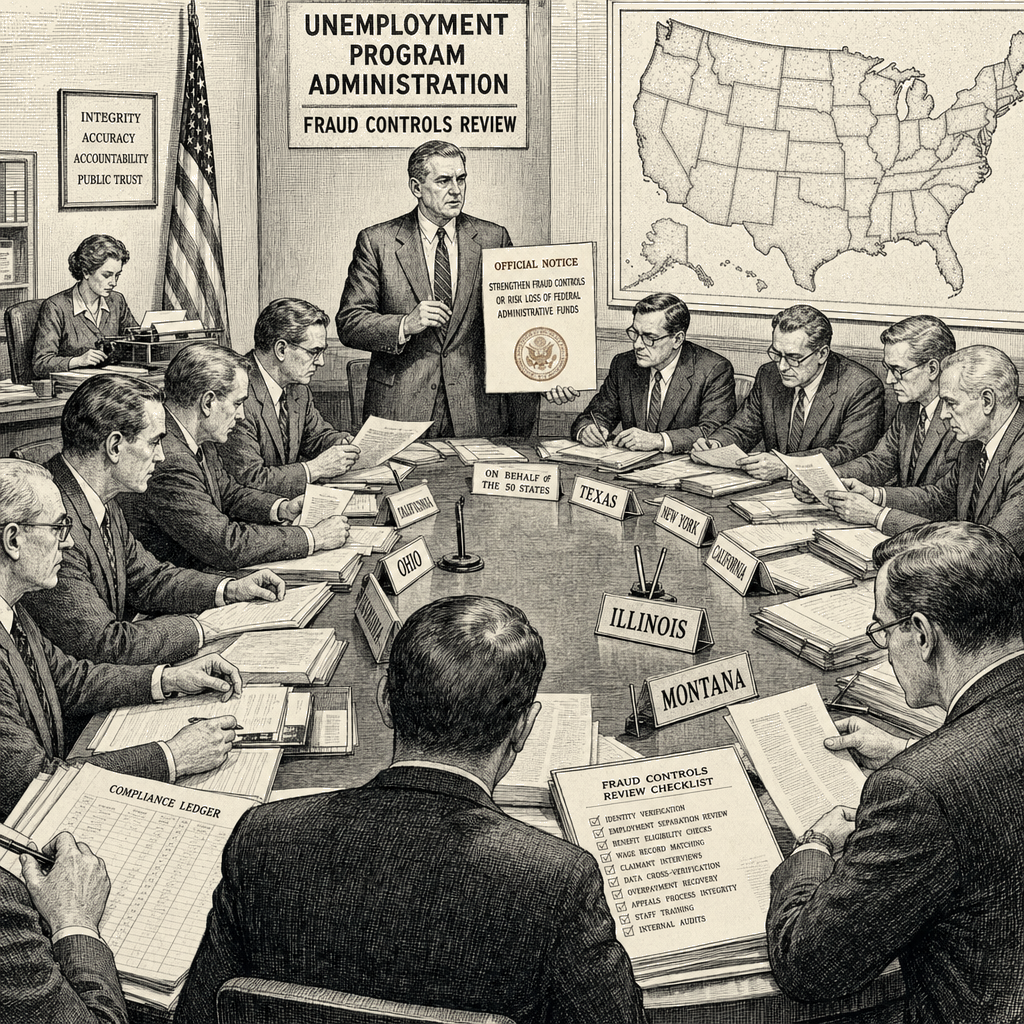
The Trump administration has warned all 50 states that they risk losing federal funding for unemployment insurance benefits unless they comply with anti-fraud efforts, in what acting Labor Secretary Keith Sonderling described as an unprecedented use of the government’s authority to withhold administrative funds from state unemployment programs.
In a letter to state governors reviewed by The Wall Street Journal, Sonderling wrote that unemployment benefits are meant to be temporary support for workers searching for employment. He said the department would use “every available tool” to protect taxpayer money, including “withholding administrative funds from states” for the first time in history.
A Labor Department spokesman said the likely impact of states losing federal administrative funding “would be their system shutting down as administrative funding is what covers the cost to operate the program.”
The administration alleges that unemployment benefits have become an easy target for fraud, especially since the Covid-19 pandemic when millions of Americans relied on aid after losing their jobs. More than 40 million Americans filed for unemployment at the height of the pandemic, according to the Bureau of Labor Statistics. As of this year, approximately 1.8 million Americans currently receive benefits, the Labor Department said.
The Trump administration is alleging that lax oversight at the state level has allowed individuals to improperly collect unemployment benefits. It cited California as a “particularly glaring” example. The state is more than $20 billion in debt to the federal government, according to the California Employment Development Department, which it attributes to the pandemic and said it is paying back. The Trump administration blames that debt on “years of fraud, improper payments, and mismanagement.”
The Labor Department said it would press states to update existing technology, strengthen identity verification procedures and implement stricter controls to ensure that benefits flow to citizens with legitimate unemployment claims.
“The days of excuses are over. States that fail to protect taxpayer dollars should expect consequences,” said Labor Inspector General Anthony D’Esposito, adding that the department would use all means available “to demand accountability, recover stolen money, and ensure unemployment benefits only go to eligible Americans.”
The effort is part of the larger White House antifraud task force helmed by Vice President JD Vance, who delivered a similar warning to state Medicaid programs last month. The administration cut off funding to Hawaii’s Medicaid Fraud Control Unit, the state-level watchdog charged with policing wrongdoing. The state responded by establishing an antifraud “strike force” to root out abuse in an effort to return to compliance with federal statutes, as MSI previously reported.
Conservatives have long complained that regulations governing unemployment benefits are too lax, and during the 2024 campaign, the Heritage Foundation called on Congress to pass legislation to overhaul the system, including with measures such as stronger identity verification standards.
There is no single national program that provides unemployment payments. Since the Great Depression, the federal government has instead partnered with individual states to provide temporary financial assistance to workers who have lost their jobs through no fault of their own. Most states typically provide 26 weeks, about six months, of unemployment benefits to workers who qualify. While the payments are primarily funded through state unemployment taxes paid by employers, the federal government covers administrative costs and, on occasion, gives loans to individual state programs.
The current move by the Trump administration comes as the unemployment rate stands at 4.3%.