The average U.S. family will spend nearly $800 on air conditioning this summer, a 40% increase from 2020 and a 10.5% increase from summer 2025, according to an analysis by the National Energy Assistance Directors Association released Thursday.
The six-fold increase in cooling costs outpaces general inflation and follows two years of rising electricity prices driven by natural gas costs and growing demand from data centers, the group said. Wolfe, the association’s executive director, said the summer energy burden comes as households are already stretched by higher gasoline prices, rising grocery costs and surging credit card debt.
“Families who thought they were doing everything right” are now draining savings, carrying larger credit card balances and putting off major purchases, Wolfe wrote in the analysis. He noted that Americans now carry more than $1.2 trillion in credit card debt, and nearly 60% of households report living paycheck to paycheck.
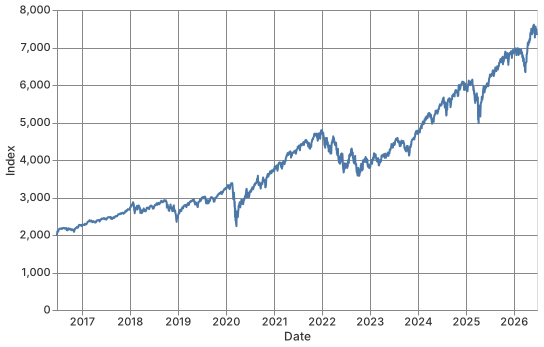
The analysis highlights a widening gap between the stock market’s performance and household financial reality. As of June 18, the S&P 500 stood at 7,420.1, more than double its level in early 2020, according to FRED data. But Wolfe said that for millions of Americans, “the economy isn’t measured by the S&P 500; it’s measured at the gas pump, in the grocery store and when the monthly electric bill arrives.”
Utility disconnections remain widespread: electric service is disconnected more than 13 million times each year, and one in six households is behind on utility bills, the analysis found. Nearly 40% of lower-income households struggle to pay their energy bills.
Wolfe said the pressures are now extending to middle-class families who had previously been able to manage. “A $100 increase in monthly expenses is not an inconvenience,” he wrote. “It can mean the difference between paying every bill and falling further behind.”
The report cited Moody’s estimates that the oil market disruption over the past three months has cost the average family $450, reducing money available for groceries, healthcare, and electricity.
Wolfe criticized Washington’s focus on asset prices rather than household affordability, writing that “Washington keeps telling Americans to look at the stock market” while families are “looking at their electric bills, their grocery receipts and their credit card balances.”
The association’s data comes as the U.S. continues to contend with elevated inflation — the Consumer Price Index rose 4.2% year-over-year in May, a three-year high — and as the conflict with Iran threatens further disruptions to global oil supplies. Higher energy costs are expected to persist as demand on the electric grid grows from data centers and as volatile oil and gas markets push utility rates higher.