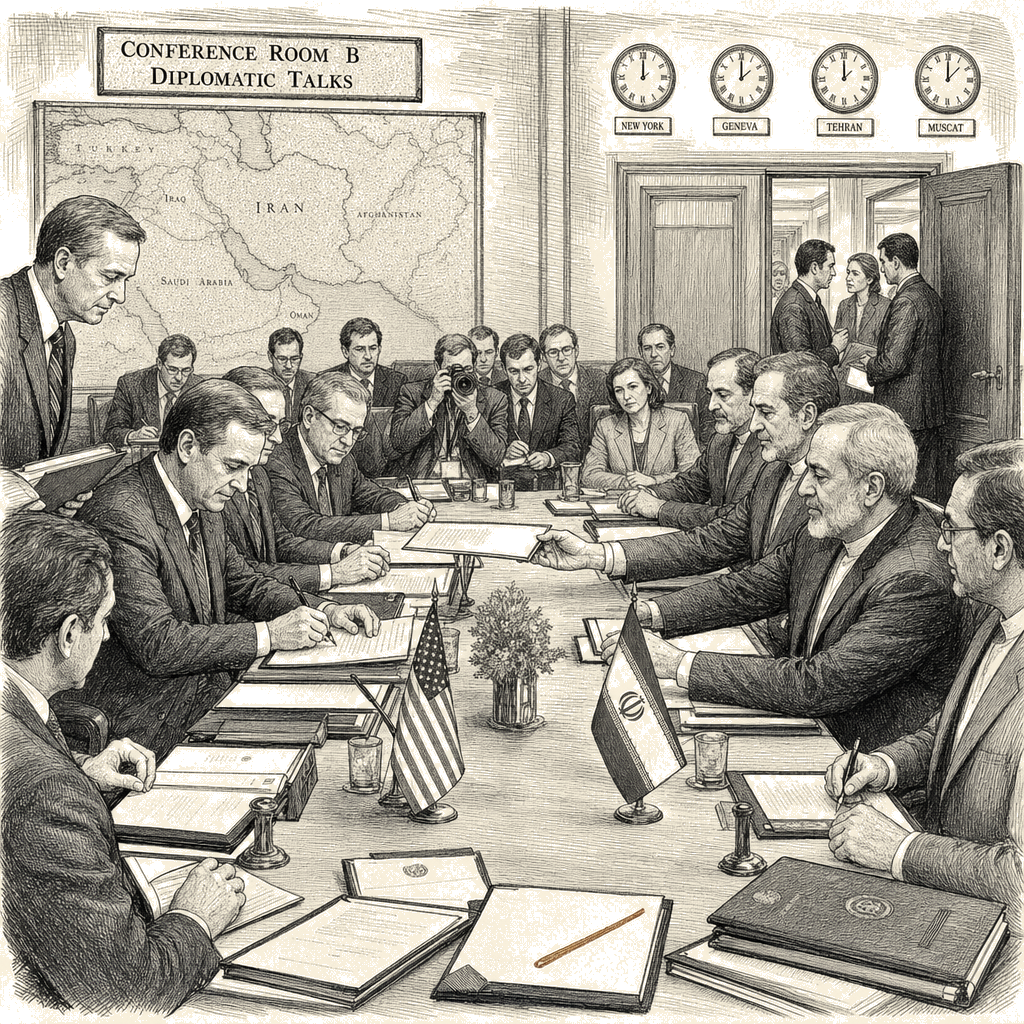
British commentator Simon Jenkins, writing for The Guardian, argued Thursday that the newly signed U.S.-Iran ceasefire deal is a victory for Tehran, as the Trump administration offers extensive concessions.
Jenkins said President Donald Trump is “running fast to escape the catastrophic war on Iran that he and Benjamin Netanyahu started four months ago.” According to Jenkins, Trump is offering a $300 billion rebuilding fund, an end to economic sanctions, and a promise not to interfere in Iran’s internal affairs — terms that Jenkins described as a settlement on Tehran’s terms.
Trump, speaking at the G7 summit in Evian, France, this week, has called the ceasefire a “major win.”
Jenkins wrote that Trump appears to have soured on Israel. He quoted Trump as saying of Netanyahu’s bombing campaign in Lebanon: “You don’t have to knock down an apartment house every time you’re looking for somebody” because “there are a lot of people in those apartment houses and they’re not all Hezbollah.”
The war began in February with a massive U.S. bombing campaign that Jenkins said was justified by “thin and sketchy” intelligence about Iran’s nuclear potential. He noted that Trump, who in a 2017 speech in Saudi Arabia had pledged to end U.S. military interventions, broke that commitment.
Jenkins cited Iranian authorities as saying U.S. and Israeli forces killed more than 3,300 Iranians in the conflict, including more than 100 children in a girls’ school. Trump’s initial war strategy, Jenkins wrote, predicted victory in “four to five weeks” — a timeline he said was repeatedly redefined.
Jenkins argued that the best outcome of the war would be the full removal of sanctions and Iran’s opening to outside commerce, which he said is “far more likely to dilute the regime’s grip on society than any bombing.” He said decades of bombing campaigns by the United States have failed to achieve their political objectives.
Jenkins’s column is the latest reaction to a ceasefire agreement that was signed this week at the G7 summit, drawing a mixed response from U.S. allies and analysts.