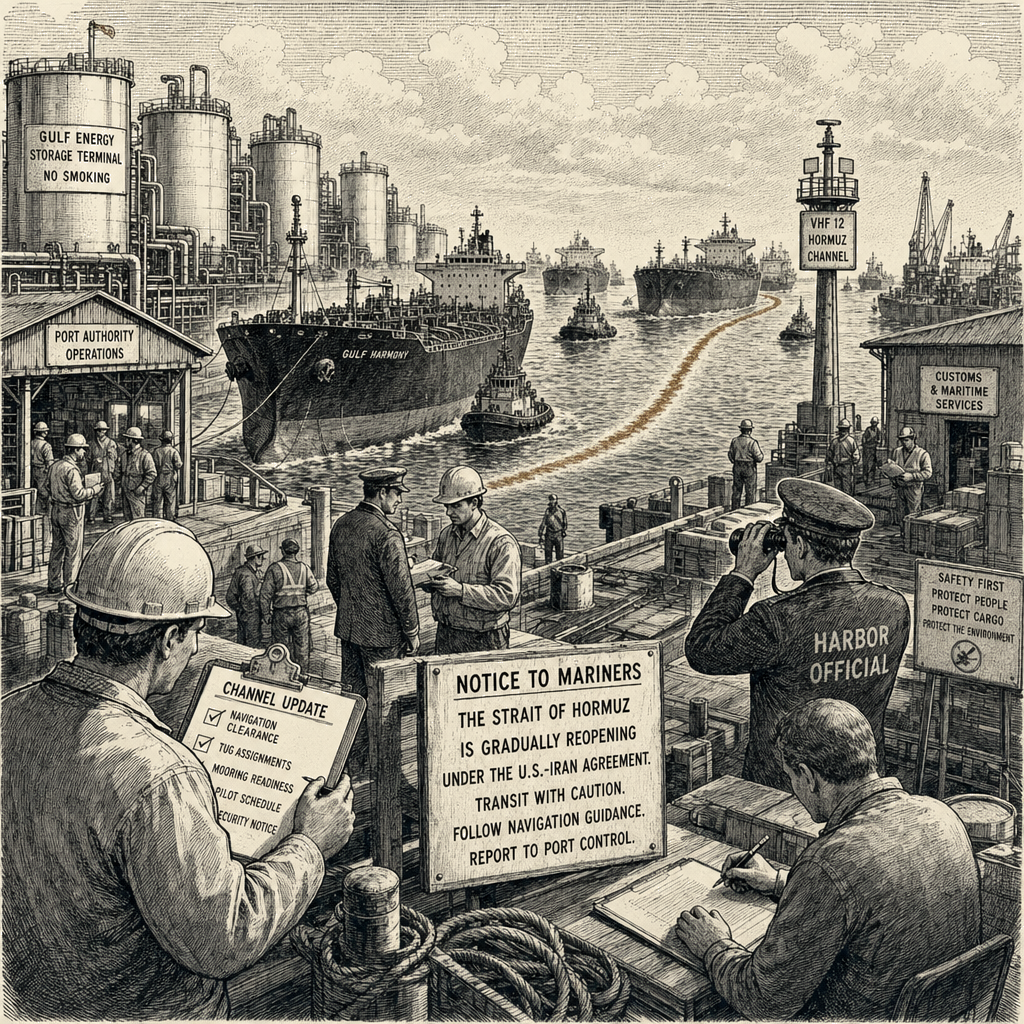
Doha, Qatar — With the Strait of Hormuz gradually reopening, Gulf oil producers face a new test: how fast they can clear shipping bottlenecks and turn stockpiled crude into exports, according to ship-tracking data and analysts cited by The Wall Street Journal.
Iran effectively shut the strait after the war with the U.S. and Israel broke out on Feb. 28, choking an artery that normally carries about a fifth of globally traded oil. The reopening began under a U.S.-Iran agreement signed earlier this week.
The recovery hinges on two separate constraints, said Jorge Leon, head of geopolitical analysis at Rystad Energy, an Oslo-based energy research firm. The markets will closely watch whether tankers can freely transit through the strait, and whether the region’s oil producers can load enough crude once those vessels are ready to sail, he noted.
Shipping remains limited. Kpler recorded six verified transits on June 17, while average daily crossings so far in June have stayed around 10 ships, far below the more than 100 a day before the war, according to ship-tracking data. Some vessels have begun crossing, including three tankers carrying Saudi oil and one French-flagged LNG carrier.
The first stage of the recovery is logistical. Shipowners need to regain confidence in the route, insurers need to bring premiums down, and producers need to load crude quickly enough to avoid bottlenecks at export terminals. Traffic through Hormuz could take around four to six months to return to prewar levels, Leon said.
The disruption has also drawn attention to storage capacity. Saudi Arabian Oil Co., known as Aramco and the world’s top oil exporter, said it is considering expanding capacity worldwide after the crisis underscored the importance of strategic reserves. Aramco can rely on a network of storage sites inside the kingdom and overseas, especially in Asia, one of its biggest markets.
Leon said energy security is likely to become a bigger priority after the crisis. “For oil exporting countries that means putting together mechanisms and infrastructure to ensure exports can reach destination,” he said. “In that sense, infrastructure bypassing Hormuz and storage capacity around the world would be crucial.”
Some Gulf producers already have infrastructure allowing them to bypass the strait, including Saudi Arabia’s route to the Red Sea and the United Arab Emirates’ pipeline access to Fujairah. Those routes helped keep oil flowing, but they were no substitute for Hormuz, the main artery for Gulf crude exports.