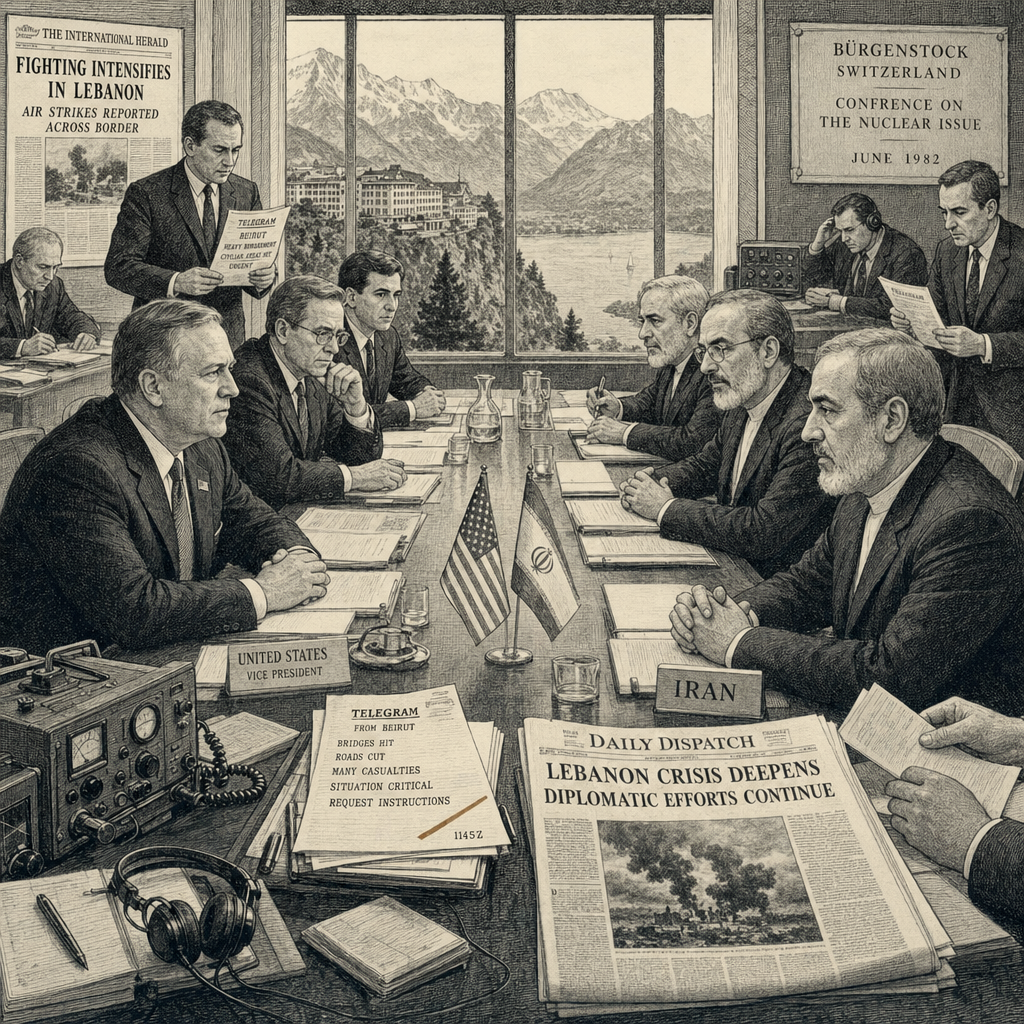
BÜRGENSTOCK, Switzerland — New U.S.-Iran nuclear talks opened Sunday with Vice President JD Vance leading the American delegation, but the continuing war in Lebanon between Israel and Hezbollah threatened to consume the discussions before they could address Iran’s nuclear program.
Iranian negotiators, led by parliamentary speaker Mohammad Bagher Ghalibaf, said the fighting in Lebanon would be the main topic. Iranian Foreign Ministry spokesman Esmail Baghaei accused Israel of violating its commitments under last week’s U.S.-Iran deal and said the U.S. had been unable or unwilling to rein in its ally.
“The Israeli regime continues to violate its commitments,” Baghaei said Sunday. “This issue is the main subject of today’s talks.”
Israel says it is responding to attacks by Hezbollah.
The venue at the Alpine resort of Bürgenstock was protected by heavy security. Visitors were greeted by security forces in flak jackets, some in military camouflage and others toting submachine guns, scattered amid a landscape of green pastures, wooden chalets and snowy peaks. The entrance of the luxurious hotel hosting the negotiations was protected by concrete blocks and metal barricades.
The talks follow a deal signed Wednesday that ended the direct U.S.-Iran war, reopened the Strait of Hormuz and set up negotiations on Iran’s nuclear program. The agreement also called for an end to the fighting in Lebanon in its opening paragraph — a key Iranian demand — but flare-ups over the past two days have threatened that component.
Iranian security officials said Saturday they had closed the Strait of Hormuz, a strategic waterway for global oil shipments, in response to Israeli strikes in Lebanon. The waterway remained shut Sunday, according to Iran’s Fars news agency. The U.S. military said the strait remained open and that it would monitor the situation to make sure it didn’t change.
Last week saw one of the most serious escalations in Lebanon since a ceasefire was reached in April. Israel carried out heavy strikes in retaliation for a Hezbollah drone attack that killed four Israeli soldiers. The front was relatively quiet early Sunday. Iran postponed plans to send its diplomatic team to the talks Friday but agreed to attend late Saturday after announcing the focus would be on ending the fighting in Lebanon.
Vance, upon boarding his flight to Switzerland late Saturday, confirmed that a key focus would be making progress on the Lebanon ceasefire. He also expressed hope for progress on the nuclear issue.
The U.S. position is that Iran should destroy or turn over its enriched uranium stockpile and suspend enrichment for 20 years. Iran has expressed openness to downblending uranium to lower enrichment levels inside the country and suspending enrichment for about a decade.
In exchange, the U.S. is offering extensive sanctions relief, including Iranian oil sales and plans to release billions of dollars in frozen Iranian cash as upfront incentives to open the strait and keep Iran at the table.
Israeli leaders, including Prime Minister Benjamin Netanyahu and Defense Minister Israel Katz, have said the country will not back down in Lebanon and will continue to hold territory until Hezbollah is vanquished. The Trump administration has sent mixed signals, criticizing Israel last week for what it called excessive use of force while also supporting its right to address security threats.
President Trump faces pressure from Iran hawks at home. Sen. Lindsey Graham said Friday that Israel should not have to tolerate being attacked by Iranian proxies.
Iran’s Supreme Leader Mojtaba Khamenei said on social media that he had originally opposed the deal and only relented when he got guarantees that the interests of Iran’s Middle East allies would be protected.