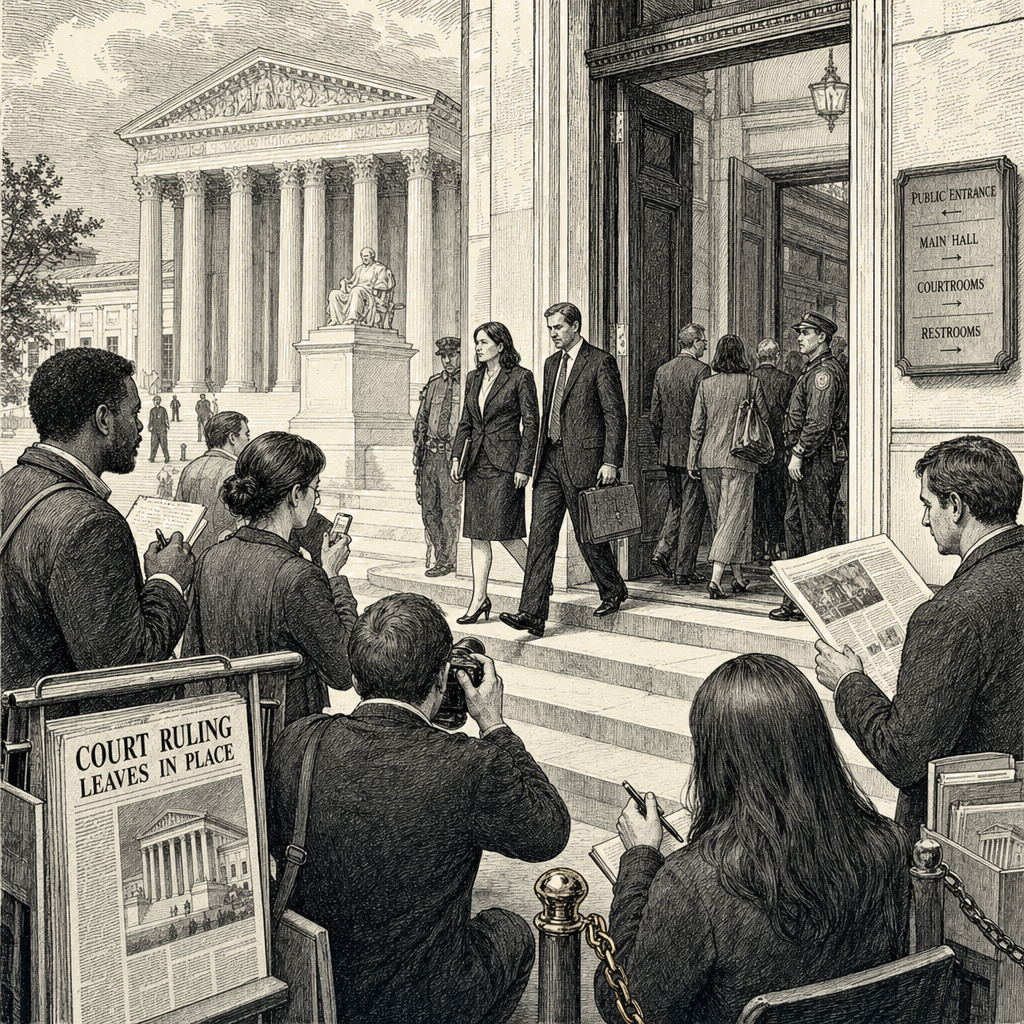
WASHINGTON — The U.S. Supreme Court on Monday declined to review an Arkansas voting rights case, allowing an appeals court ruling to stand that eliminates a long-used enforcement tool for protecting minority voters under the Voting Rights Act in seven states.
The court announced it would not take up the lawsuit brought by Arkansas United, an immigrant advocacy group that had challenged a state law banning any person who is not a poll worker from helping more than six voters cast ballots. A federal judge in 2022 ruled that the law violated Section 208 of the Voting Rights Act, which generally allows voters with a disability or an inability to read or write to receive help voting from a person of their choice. But after Republican state officials appealed, a panel of the 8th U.S. Circuit Court of Appeals found last year that private groups do not have the right to bring such lawsuits.
The 8th Circuit’s 2025 ruling applies to the seven states within its jurisdiction — Arkansas, Iowa, Minnesota, Missouri, Nebraska, North Dakota and South Dakota — and found that there is no private right of action under either Section 208 or Section 2 of the Voting Rights Act.
The Supreme Court’s decision not to intervene comes less than two months after its conservative supermajority issued a major ruling in May that weakened Section 2, which protects against racial discrimination in redistricting. That decision set off a wave of redistricting activity across the country, as MSI previously reported. In May, shortly after that ruling, the high court also declined to weigh in on the broader private-right-of-action question, sending back to lower courts two cases brought by Black voters in Mississippi and Native American voters in North Dakota.
For decades, enforcement of the Voting Rights Act has relied heavily on lawsuits filed by private individuals and civil rights groups. The Justice Department, which also has authority to bring such cases, has limited resources and shifting priorities under different presidential administrations, raising concerns that relying solely on federal enforcement would lead to a dramatic decline in voting rights lawsuits.
The novel legal argument that only the U.S. attorney general may bring such suits gained traction after conservative Justice Neil Gorsuch issued a single-paragraph opinion in 2021 questioning the existence of a private right of action under the law. Since then, Republican officials in multiple states have raised the argument in court.
So far, the 8th Circuit is the only federal appeals court to break with decades of precedent on the issue, according to the report.