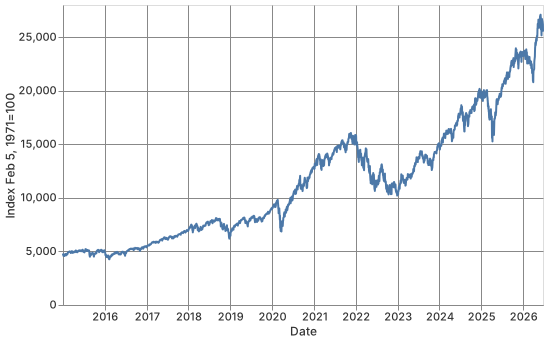
- The Nasdaq composite index fell about 2% on Tuesday, driven by a broad selloff in major technology shares that raised new doubts about the sustainability of the artificial intelligence rally.
- Semiconductor stocks including Nvidia and Intel led the decline, with an index of global chip firms sliding on concerns that corporate AI adoption will not be sufficient to justify inflated valuations.
- SpaceX, which went public on June 12, saw its share price drop below its $150 initial offering price before recovering to about $157 amid the broader market anxiety.
- Bank of America analyst Vivek Arya said the sector is transitioning from defending return on investment to solving physical infrastructure constraints, while other analysts argue cooling IT budgets mean the period of easy gains is over.
Financial markets on Tuesday received what one observer described as a sharp wake-up call, as a sudden wave of selling in major technology shares triggered widespread doubt over whether months of AI-driven gains had run their course.
The tech-focused Nasdaq composite index fell about 2%, with the index standing at 26,166.6, according to FRED data. International chipmakers also fell, with an index of global semiconductor firms sliding as investors questioned whether actual corporate adoption of AI can sustain the stock prices built over a three-month rally.
For months, stock exchanges internationally have climbed on optimism about AI’s economic potential, pushing indices to repeated new highs. The rally left stock prices, in the words of one report, “looking incredibly inflated.” On Tuesday, that upward drive reversed as market participants began to reconsider whether the steep valuations were justified.
Semiconductor players Nvidia and Intel were hit hardest among the major decliners, according to market reports. The selloff follows a period in which the wider tech sector more than doubled stock prices from cyclical lows in 2022. The reversal suggests that investors may have moved too quickly to fund the hardware infrastructure behind the AI push.
The anxiety spread to other high-profile assets. SpaceX, Elon Musk’s aerospace company that went public on June 12, experienced a volatile session. The Texas-based firm’s share price dropped below its widely watched $150 initial public offering price during early trading, then staged a modest recovery to close around $157.
Some traders interpreted the quick bounce as a sign of steady underlying interest in the commercial space sector. Skeptics argue that the magnitude of the price swings exposes the speculative nature of the current market environment, according to reports.
Market analysts are split on whether the selloff represents a healthy temporary pause or the start of a more significant retreat for technology investments. The more optimistic view holds that profit-taking is a standard reaction following a historic run.
Bank of America’s Vivek Arya told clients that a combination of sticky inflation and strengthening demand will drive sector forecasts higher. Arya said the industry is transitioning from a phase of defending initial return on investment to one focused on solving physical infrastructure and power constraints.
However, a growing number of skeptics argue that cooling corporate IT budgets and broader economic pressures mean the period of easy market gains has ended.
Danni Hewson, head of financial analysis at AJ Bell, noted that the relative lack of tech stocks on London markets helped the FTSE 100 stay in positive territory even as Wall Street fell.
As the trading week continues, Wall Street is watching upcoming corporate earnings. The results will test whether major technology companies can demonstrate that their AI investments are generating real profits, according to reports.