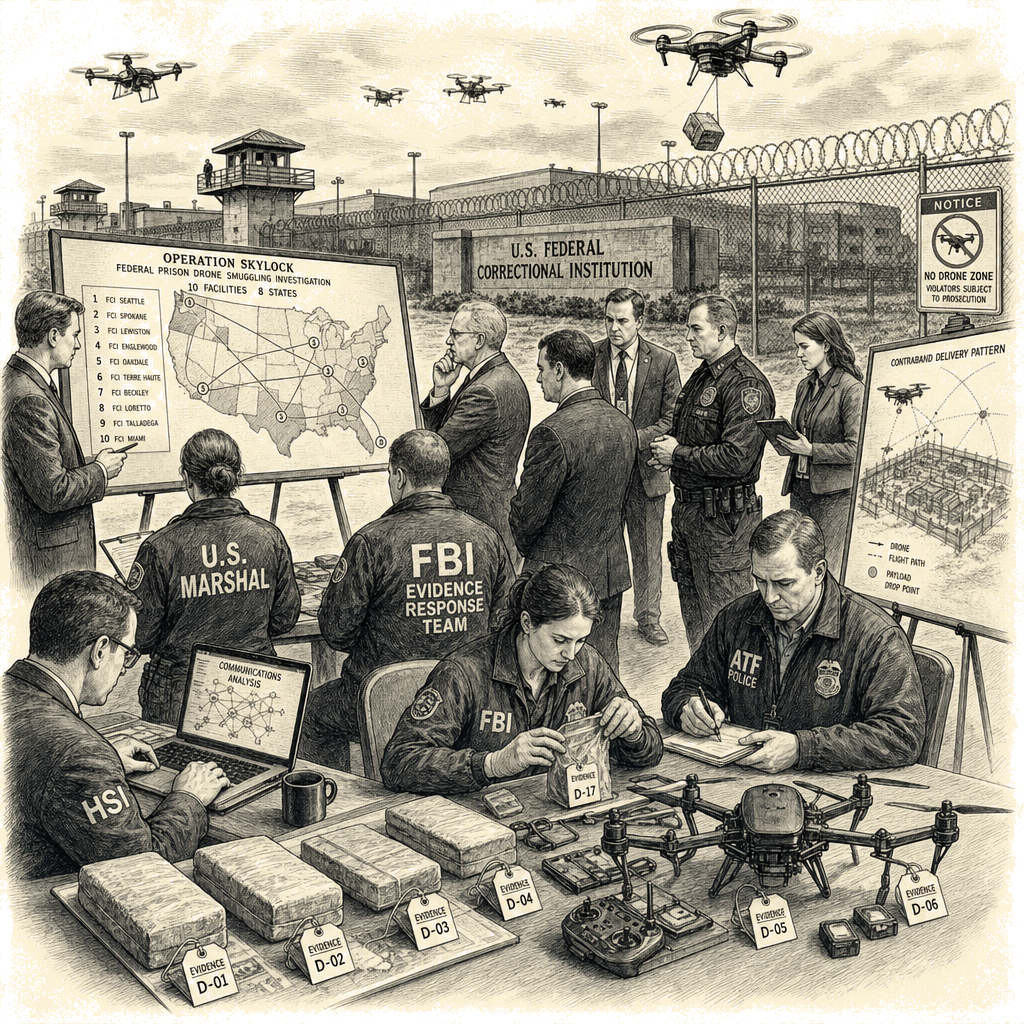
The U.S. Justice Department on Wednesday announced charges against 12 individuals for allegedly running a sophisticated operation that used drones to smuggle drugs, weapons and other contraband into federal prisons across multiple states. The indictment, unsealed by U.S. Attorney William Keyes of the Middle District of Georgia, charges the group with conspiracy to distribute controlled substances and firearms.
Keyes said the conspiracy affected 10 federal prisons in eight states, including facilities in Georgia, Virginia, West Virginia, Kentucky, Tennessee, Louisiana and Mississippi. The operation was based at a former daycare in Macon, Georgia, and prosecutors said it used multiple drones to deliver contraband under cover of darkness.
According to court documents, the alleged drone deliveries took place between September 2023 and May 2026. The group used six drones to make at least 38 separate drops. The contraband included methamphetamine, marijuana, cocaine, other illegal drugs, tobacco, blades and cell phones. Authorities said inmates inside the prisons used phones to help guide the drone pilots to drop zones, and that prison staff found some — but not all — of the deliveries.
Keyes said the indictment “charges the most sophisticated and sprawling criminal enterprise using drones to introduce contraband into the federal prison system ever charged by the Department of Justice.”
Bureau of Prisons Director William Marshall III said the agency used drone detection systems to uncover the conspiracy. “The allegations outlined in this indictment describe a coordinated criminal effort involving heavy payload drones to introduce dangerous contraband into federal prisons across multiple states,” Marshall said. “Activity of this nature threatens the safety of everyone who lives and works inside our facilities and will not be tolerated.”
A federal grand jury in Georgia handed down the indictment on June 10 on charges including drug and firearms distribution. The names of the 12 defendants were not immediately released by prosecutors.
The case is the latest in a growing pattern of drone-based smuggling attempts at correctional facilities. Earlier in 2026, a group of state attorneys general launched a combined effort to combat the use of drones to deliver contraband to prisons, reflecting growing concern among law enforcement about the technology’s use in circumventing traditional prison security measures.