Oil prices fell Wednesday, extending recent declines, after President Trump said in a social-media post that Iran told the United States it was not seeking or collecting tolls from ships navigating the Strait of Hormuz. In afternoon European trade, Brent crude slid 2.8% to $74.62 a barrel, while West Texas Intermediate futures fell 3% to $71.06 a barrel.
“No tolls, no insurance costs, & no other charges of any kind being sought or received by Iran on ships traveling the Strait of Hormuz,” Trump said Wednesday on social media.
The comment came as traders grew increasingly optimistic that flows through the Strait of Hormuz would gradually normalize and that supply from major Gulf producers would recover soon, according to the Wall Street Journal. Analysts at MUFG said in a note that although negotiations remain complex and questions persist over the future governance of the strait, the market is increasingly pricing in a gradual normalization of Middle East energy flows.
Sentiment has also been supported by the U.S. sanction waiver on Iranian oil sales, which has strengthened expectations of a meaningful increase in regional crude supply, the MUFG analysts said. The broader economic backdrop showed the Dow Jones Industrial Average closed Wednesday at 51,666.84, according to FRED data.
In the transport sector, FedEx shares fell 7.2% in Wednesday trading after the company reported a drop in profit for the latest quarter after market close Tuesday. Shares slipped 5.9% in late trading Tuesday to $298.39. Citi analysts said the stock move likely reflected elevated expectations among investors heading into the report, noting shares had gained about 75% in the past year. Confusion related to the spinoff of the company’s freight division, which took effect June 1, could also be playing a role, the analysts said.
Morgan Stanley analysts said Wednesday that FedEx’s guidance is difficult to measure due to several structural changes to how the company reports its finances. The switch to a calendar-year reporting schedule and the spinoff of FedEx Freight complicate comparability, the analysts said, and investors are waiting until the newly independent company reports financials Thursday to see how the freight industry performed. Morgan Stanley estimated FedEx’s guidance for the second half of this calendar year is modestly below sell-side consensus estimates, which they said is contributing to the stock’s decline.
Jefferies analyst Stephanie Moore wrote in a note Wednesday that FedEx margins are at a trough and will expand thanks to technology investments and efficiency savings. The delivery group’s margins are less than half those of its top competitor Old Dominion, Moore wrote. As a result of a fresh sales team and technology improvements that will increase the density of packaging in trucks, margins could expand by 350 basis points by 2029, Moore said. The company will also benefit from a broader growth uptick in the freight sector, she added. Jefferies initiated coverage of FedEx with a buy rating.
In Canada, gasoline consumption reached a record high in the first quarter, according to Desrosiers Automotive Consultants. The firm reported 10.33 million cubic meters of domestic consumption, a 4.2% increase compared with the same period last year. Desrosiers managing partner Andrew King noted gas consumption was high at the start of the year, then prices spiked dramatically in March due to the conflict between the U.S. and Iran. “We will be tracking if this may work to dampen demand in the second quarter,” King said.
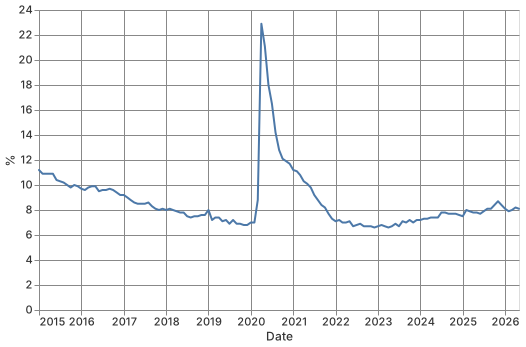
The broader U.S. labor market showed the U-6 unemployment rate — which includes discouraged workers and those working part-time involuntarily — stood at 8.1%, according to FRED data.