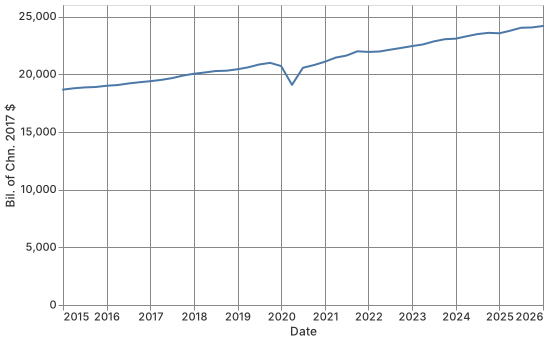
The Commerce Department on Thursday delivered its third and final look at first-quarter gross domestic product, reporting that the U.S. economy grew at a 2.1% annual rate from January through March. The figure was an upgrade from the department’s second estimate of 1.6% growth and came in above the 1.6% that economists surveyed by financial data firms had forecast. Real gross domestic product, adjusted for inflation, stood at $24.18 trillion during the quarter, according to Commerce Department data.
The 2.1% pace represented a sharp rebound from the final quarter of 2025, when the economy expanded at just a 0.5% annual rate. That slowdown had been driven largely by a 43-day federal government shutdown that disrupted economic activity across multiple sectors.
Business investment rose sharply in the first quarter, the Commerce Department said, reflecting what analysts described as a surge in spending on artificial intelligence infrastructure and related computer equipment. The investment category posted its strongest gain in several quarters, helping to lift overall output despite signs of consumer weakness.
Consumer spending, the main engine of U.S. economic growth, posted a notable decline from the fourth-quarter pace and from the department’s previous first-quarter estimate. The Commerce Department attributed the pullback partly to rising gasoline prices, which have climbed as the conflict with Iran has disrupted energy markets. Motor fuel costs have been a persistent source of household financial strain since the war began in early 2026.
The revision trajectory for first-quarter GDP has been volatile. The department’s advance estimate, released in late April, pegged growth at 1.6%. That figure was revised up to 2.1% in Thursday’s final reading. The swings reflect the difficulty of measuring economic output during a period that included both a government shutdown and the early months of a major military conflict.
Thursday’s report caps the government’s data on the January-through-March period. The Commerce Department’s first estimate of second-quarter GDP is scheduled for release in late July, and economists will watch closely for any further softening in consumer spending or effects from the Iran war on energy-sensitive sectors.