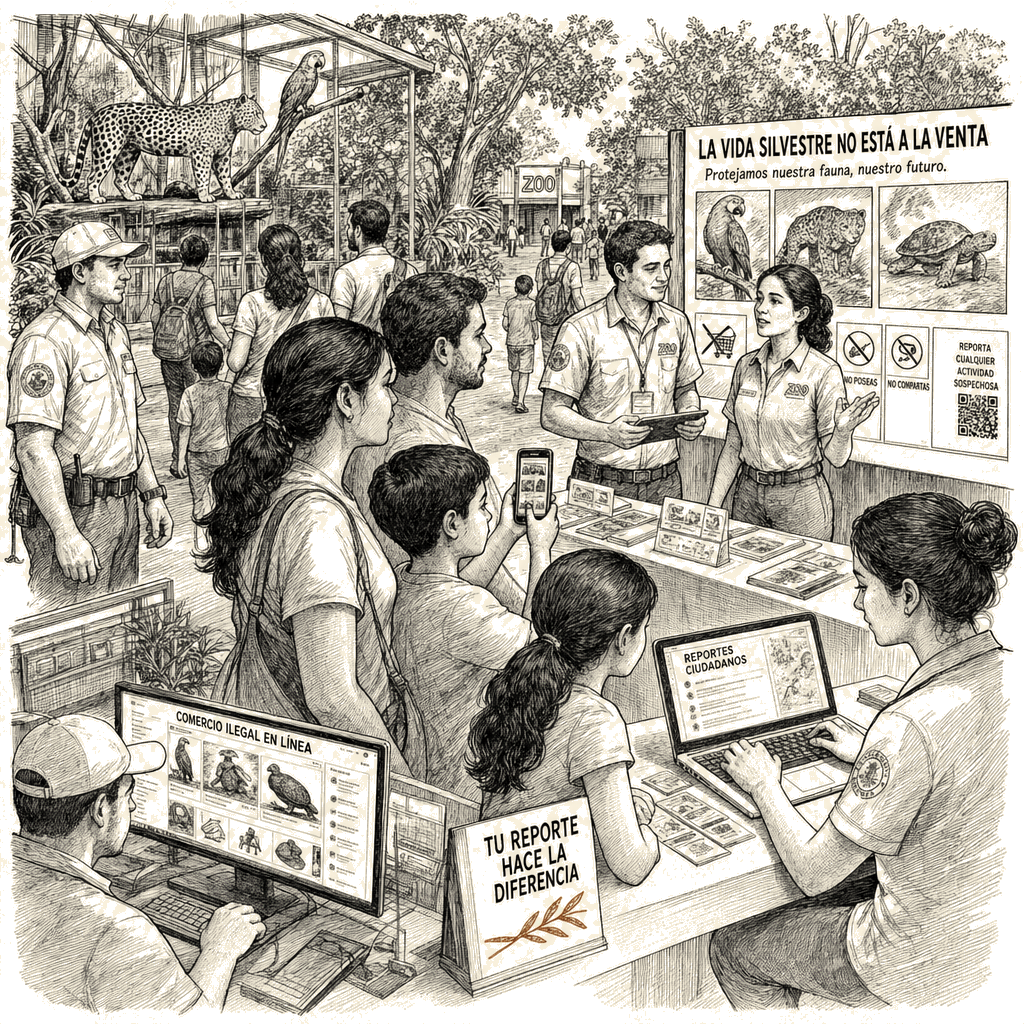
The Latin American Association of Zoos and Aquariums (ALPZA) on Thursday launched a regional campaign to combat illegal wildlife trafficking, warning that the illicit trade has increasingly shifted to digital platforms and social media, where it is more difficult to detect and combat.
The initiative coincides with the International Day Against Illegal Wildlife Trafficking and seeks to raise awareness among both the public and authorities about the evolution of a crime the association described as the world’s fourth most profitable illicit activity.
According to ALPZA, the illegal wildlife trade generates between $7 billion and $10 billion annually. The figure rises to about $20 billion when illegal fishing and logging are included. The organization also warned that these activities are linked to organized crime networks involved in drug trafficking, arms trafficking, human trafficking and money laundering — a pattern MSI has previously reported on in the context of maritime trafficking routes in the region.
ALPZA said the growth of e-commerce and social media, accelerated after the pandemic, has allowed much of the illegal trade to move online, making it easier to sell live animals and wildlife parts with less risk for traffickers.
The organization estimated that nine out of every 10 animals captured in the wild die while being transported to illegal markets and that pressure from the illicit trade has caused population declines of up to 71% in some vulnerable species.
In Latin America, reptiles and birds are among the most heavily trafficked animals because of demand for exotic pets. The theft of parrot eggs, including those of parrots and macaws, reaches between 400,000 and 800,000 eggs each year, while the illegal trade in body parts from big cats, especially jaguar fangs, is also increasing, according to Diario La Tribuna.
“Every rescued animal represents a story of violent extraction, but also an opportunity to transform millions of visitors into active allies against this crime,” Alexandra Guerra Ramírez, executive director of ALPZA, said in a statement.
The association said its accredited zoos and aquariums received about 150 million visitors over the past seven years and operate rescue, rehabilitation and reintroduction programs for confiscated animals, while also providing technical training to environmental authorities and police forces.
The campaign was launched simultaneously across media outlets, digital platforms and institutional spaces throughout Latin America, with materials available in Spanish, English and Portuguese.
The launch coincides with a growing number of government initiatives to combat illegal wildlife trafficking across the region. This month, Guatemala launched the national campaign “Let Me Live, Don’t Kill Me,” led by the National Council of Protected Areas, to reduce poaching and the illegal wildlife trade through environmental education, public participation and enforcement of penalties established under national law.
Guatemalan authorities maintain that poaching and illegal wildlife trafficking threaten biodiversity, disrupt essential ecological processes and affect resources such as forests, water and food security, making it a priority to reduce demand for wild animals and strengthen regional cooperation against the crime, Infobae reported.