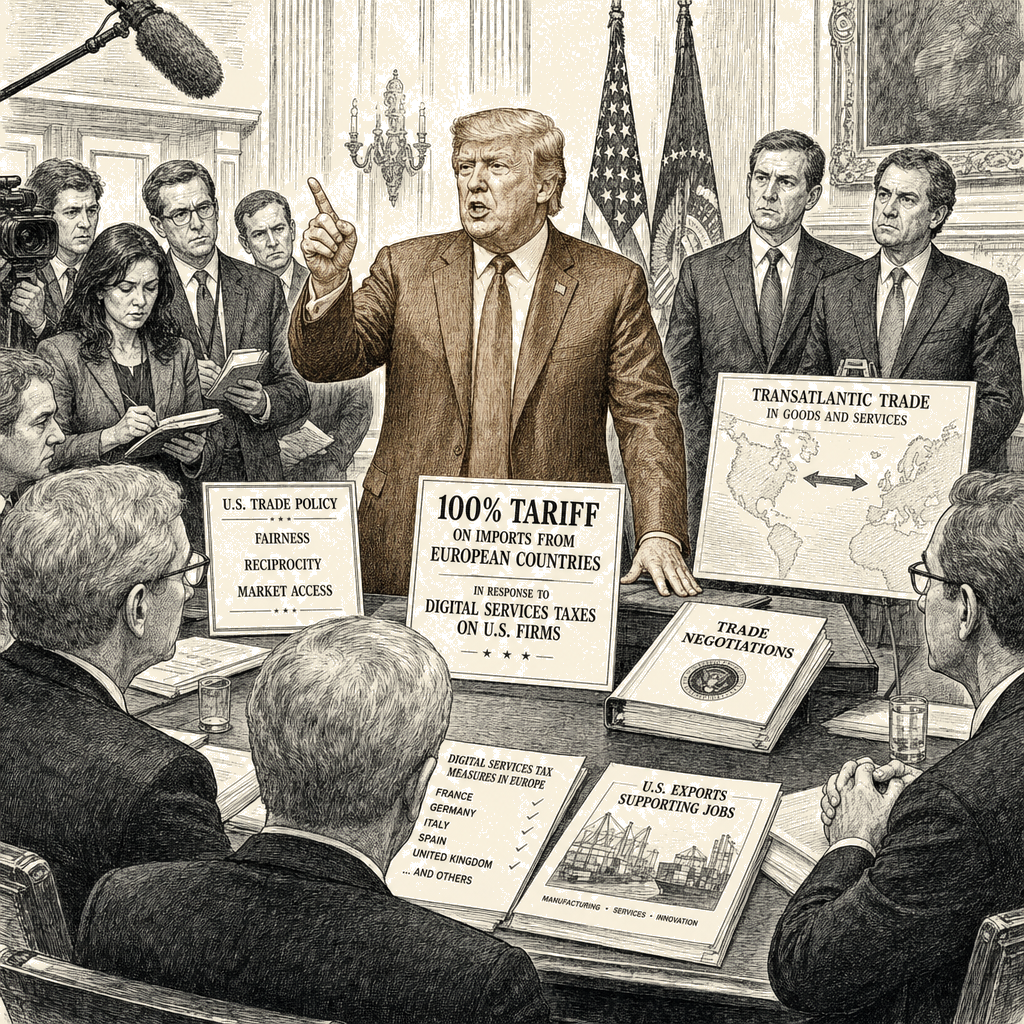
President Donald Trump on Friday threatened to impose a 100% tariff on imports from any European country that imposes a digital services tax on U.S. technology companies, escalating a transatlantic trade dispute that risks unraveling a year-old trade deal.
“Numerous European Countries have been discussing the imminent implementation of a Digital Services Tax on American Companies,” Trump wrote on his Truth Social platform. “Please let this statement serve to represent that any Country that imposes such a Tax will immediately be met with a 100% TARIFF on any and all Goods sent to the United States of America.”
European countries for years have considered imposing taxes on large tech firms such as Amazon.com and Meta Platforms. Some nations including France, Denmark and Portugal already have such levies. The U.S. has pushed back on those proposals in Europe and elsewhere, with Trump previously threatening tariffs on Canada and South Korea over alleged discrimination against American tech firms.
Trump earlier this month also threatened to impose a 100% tax on French wines if that nation did not drop its tax on tech firms, but he has so far not followed through on that threat.
The new tariff threat comes one day after the European Union approved the tariff cuts it promised to the U.S. in last year’s trade deal, following months of internal wrangling. Trump had earlier threatened to raise U.S. levies on the bloc’s cars if it did not follow through on its side of the trade deal by July 4, as MSI previously reported. Trump said the EU had until July 4 to approve the trade framework or face higher tariffs.
Trump posted that the 100% tariff would “supersede” the EU trade pact, which capped most tariffs on European goods at 15% in exchange for lower tariffs and other concessions but left the issue of digital taxes largely unresolved.
The higher tariffs would be imposed “immediately” if tax plans proceed, Trump added, but it remains unclear which legal authority would allow that. Many of Trump’s previous tariffs were ruled illegal by the Supreme Court in February, and the levies that are planned to replace them require lengthy investigations before tariffs are imposed.