Brent crude, the global benchmark for wholesale oil prices, dipped below $72.48 a barrel this week — the level it sat at on February 27, the last full trading day before the US and Israel launched attacks on Iran. The price had peaked above $120 a barrel during the conflict, which effectively closed the Strait of Hormuz, a waterway carrying about a fifth of the world’s oil and liquefied natural gas.
With tankers resuming passages through the strait after a US-Iran framework deal this month, wholesale costs have descended steadily. Analysts say every $10 increase in the oil price pushes up pump prices by roughly 7p a litre; the reverse effect is now working through the supply chain.
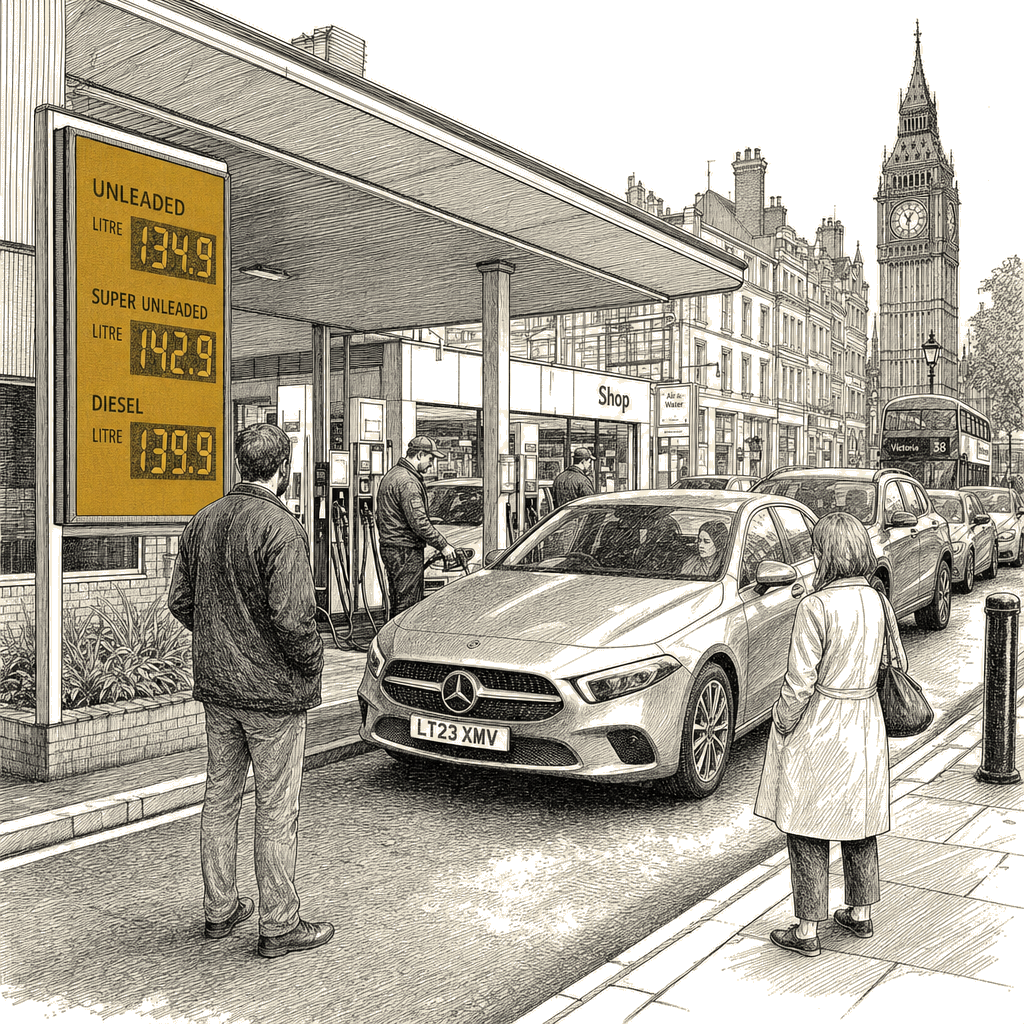
The RAC said on Friday that the average price of a litre of unleaded petrol stood at 151.98p, down from the conflict’s peak of 159.53p on May 28. Diesel, which reached a war high of 191.54p a litre on April 15, had fallen to 168.64p. The motoring group said it now costs £83.59 to fill a 55-litre family car with petrol and £92.75 for diesel — still £10.50 and £14.40 more, respectively, than on the eve of the war.
Simon Williams, the RAC’s head of policy, said the drop was welcome but incomplete. “Fuel prices are falling steadily in reaction to the drop in the price of oil and wholesale petrol and diesel costs which is good news for drivers who’ve had a torrid time at the pumps this year,” Williams said. “But our analysis of wholesale data shows the reduction should be faster and greater, particularly for diesel. Drivers really ought to see average prices of below 150p for unleaded and below 160p for diesel in the next week or so.”
Luke Bosdet, head of policy at the AA, said the group had been surprised at how quickly prices had fallen and attributed the pace partly to the government’s Fuel Finder scheme, which lets drivers compare fuel costs at different petrol stations across the UK. The AA said the timing of the decline was favourable: “the timing is perfect for the start of the summer holidays,” the group said in a statement.
Despite the conflict-era price spikes, petrol and diesel in the UK remained below the record levels set in the summer of 2022 after Russia’s invasion of Ukraine, when petrol hit 191.5p a litre and diesel reached 199p.
Wholesale oil price movements take roughly a fortnight to show up at the pump, meaning further reductions are likely as crude at current prices flows into retail supply. The UK’s markets regulator said it had “not seen evidence of retailers actively changing their pricing strategies to take advantage of the crisis,” following earlier accusations of price gouging during the war.
Prime Minister Sir Keir Starmer said on May 20 that a planned 5p increase in fuel duty due in September would be postponed until December 31 because of the conflict. Experts have cautioned that a return to normal shipping volumes through the Strait of Hormuz will take time, and the economic effects of the war may persist for months.