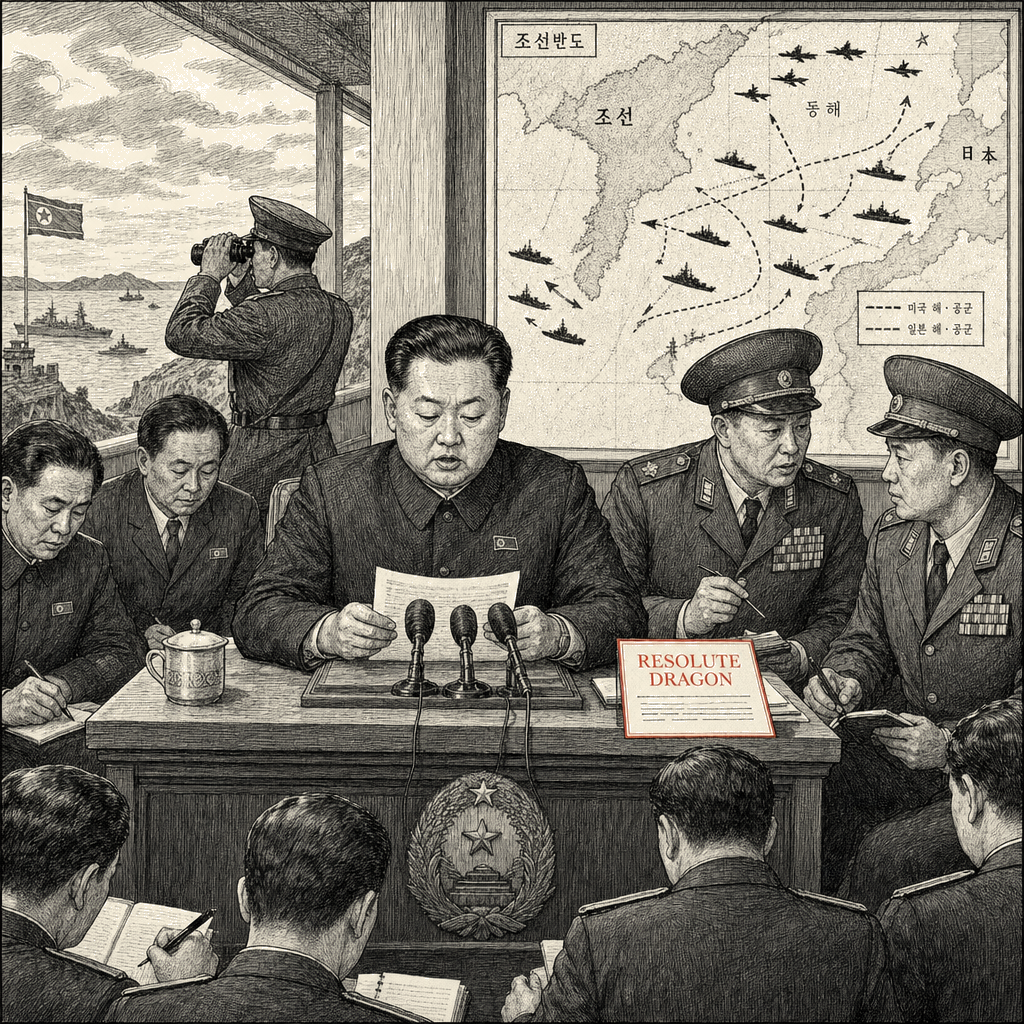
The Resolute Dragon joint military exercise between Japan’s Ground Self-Defense Force and the U.S. Marines began June 20 at military bases and training areas across Kyushu and Japan’s southwestern islands, including Okinawa, and is scheduled to conclude Tuesday. Japan’s Ground Self-Defense Force said in a Facebook post that the exercise would “improve bilateral interoperability for island defense operations and further strengthen our bilateral deterrence and response capabilities.”
North Korea on Monday condemned the exercise as a “rehearsal for war,” according to an unsigned editorial published by the official Korean Central News Agency. The editorial described Resolute Dragon as “a war exercise that thoroughly simulates actual combat.”
“Through the exercise, Japan is steadily strengthening its invasion capabilities,” KCNA said. The editorial added that “this year’s exercise is likewise aimed at verifying the operational readiness of Japan’s war machine and bringing forward the moment of actual combat.”
The KCNA editorial cited elements such as unmanned aerial vehicle training, which it said reflected lessons from the war in Ukraine, as evidence of what it called “the offensive and aggressive nature inherent in Resolute Dragon.”
“The problem is that Japan has recently deepened its military integration with the United States, worsening the security situation in the surrounding region,” the editorial said, citing other joint exercises including February’s Iron Fist drills.
The editorial also accused Japan of firing long-range missiles developed for “preemptive attacks on neighboring countries” while participating in a U.S.-led multinational exercise in the Asia-Pacific region in April and May.
“If Japan completes all preparations to operate its war machine for overseas invasion under the active support of the United States, it will inevitably create a serious crisis for the peace and stability of the Korean Peninsula and the region,” KCNA said.
Japanese Prime Minister Sanae Takaichi took office in February and has advocated revising Japan’s post-World War II pacifist constitution to formally recognize the Self-Defense Forces as a military. Takaichi has also suggested Japan could play a role in responding to a Taiwan contingency, remarks that drew strong criticism from China.
North Korea has repeatedly criticized Takaichi’s administration over its efforts to strengthen Japan’s military. In February, North Korean newspaper Rodong Sinmun described Japan as a “war criminal nation” and warned that Tokyo’s expanding military partnerships amounted to the formation of a “de facto military alliance” with NATO members and regional countries.
Last week, Kim Jong Un also singled out Japan in remarks at a key Workers’ Party congress, accusing Tokyo of transforming itself into a “war state” and warning that military buildups in Northeast Asia were heightening regional tensions.