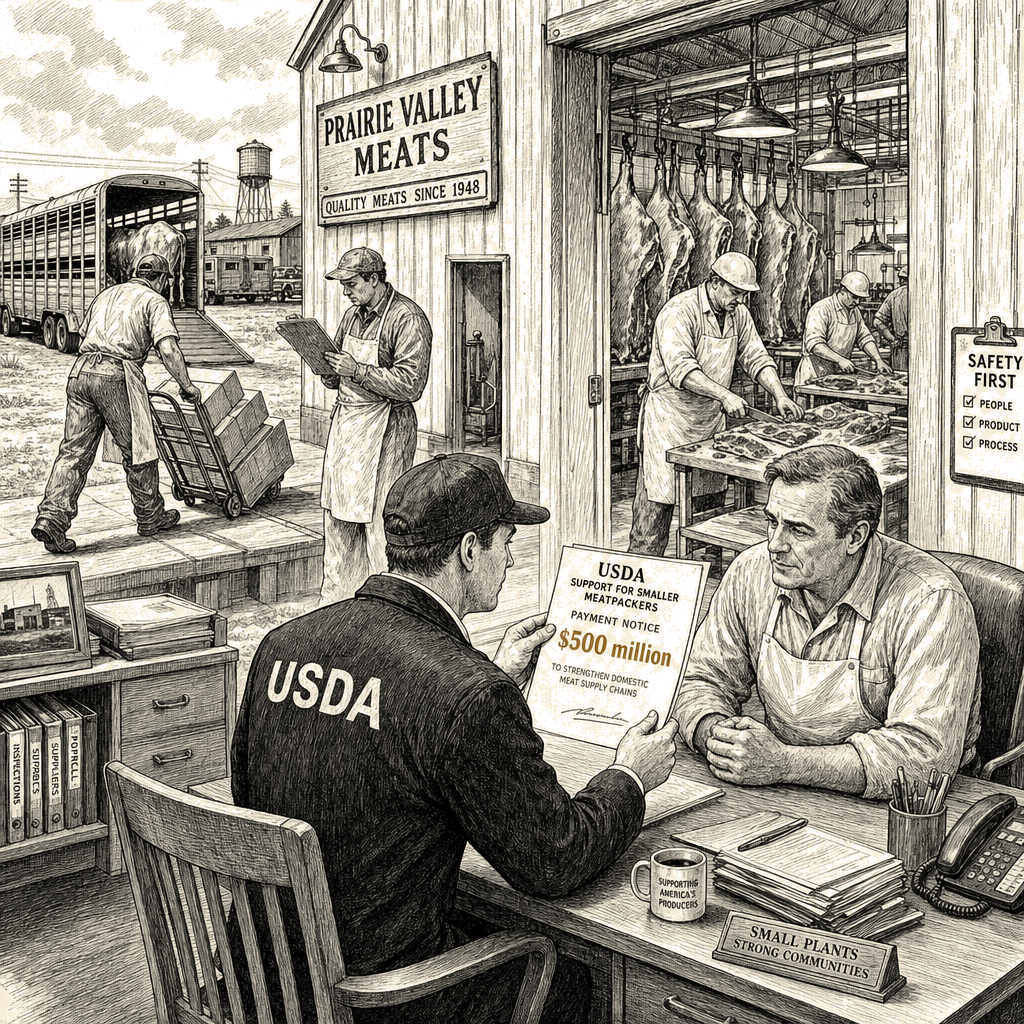
The funds would be distributed to beef plants that maintain their processing volumes at a certain level, according to people familiar with the discussions. The payments are intended to keep smaller packinghouses slaughtering cattle at a time when many are scaling back operations.
Smaller slaughterhouses are losing an estimated $300 per head of cattle as tight supplies force packers to pay more for animals. Years of drought and herd reductions have left the U.S. cattle herd at its smallest in decades, squeezing margins for processors that lack the purchasing power of the industry’s largest players.
The funding would exclude the four largest U.S. beef processors: Tyson Foods, JBS, Cargill, and National Beef, which is owned by Brazil-based MBRF Global Foods. Those companies together process roughly 85% of U.S. beef.
The planned aid is the Trump administration’s latest attempt to address record-high beef prices, which have persisted despite falling cattle numbers. President Donald Trump has tasked top advisers with finding solutions, and the Justice Department has launched a criminal probe into the largest U.S. meatpackers, according to earlier reporting.
Senate Minority Leader Chuck Schumer earlier this year introduced a bill that would force large packers to sell or spin off lines of business and limit how many cattle they can slaughter from large feedlots. The Trump administration has separately pursued its own antitrust enforcement against the industry and aligned with smaller rancher groups advocating for stricter competition rules and mandatory country-of-origin labeling.