
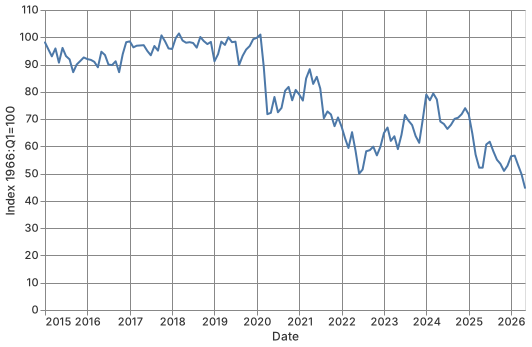
- The Conference Board’s consumer confidence index rose 0.6 point to 91.2 in June, the research group said Tuesday, as declining gas prices offered some relief from inflation fears.
- The index remains below its year-ago reading of 95.2 and well off the 120-plus levels it regularly topped before the pandemic.
- Consumer attitudes worsened after the Iran war caused oil and gas prices to spike, accelerating inflation and eroding Americans’ inflation-adjusted incomes.
- The University of Michigan’s separate consumer sentiment index stood at 44.8 in its June reading, underscoring the persistent gap between headline economic indicators and household mood.
Consumer confidence inched up in June as falling oil prices in recent weeks provided some relief to consumer inflation fears, Dana Peterson, the Conference Board’s chief economist, said in a statement. The 0.6-point gain to 91.2 left the index still below its year-ago reading of 95.2 and far below the 120-plus levels it regularly topped before the pandemic.
The modest uptick follows the hit to consumer attitudes caused by the Iran war, which accelerated inflation and caused Americans’ inflation-adjusted incomes to decline. Americans have continued to spend despite their dour outlook, which has kept the economy growing even as inflation accelerated. Economists have noted that measures of consumer sentiment have been less predictive of how Americans actually shop since the pandemic.
The Conference Board’s index has moved within a narrow range this year. It stood at 91.8 in March and 91 in February after collapsing to 84.5 in January, the lowest since May 2014. The June reading, while a small improvement from the prior month, leaves the index below year-ago levels and well off pre-pandemic benchmarks. Americans’ outlook is still mostly negative by historical standards.
Peterson attributed the June uptick to falling oil prices, which have eased after a surge triggered by the Iran war. Gas prices in the U.S. had climbed above $4 a gallon earlier this year, contributing to elevated inflation readings before receding modestly in recent weeks.
The University of Michigan’s separate consumer sentiment index stood at 44.8 in its June reading — a level still below readings seen during the worst stretches of the Covid-19 pandemic. The sentiment gauge and the confidence index measure consumer attitudes differently, but both point to a dour outlook among American households even as stock markets have reached record highs.
MSI previously reported that the Conference Board’s June index edged up 0.6 point to 91.2 as gas prices eased. That article is available here.