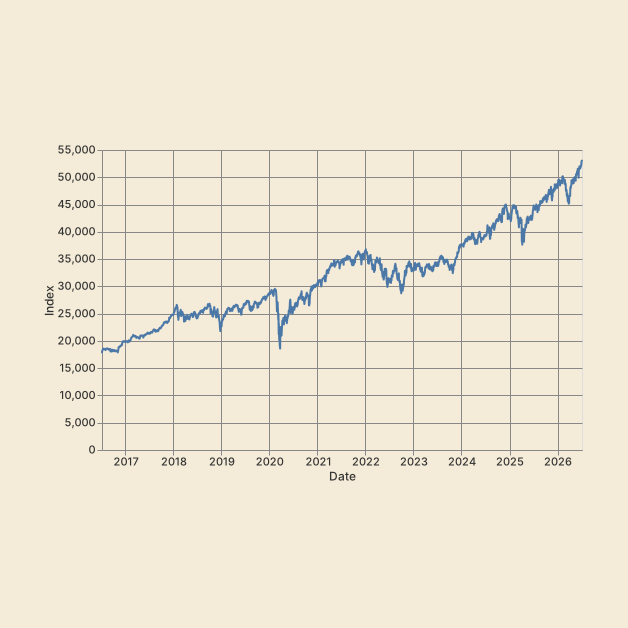
AI investment boom creates new vulnerabilities in equity markets
The Bank of England’s Financial Policy Committee said in its twice-yearly financial stability report that the signing of a Memorandum of Understanding between the U.S. and Iran has allowed energy prices to fall back to just above pre-conflict levels, reducing near-term risks. “However, substantial uncertainty remains and energy prices and interest rate markets have remained volatile,” the BOE said.
The FPC warned that many of the threats to the financial system it had previously highlighted have intensified. The committee specifically noted a significant rise in hedge fund leverage in equity markets, “creating risks, including via the prime brokers that facilitate this activity.”
The Bank of England said the use of leverage could accelerate declines in equity prices should investors encounter a setback, such as disappointing revenues for providers of AI-generated services. The BOE highlighted the risks involved in meeting “historically unprecedented levels” of investment needed to develop AI, alongside high uncertainty about future revenues.
“A reassessment of these prospects could trigger a fall in equity prices that might be amplified by high concentration, correlated momentum-driven positions that can exacerbate volatility as markets fall, and increased leverage,” the BOE said.
The warning from the U.K. central bank follows a similar statement late last month from the Bank for International Settlements, which cautioned that fierce competition to dominate artificial intelligence risks driving investment spending to excessive levels, threatening the profitability of leading firms.
The FPC also highlighted risks from new AI models, including Anthropic’s Mythos and those being developed in China, which it said can find cybersecurity bugs in companies’ systems. “The FPC judged that recent advances in frontier AI could pose material risks to U.K. financial stability,” the BOE said, adding that software vulnerabilities could be identified and exploited faster than firms could respond, “leaving less time to detect, contain and remediate emerging threats.”
While a range of setbacks is possible, including a fresh intensification of the U.S.-Iran conflict, the FPC said it is preparing changes to the rules that govern how much capital U.K. banks must hold against potential losses. “The reforms will address unintended consequences in the leverage framework and strengthen the releasability and usability of buffers,” the BOE said.