Diesel inventories hit lowest level since early 2000s
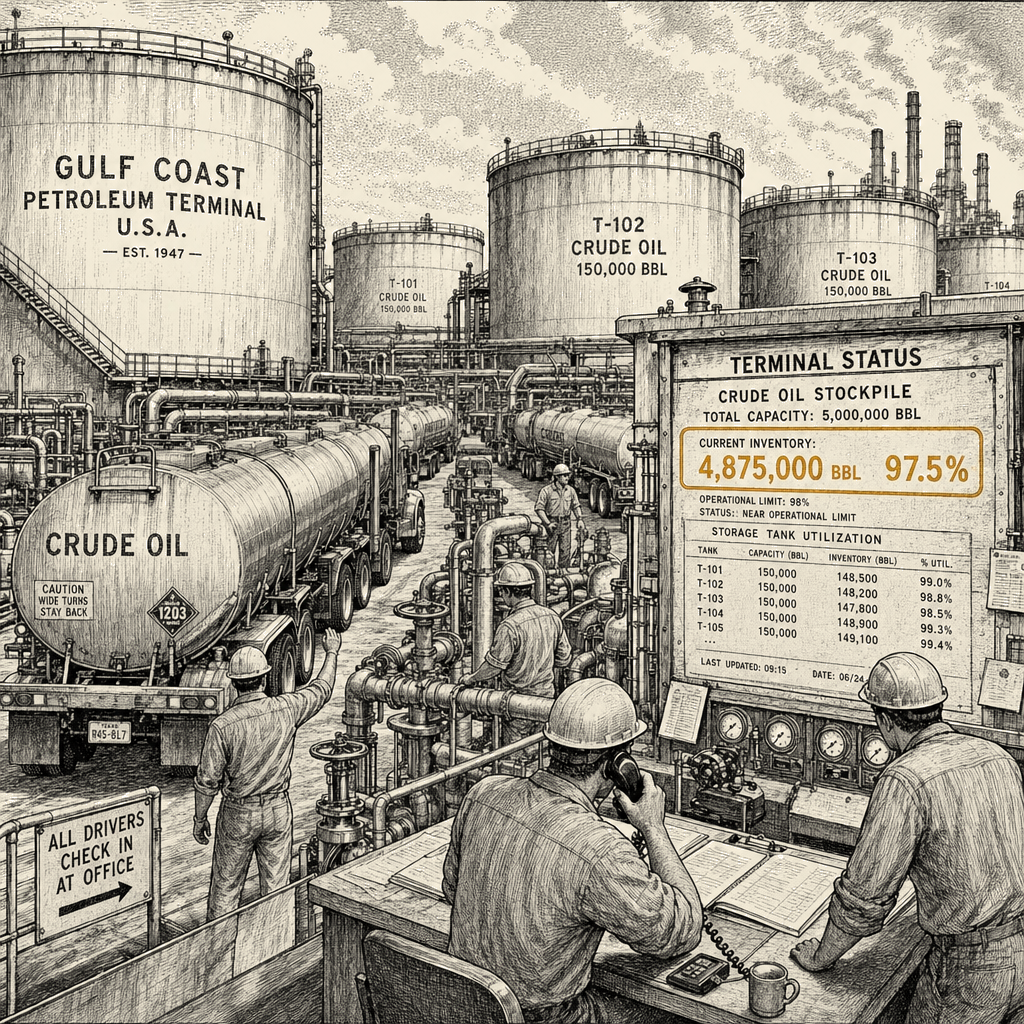
U.S. commercial crude inventories rose by 3 million barrels in the week ended Friday, according to the Energy Department, the first uptick after 10 consecutive weeks of drawdowns. Stockpiles are still so low that the central U.S. storage hub in Cushing, Oklahoma, has reached operational limits that would make withdrawing more crude challenging, according to Andy Lipow, president of Lipow Oil Associates in Houston.
“The worst fears of the oil market could still be realized later this year as we get to the minimum operating levels,” Lipow said. “The only way to get prices back in balance is to have prices go up, such that you would have demand destruction. Once the shelf is bare, there’s nowhere to turn.”
The government-run Strategic Petroleum Reserve, a system of salt caverns on the Gulf Coast, has continued to fall and now sits at its lowest level since 1983, according to Energy Department data. The U.S. has slowed releases from the reserve as inventories declined and prices tumbled; the Energy Department awarded only about 500,000 barrels of the 40 million it had authorized for the most recent release.
U.S. oil prices rose about 5% to $73.90 a barrel as of early trading Thursday after Trump launched new strikes on Iran this week, reaching the highest level since late June, according to market data. The price jumps were more pronounced in refined products. Gasoline futures rose 6.1% and diesel soared over 10%, according to trading data.
Fuel markets are tighter than crude markets, according to analysts at market intelligence firm Kpler, because China and other countries have cut back on refining. China this week said it would lift a ban on product exports, meaning its refineries will soon ramp up production. Ukraine’s drone strikes on Russian refineries have taken out a substantial portion of the country’s capacity to make fuel and export it, Kpler analysts said.
Russia banned diesel exports Wednesday to keep domestic supplies from sinking further, and recently imported some fuel supplies from India in a rare move that underscores the tightness in the products market. Brazil, which had been a big buyer of Russian diesel, has turned to U.S. exports, contributing to near-record American diesel outflows.
“The issue isn’t in the crude market, the issue is in the products market, and it’s finally showing itself here,” said Matt Smith, an analyst at Kpler. “We’ve lost, over the past four months, 10 million barrels a day out of the Middle East, and yet we’re at $70 a barrel. The reason is largely offsetting that loss of oil production has been a pullback in refinery runs.”
On the Gulf Coast, the central hub of U.S. oil refining and fuel exports, stockpiles of gasoline are 7.2 million barrels lower than normal for this time of year and well below the five-year average, according to energy-data and analytics provider OPIS, a Dow Jones company.
“We started the year well above that [five-year] band,” said Denton Cinquegrana, chief oil analyst at OPIS. That partially explains “why gasoline remains strong despite the fact there’s plenty of crude oil that appears to be available in the open market.”
The national average for a gallon of regular gasoline was $3.85 Thursday, up from $2.98 at the start of the conflict. Although jet fuel supplies are stabilizing, American diesel inventories are at the lowest levels since the early 2000s. Exports of diesel are poised to climb to near-record levels in July, according to Kpler.
U.S. crude exports, which soared to records in April after Trump declared America’s energy market open for business, are likely to end July below 4 million barrels a day, a level last seen in February before the start of the conflict, according to Kpler. South Korea, the Netherlands, Taiwan and other countries turned to the U.S. for barrels they could not get from the Middle East after the Strait of Hormuz closed to tanker traffic in February.
Two factors are working in the U.S.’s favor: crude prices that have fallen more than 30% from their April highs and an unexpected shift in global energy flows. China and other big buyers are, for now, proceeding without using as much oil, freeing up supplies on the open market.
Energy executives and analysts are not yet predicting a repeat of the oil shock that sent prices above $100 a barrel this spring, but they said another closure of the Strait of Hormuz could threaten America’s energy security. If the U.S. is forced to further draw down its stockpiles, that would potentially limit its ability to respond to new oil disruptions on the world stage, or natural disasters such as hurricanes that can damage fuel supply chains.