U.S. strategic reserve hits lowest level since 1983
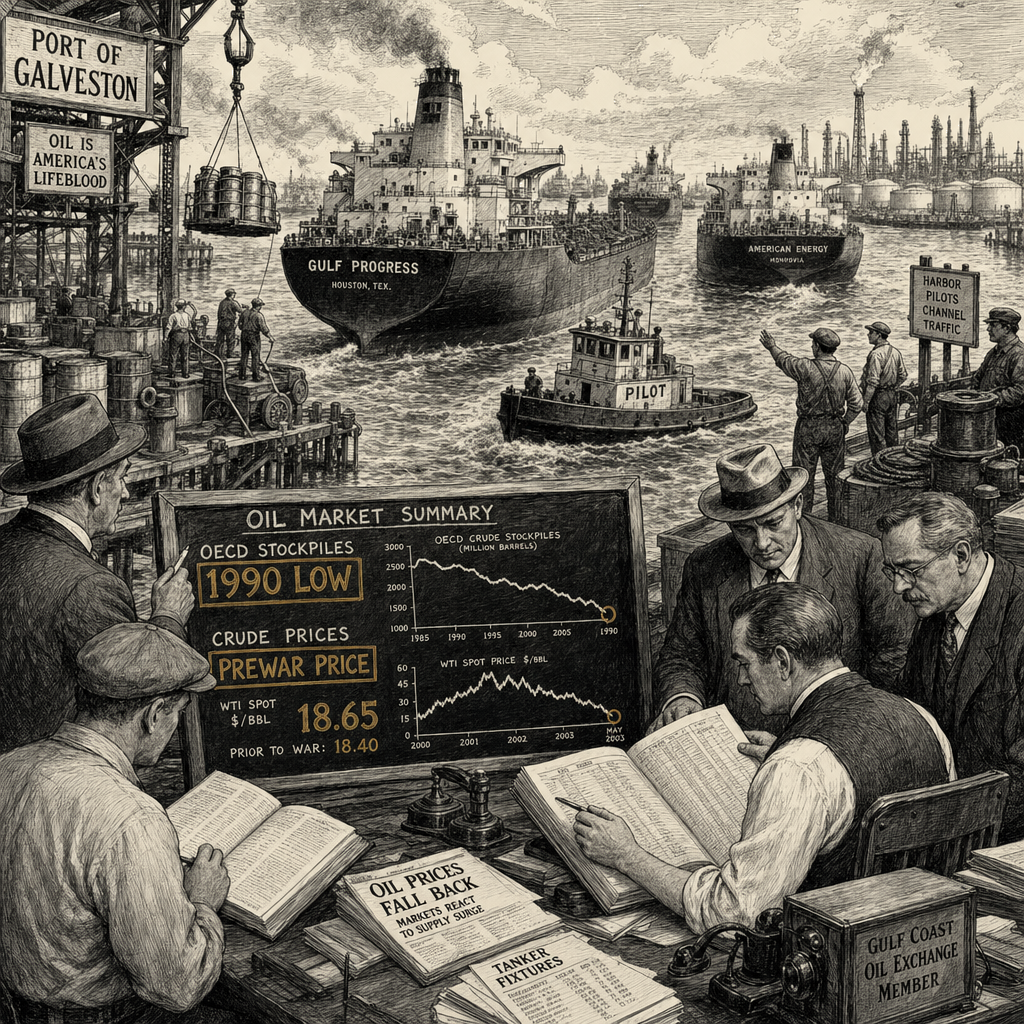
Oil prices have fallen back to levels last seen before the Iran war began early this year, driven by a rapid recovery in tanker traffic through the Strait of Hormuz and a surprising rush of supply from Gulf producers. But the shift in market conditions has not yet translated into rebuilt stockpiles, leaving world inventories at the lowest level since December 1990 and Iran with continued leverage in ongoing negotiations, according to The Wall Street Journal.
The amount of oil in storage around the world has become a central factor in U.S.-Iran power dynamics, the Journal reported Sunday. Vice President JD Vance explicitly connected oil storage and negotiating leverage in an interview with media personality Michael Knowles last week, saying the U.S. signed a memorandum of understanding with Iran to allow the world to “refill some stocks and then to see where the hand is,” referring to Tehran’s position at the table.
Stockpiles in OECD countries—a group of mostly wealthy nations—fell by 163 million barrels from March to May, reaching their lowest level since December 1990, according to the Journal. Refilling those stocks is likely to take months if not years, longer than the 60 days stipulated in the MOU to settle thorny issues such as Iran’s nuclear program.
“The surge in oil supply is about to collide with a market that, at least for now, simply does not need it,” said Natasha Kaneva, head of the global commodities strategy team at JPMorgan.
Oil prices currently sit around $70 a barrel, and Kaneva noted that OECD nations are projected to begin refilling strategic reserves only in the fourth quarter of this year, with the U.S. starting its own replenishment in 2027. Analysts at Macquarie and Citigroup both forecast this past week that prices could sink to $60 in coming months.
Part of the reason for the projected price decline is that inventory rebuilding will take time to begin. Rory Johnston, founder of oil research firm Commodity Context, called the turn of events—from a market that nearly experienced a dangerous supply shock into one that is amply supplied—“an almost comical development four months into Hormuz’s closure.”
Tanker traffic out of the Strait of Hormuz has entered a new normal of around 30 to 60 vessels per day, less than before the war but enough to relieve pressure in global markets. Ship tracker Vortexa estimated that around 140 million barrels of crude left in June—an average of about 4.7 million barrels a day, up from just 2 million a day in May. The crude exodus accelerated in early July to about 40% of prewar levels.
On Sunday, the Organization of the Petroleum Exporting Countries and its allies agreed to raise oil output by 188,000 barrels a day in August, the fifth straight monthly increase. The United Arab Emirates, which left OPEC in May, has been one of the quickest Gulf producers to dial exports back up, using a bypass pipeline from Abu Dhabi to Fujairah outside the strait. Kuwait’s export loadings rose to around 1.6 million barrels a day last week, compared with prewar levels of around 2.4 million barrels a day, Johnston said. Saudi Arabia has kept sending oil via a bypass route to the Red Sea.
Crude levels in the U.S. Strategic Petroleum Reserve—which was created in 1975 after the Arab oil embargo—are still falling. In the week ended June 26, the SPR hit its lowest level since 1983, according to the U.S. Energy Information Administration.
Replenishing the SPR back to prewar levels will take 15 to 18 months at a rate of 200,000 barrels a day, said Hamad Hussain, commodities economist at Capital Economics. After the Ukraine war sparked an oil price shock in 2022, the U.S. did not start replenishing its SPR until mid-2023 and added roughly 75,000 barrels a day for 30 months until the war with Iran started.
“Washington did not rebuild the SPR after the previous drawdown cycle, and with focus on keeping prices low, it has little incentive to bid aggressively for barrels to refill it now,” said Rahul Choudhary, an oil and gas research analyst at Rystad Energy.
In China, the government drew down barrels from its massive oil reserves—which analysts estimate to be between 1 billion and 1.4 billion barrels—to cushion the Gulf supply shock. But China imported just 6 million barrels of crude a day via sea in June, roughly 4 million barrels a day fewer than it averaged in 2025, according to Vortexa data.
Not everyone is convinced the current calm will last. The oil price is reacting to the idea that “hostilities have largely finished for good,” said Neil Crosby of market-intelligence company Sparta Commodities. “I and many doubt that this outcome is real and lasting,” he said. But for now, Crosby added, it is hard to bet the other way until conflict flares up again.