Oil futures reversed a recent slide Monday after the U.S. and Iran exchanged strikes over the weekend but also agreed to resume negotiations, with analysts saying the market is pricing in an extended period of continued flows through the Strait of Hormuz even as the security situation remains fragile.
West Texas Intermediate crude for front-month delivery settled up 2.2% at $70.75 a barrel, while front-month Brent rose 1.6% to $73.15 ahead of its expiry Tuesday. The gains followed a sharp decline last week that pushed oil to prewar levels as flows through the Gulf resumed, MSI previously reported.
Rob Thummel, senior portfolio manager at Tortoise Capital, said the risk premium has come down “quite a bit,” and that while conditions remain subject to change, the market currently perceives flows through the Strait of Hormuz will continue for an extended period. Even when flows normalize, Thummel said, prices are likely to see support from the need to rebuild depleted inventories. “We’ll need to have an oversupply in the oil market just to build back inventories, for a while,” he added.
Mizuho’s Robert Yawger said in a note that the main concern is that shipping will lose momentum as insurers pull back from green-lighting the accelerated transit of crude through the strait. “Traffic in the strait was already operating at reduced levels because of the precarious nature of the routes available to shipping,” Yawger said.
Neil Crosby of Sparta Commodities said the market is trying to clear crude that was trapped behind the Strait of Hormuz, “hitting the global market just as we had covered crude needs with other sources (e.g. SPR).” He added that “it is still fairly obvious to us that until more vessels sustainably head into the Strait than come out of it, we won’t get anywhere near a normal Arabian Gulf supply chain.”
The recent decline in oil prices from levels of about $95 to $110 a barrel in late April and early May is likely to provide a boost to consumer confidence that has not yet been accounted for in apparel and footwear companies’ forecasts, according to Baird analysts Jonathan Komp and Alexander Conway. They said such sizable declines typically lift consumer confidence and support upside for stocks in the sector, pointing to particularly good setups for Dick’s Sporting Goods, Crocs, and Adidas.
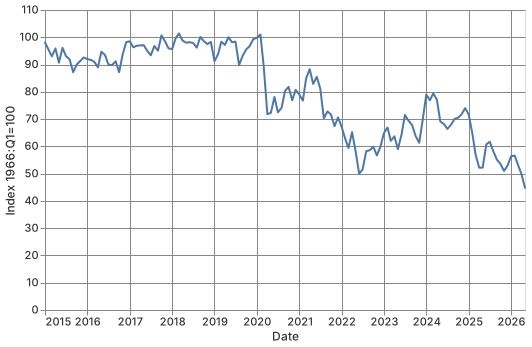
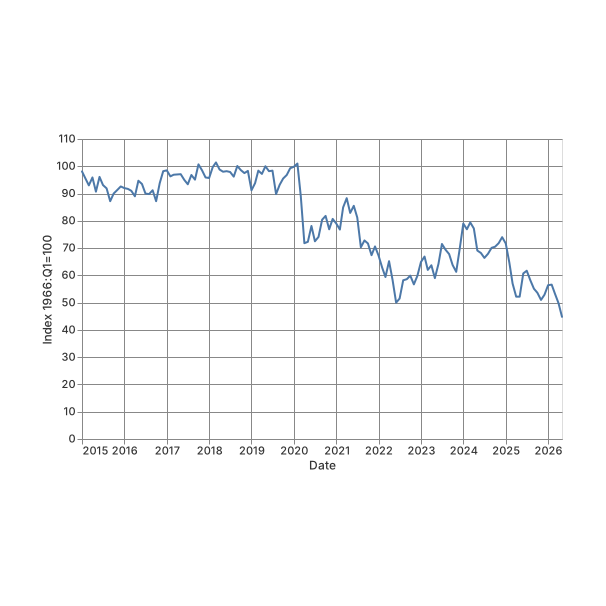
Consumer sentiment as measured by the University of Michigan stood at 44.8 as of the article’s publish date, reflecting a persistent gap between macroeconomic headlines and household confidence.
In Asia, RHB IB analyst Max Koh said Tenaga Nasional could build more battery energy storage projects to strengthen grid stability and support regulated capital spending growth. Koh estimated that expanding battery storage capacity to 3 gigawatts could lift his 2028 net profit forecast by 14%. The utility’s 595-megawatt hybrid hydro-floating solar project in Terengganu could generate a 12% internal rate of return and contribute 178 million ringgit, or about 3% of forecast 2028 net profit, based on current grid prices and its 70% stake, he added.