Stevens and El-Sayed spar over AIPAC influence in Michigan debate
A recent debate between El-Sayed and Stevens, two Democrats vying for one of the most competitive U.S. Senate seats in the country, openly displayed the tension between the party’s progressive and moderate camps.
“They clearly want one individual and it’s not me,” El-Sayed said, referring to pro-Israel groups such as the American Israel Public Affairs Committee that are spending against him. “So long as our politicians continue to be bought off by Aipac, do not be surprised when we fight wars that are in their best interest to annex Lebanon, or to do genocide in Gaza.”
Stevens retorted that Israeli Prime Minister Benjamin Netanyahu was “trashing” her on CNN that day, saying she was not afraid to stand up to Israel either.
“No one owns my vote and no one owns my policies,” she said during the debate. “Anyone who is contributing to my Senate campaign is doing so because of my proven record of fighting for Michigan.”
The June poll by the Associated Press showed a third of U.S. adults, and roughly half of Democrats, believe Israel has committed genocide in Gaza. The share of Democrats who said the U.S. was too supportive of Israel was nearly 60%, up from 45% in January 2024, according to the AP.
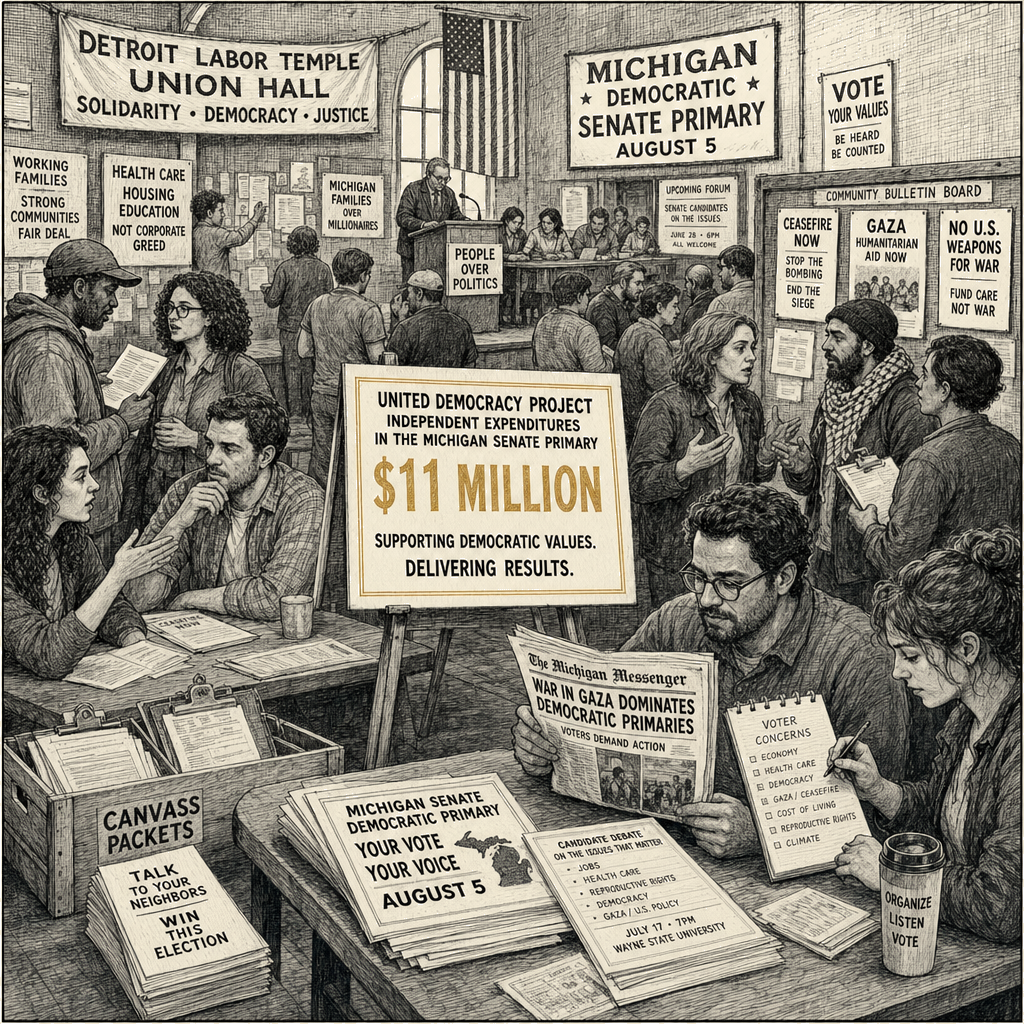
The United Democracy Project, an AIPAC-affiliated super PAC, has spent about $11 million to boost Stevens or oppose El-Sayed so far, with additional ad buys scheduled ahead of the Aug. 4 primary. The group is one of the biggest spenders in congressional elections.
“We are trying to ensure that pro-Israel Democrats have a voice in the primary process,” said Patrick Dorton, a spokesman for the AIPAC super PAC. “There is an insidious attempt by fringe left socialists to drive pro-Israel Democrats out of the party. We are not going to let what happened to the Labour party in the UK happen to the Democratic party in the United States.”
Pro-Israel groups have faced increasing headwinds nationwide. In New York, a slate of democratic socialists who spoke out against the war in Gaza have notched victories against incumbents. In Colorado, a Democratic socialist who had been fired after speaking out about Gaza beat a longtime representative. A doctor who worked in Gaza won a Democratic primary in New Jersey. In Illinois, pro-Israel groups created pop-up PACs with benign names to spend big in Democratic primaries, largely without success, according to the Guardian report.
But establishment picks, some with backing from AIPAC-affiliated groups, continue to win in many places. Adrian Boafo won a Democratic primary in Maryland after benefiting from millions from pro-Israel groups.
“There isn’t a one-size-fits-all answer,” said Tali deGroot, vice president of political and digital strategy for J Street, a liberal pro-Israel and pro-peace lobby group.
Former President Barack Obama official and moderate Democrat Rahm Emanuel delivered a speech in Tel Aviv this week emphasizing that U.S. military aid to Israel should end, and in related interviews said he would not take money from AIPAC, according to the Guardian. The report described the statements as something that would have been taboo for a moderate Democrat a few years ago.
El-Sayed frequently ties the wars to affordability, saying he wants to invest in families in the U.S. through healthcare, schools or infrastructure rather than sending billions to wars overseas. His campaign put up a website looping Stevens saying, in part: “Israel comes to me in my dreams.”
Progressive candidates and activists described the Gaza issue as a litmus test for authenticity. Former U.S. Rep. Andy Levin, who lost his seat to Stevens in 2022 after AIPAC poured millions into the race, said the Gaza issue exemplifies questions about authenticity and truth-telling in politics.
“The Gaza issue almost exemplifies now the questions about authenticity and truth-telling in politics that the people are caring about,” Levin said.
Francesca Hong, a democratic socialist state representative in Wisconsin who is running for governor, said standing up for Palestine is about integrity.
“Voters understand that a politician unwilling to fight against the massacre of children abroad (which we’re funding), they won’t stand up for folks back home,” Hong said.
Darrin Madison, a state representative in Wisconsin who is also a democratic socialist, said voters in the state want to stand up against special interests trying to buy elections.
Whether the issue translates to the general election in swing districts remains unclear. Foreign policy usually does not rank among the top five issues voters consider in a general election, deGroot said, but it is an area where Democratic primary voters can see differences between candidates.
“A candidate’s willingness to buck the status quo of our foreign policy is a good example, a good symbol for them to show that they’re going to be willing to buck the status quo on all kinds of issues that people care about right now,” she said.