International hotel chains exit island amid pressure campaign
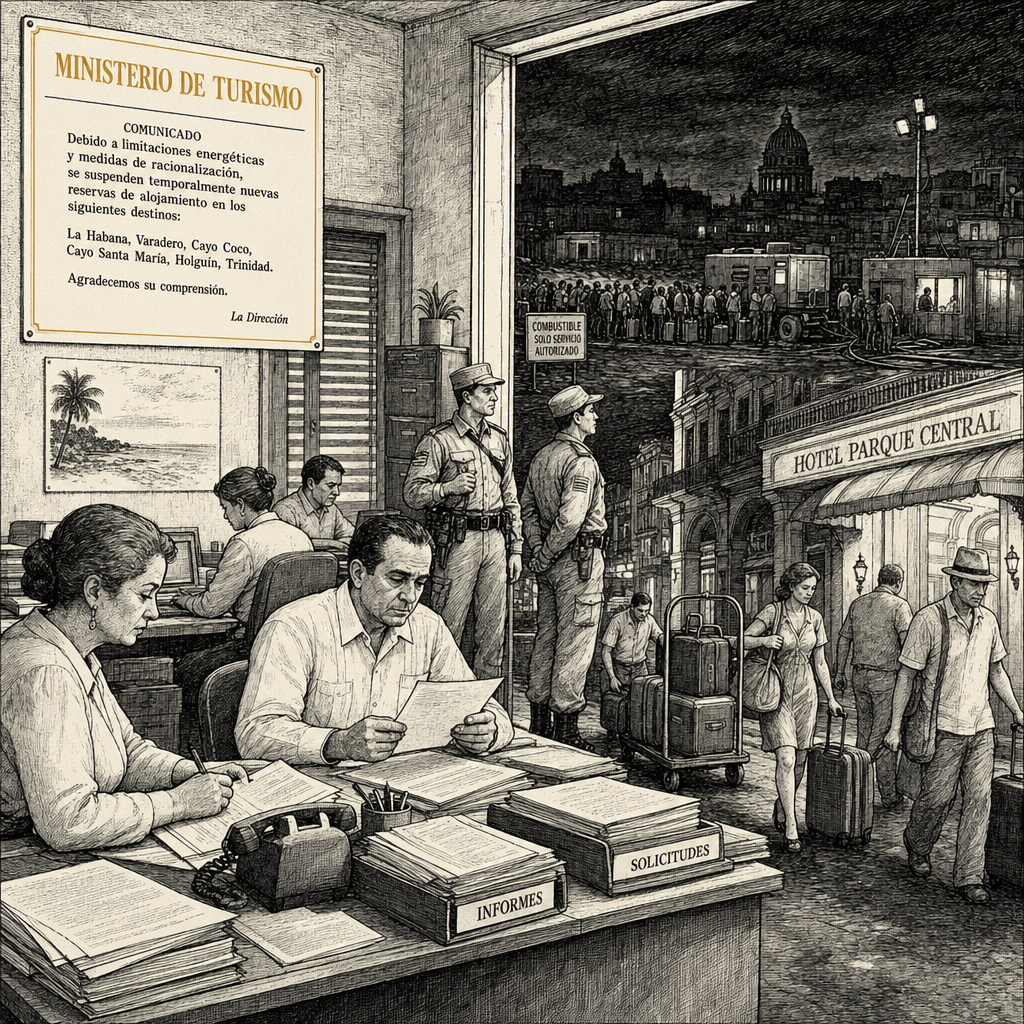
The Trump administration on Monday designated Cuba’s Ministry of Tourism and nine other state-owned companies and paramilitary organizations for sanctions, expanding an economic pressure campaign that has accelerated since May and is now bearing down on one of the Cuban government’s last major sources of foreign currency.
“The Department of State is designating ten entities to further the Trump Administration’s comprehensive push to end the Cuban regime’s malign activities, both in Cuba and across our hemisphere,” the agency said in a statement. “These actions target interlocking pillars of that apparatus: state-owned entities that funnel revenue to the regime and paramilitary forces, armed civilian groups, and surveillance organizations that repress the Cuban people.”
The designations were imposed under an executive order President Donald Trump signed in May that authorizes the U.S. government to block entities linked to repression in Cuba or to strategic economic sectors. The order has been used repeatedly in recent months to tighten economic pressure on the island.
MSI previously reported that the Trump administration sanctioned Cuban President Miguel Díaz-Canel, the Cuban military, and members of the Castro family on June 4, and followed that with designations of five state companies on June 24.
Monday’s sanctions freeze all property and interests in property of the designated entities that are in the United States or under the control of U.S. citizens or companies. Foreign companies and financial institutions that maintain significant operations with the sanctioned organizations may be exposed to secondary U.S. sanctions.
The list of designated state-owned entities includes Grupo Empresarial de Comercio Exterior, or GECOMEX; Grupo Empresarial de Transporte Marítimo Portuario, or GEMAR; Organización Superior de Dirección Empresarial Caudal S.A., or CAUDAL; and Corporación Antillana Exportadora S.A., or ANTEX. Energy-sector companies Coreydan S.A. and Enetec S.A. were also sanctioned.
The State Department likewise designated three organizations it described as part of the apparatus used by the Cuban government to monitor, control, and repress opponents: the Rapid Response Brigades, the Territorial Troops Militia, and the Association of Combatants of the Cuban Revolution.
The tourism industry — which economists say accounted for about 14% of Cuba’s exports and nearly 8% of the country’s gross domestic product in 2024 and 2025 — has already been reeling from the broader pressure campaign. Several major international hotel chains announced in recent weeks they were reducing or ending their operations at hotels linked to GAESA, the military-run conglomerate, after the White House’s ultimatum to foreign companies managing assets associated with the Cuban military.
Spain’s Meliá and Iberostar, Canada’s Blue Diamond, and Asia’s Archipelago International either withdrew or began withdrawing their brands from dozens of hotels operated in partnership with companies controlled by GAESA, according to the State Department.
Ricardo Torres, an economics professor at American University, estimated the reduction in international operators could cause tourism revenue to decline by more than 60% this year, according to digital news outlet El Toque.
Cuba’s own data underscores the decline. The island received 328,608 international visitors between January and April, down 55.8% from the same period a year earlier, according to the National Office of Statistics and Information.
The sanctions come as Cuba continues to endure a severe economic and energy crisis. On Sunday, Cuba’s Electric Union said it had restored the National Electric System after another nationwide blackout — the second in less than a week. The state-owned utility said reconnecting the grid took more than 24 hours and was hampered by fuel shortages.
The State Department said the measures target “the Cuban government’s sources of financing and tools of oppression” and reiterated that the United States will continue using “all available tools” to promote economic and political reforms on the island.