Compromise bill grants Trump statutory backing after Supreme Court ruling
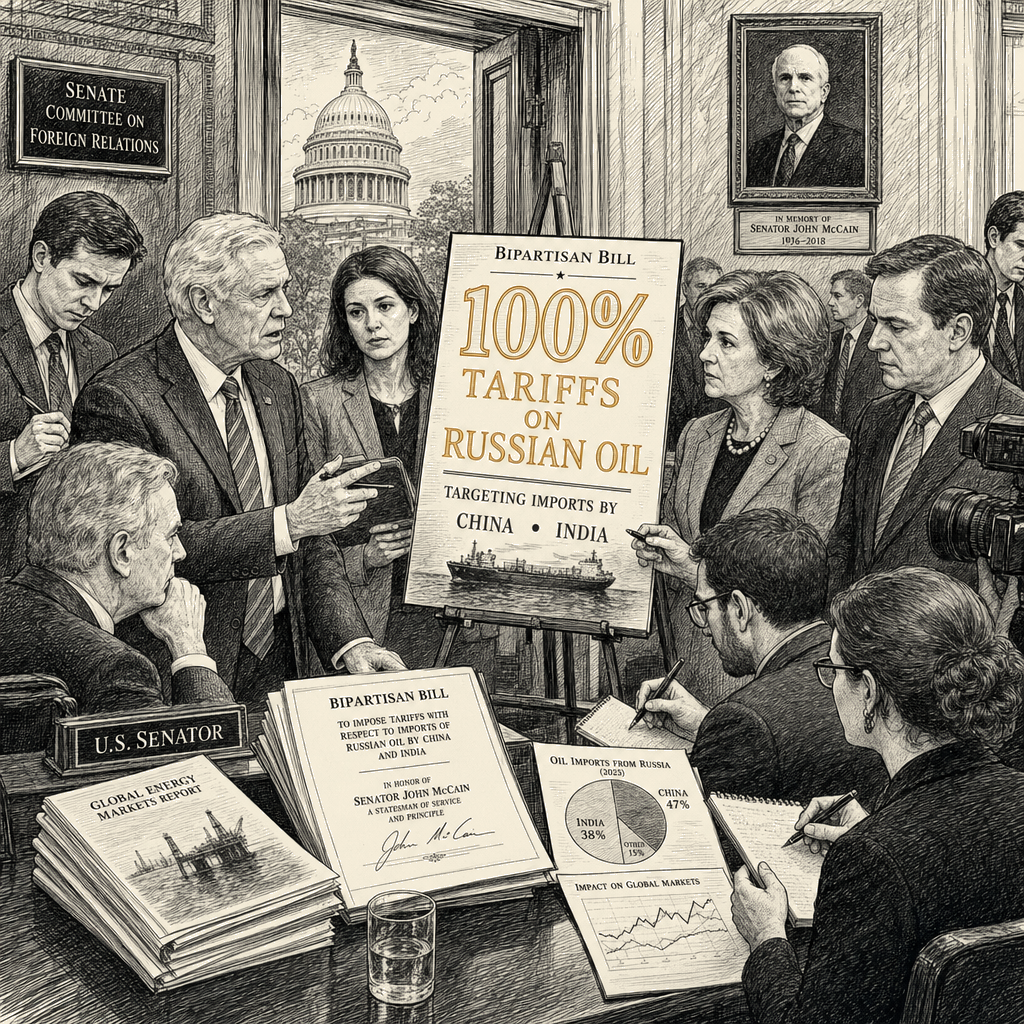
A new bill that had been championed by the late Sen. Lindsey Graham (R., S.C.) would give President Trump authority to impose up to 100% tariffs on the largest importers of Russian energy, in legislation designed to punish Moscow for the invasion of Ukraine, according to people familiar with the matter.
The measure, which was expected to be introduced in Congress as soon as this week, would target the top five buyers of Russian oil and gas, with China and India atop the list. Under the draft bill, Trump could issue up to 100% tariffs on the individual countries and individuals facilitating those energy sales, the people said, adding that any tariff decision would be the president’s alone.
If the bill becomes law, it would be the first time Congress has authorized the use of tariffs as an explicit geopolitical weapon, analysts said. Tariffs historically have been used as a tool to combat unfair trade practices.
The bill also includes sanctions provisions on Russian defense, energy, and financial targets as well as the country’s shadow fleet, the secretive network of aging vessels used to circumvent global sanctions, the people familiar with the matter said.
Lawmakers have long pushed for a tougher U.S. line on Russia after more than four years of war on Ukraine. While Trump has issued sanctions on Moscow during his second term, most Republicans and Democrats in the Senate want the Kremlin to face harsher financial penalties that could potentially convince Russian President Vladimir Putin to end the invasion and come to the negotiating table, the Wall Street Journal reported.
A bipartisan set of senators and the White House spent more than a year iterating the Russia bill, including one version that would have imposed 500% tariffs on imported goods from any country that purchases Russian oil, gas, uranium and other products. But the White House did not want Congress to mandate such penalties, leaving Trump maximum flexibility as he tries to negotiate an end to the war in Ukraine. The bill is a compromise that received support from Republicans, Democrats and the Oval Office, the people said. It also gives Trump statutory backing so he does not run afoul of the Supreme Court, which this year rejected his use of an emergency law to unilaterally impose tariffs.
Trump’s team said the president supported the bill, which senators back in large numbers and want to pass in Graham’s honor following his death from an aortic dissection that medical examiners assess killed him at age 71. Asked directly Monday about his views on the legislation, Trump said “we’re talking about that,” according to the Journal.
Some analysts fear that Trump will not use the broad new powers granted to him in the specific way the Senate designed the bill. “They may well not be used as intended to pressure Russia, but rather as a way for Trump to wage trade wars against friends and foes alike,” said Edward Fishman, a former senior U.S. sanctions official who now runs the geoeconomics program at the Council on Foreign Relations. Secondary sanctions on the actual buyers of Russian oil and their facilitators — refineries, banks, oil traders — would be a much more effective approach than secondary tariffs, Fishman said, which are penalties placed on a different entity to affect the coffers of the main target. “I suspect the White House has come around to supporting the bill because they realize it will give Trump much greater latitude on tariffs,” Fishman told the Journal.
Sen. Richard Blumenthal (D., Conn.), who drafted the bill with Graham and traveled multiple times with him to Ukraine, confirmed it would target Russia’s top five energy purchasers. “We have refined it over time in negotiations with the United States Trade Representative, as well as the White House colleagues here. It has been a very elaborate, painstaking, lengthy process,” he told reporters Monday. “We don’t want an overbroad, blunderbuss approach.”
Democrats counter the criticism about granting Trump more tariff authorities by insisting that secondary tariffs placed on India last year are what led to a reduction in its purchases of Russian energy. But Fishman said the Trump administration’s 2025 sanctions on Rosneft and Lukoil, two of Russia’s biggest oil companies, and the threat of secondary sanctions on Indian banks and refineries had a much greater effect.
The fight now moves to passing the legislation. The earlier version of the bill had significant bipartisan support. The new version could face opposition from some pro-Ukraine Democrats who fear it gives Trump too much tariff authority. A complication is the so-called “blue slip” issue, where any legislation that raises revenue through tariffs or another method must originate in the House, where success remains an open question.
Senate Majority Leader John Thune (R., S.D.) told reporters Monday that he is assessing whether the bill could come to the floor soon. “Lindsey was the man driving that, the driving force behind it, but there are others who have a deep interest in it, so it would be great if we could figure out a way, a path forward to get that done,” Thune said.