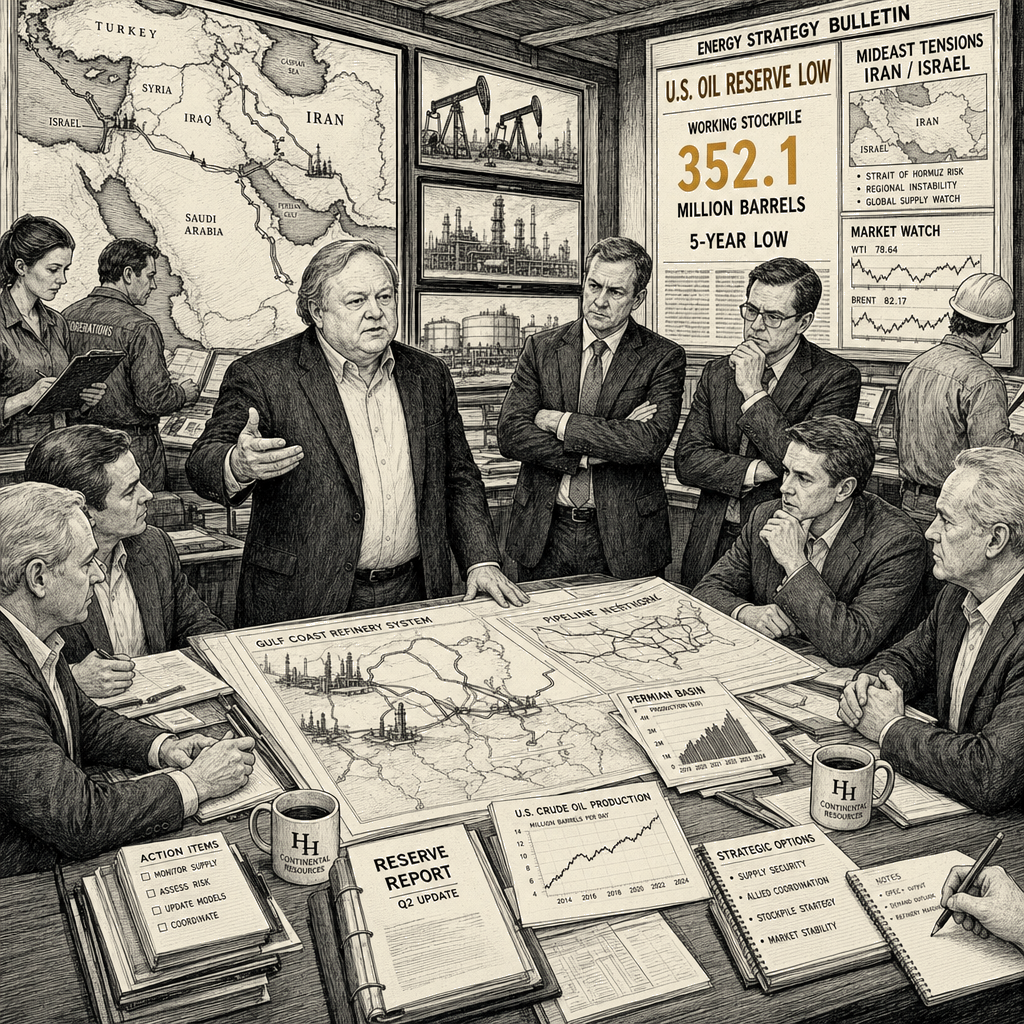
Emergency stockpile at 326 million barrels, lowest since 1983
Harold Hamm, who made his fortune pioneering the fracking techniques that fueled the 2008 shale boom, has been warning for years that Iran poses a threat to Israel and the United States, championing the importance of U.S. oil production in the Middle East and helping to strengthen ties between Washington and Jerusalem. As the war between the U.S. and Iran grinds into its sixth month, the strategic backdrop he warned about is colliding with a depleted emergency fuel reserve at home.
The U.S. Strategic Petroleum Reserve now sits below 326 million barrels, down 22% from the 415 million barrels stored just before the war began, according to the U.S. Energy Information Administration. That level is the lowest since the Reagan administration was actively filling the reserve in 1983. Such low levels of emergency oil leave the country in a precarious position if it needs to respond to another emergency — whether severe weather or an escalation with Iran, the EIA data suggests.
The conflict has disrupted shipping through the Strait of Hormuz, but a global oil glut that resulted in part from the U.S. shale boom has left the United States less exposed than Asia and Europe to price spikes, according to an April Politico analysis. Even so, the low emergency stockpile means Washington has less of a cushion than it did when the strikes began.