War may accelerate kingdom’s push into renewable energy and nuclear power
Ratney, who served as U.S. ambassador to Saudi Arabia from 2023 to early 2025, described witnessing a dramatic cultural transformation in the kingdom during his tenure. On his first visit 15 years ago, he said he could not have attended a concert by the Backstreet Boys or a Formula One race, seen modern art exhibitions or WWE wrestling, or observed Saudi women working and driving in large numbers. The changes, he wrote, were the product of massive social and economic investment that grew alongside a period of relative calm in the Middle East.
But Ratney wrote that the war launched in February threatens to upend those gains, particularly as “highly flawed peace deals take hold and then collapse.” He noted that Saudi Arabia’s reputation as a safe place to visit and do business has suffered, and that Iranian control over the Strait of Hormuz has effectively allowed Tehran to “take the economies of the Gulf and even the world hostage.”
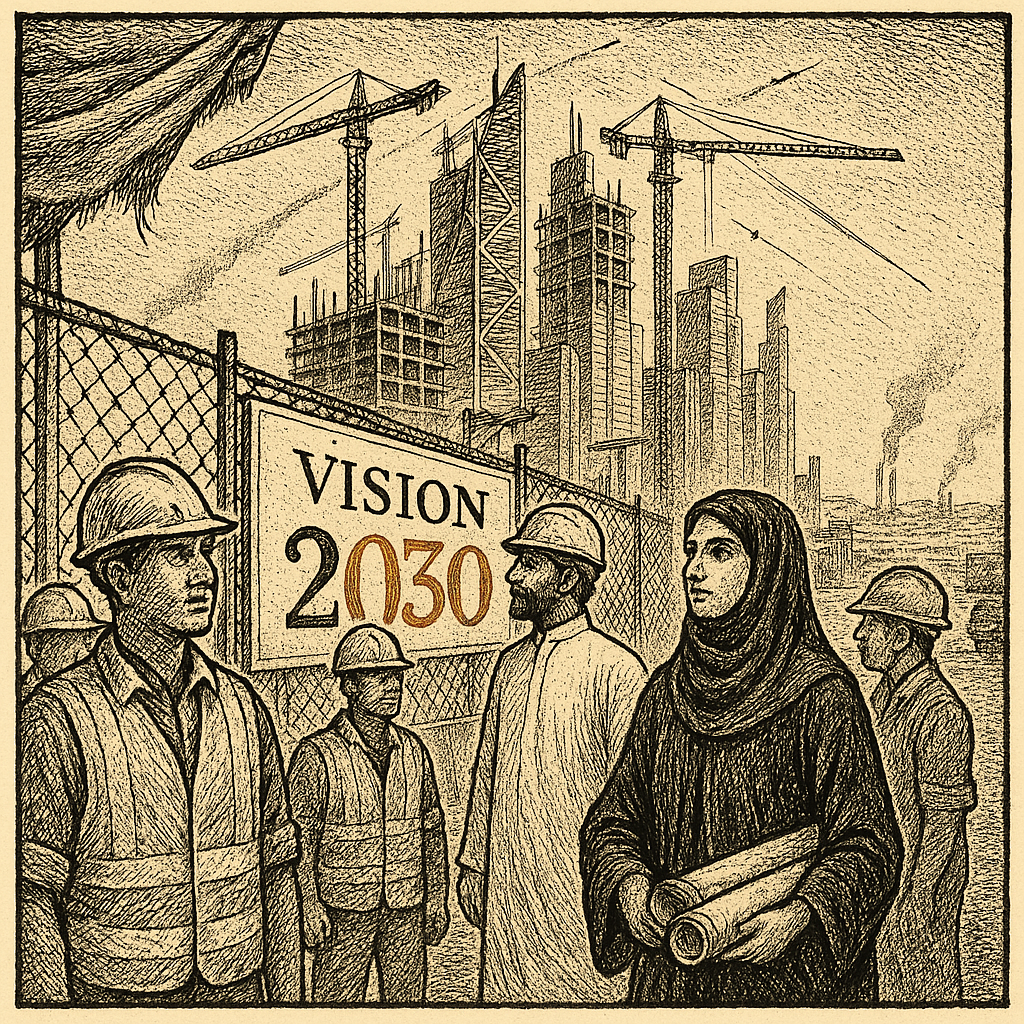
The kingdom has spent hundreds of billions of dollars on expansion into green energy, manufacturing, artificial intelligence, and service industries including tourism and hospitality, anticipating a post-fossil-fuel world, Ratney wrote. Yet the infrastructure underpinning those sectors — and essential water desalination facilities — sits in Saudi Arabia’s Eastern Province, roughly 100 miles from Iran and within range of even rudimentary Iranian rockets and drones.
In response, Ratney wrote, Riyadh will likely have to divert resources from domestic development into bolstered air defenses, including counterdrone technology. The kingdom will also need to work quickly to reduce its reliance on regional strategic chokepoints, including efforts to build alternative transportation networks such as new pipelines and rail routes.
Ratney wrote that the conflict may accelerate Saudi Arabia’s push into renewable energy, including nuclear, solar, and wind power. The kingdom, he noted, is making some of the largest global investments in green hydrogen, with the ambition of powering its own electricity grid and exporting to Europe and Asia. “That transition is still a long way off,” he wrote, “but war, as unwelcome and unnerving as it is, may actually hasten its arrival.”
Diplomatically, Ratney wrote that Saudi Arabia faces a delicate balancing act. While deeply frustrated with the United States, Riyadh cannot rupture its relationship with its principal security partner. At the same time, it cannot afford to ignore Iran given what Ratney described as America’s “capricious approach to this conflict.”
Ratney wrote that Saudi leaders have long despised the Iranian regime and would welcome its replacement with a government that threatens neither its own citizens nor its neighbors. But Crown Prince Mohammad bin Salman, he said, has recognized that the priority of domestic transformation requires a stable region. That recognition drove Saudi Arabia to restore diplomatic relations with Iran in 2023, pursue direct negotiations with the Houthis in Yemen, support the nascent government of Ahmed al-Sharaa in Syria, and remain vocally critical of Israeli military operations in Gaza, Lebanon, and elsewhere.
“Saudi Arabia never wanted this war,” Ratney wrote.
The kingdom has been “oddly lucky,” Ratney wrote, in that Iran caused damage to critical energy infrastructure and reduced total exports by about 15%, but Saudi Arabia has maintained most of its prewar exports through its Red Sea port. Oil prices have fluctuated, but as of early July the budgetary impact appeared limited given the scale of Iranian attacks.
Still, Ratney wrote, Riyadh must navigate a tense period in its relationship with the United Arab Emirates, with which the kingdom could historically make common cause. It is also contemplating an Iranian regime that appears determined to maintain a nuclear enrichment program, a network of proxies, an arsenal of drones and ballistic missiles that have already targeted Saudi territory, and ongoing management of the Strait of Hormuz — a chokepoint Ratney wrote Saudi Arabia fears may never again be free of Iranian control.
“Navigating these currents in an unceasingly volatile region is crucial to re-establish the country’s reputation as a safe and stable place for tourists and investors, and for Saudi Arabia’s own citizens,” Ratney wrote.