Kuwait water plant, oil facility hit in Iranian attacks
Kuwait water plant, oil facility damaged in Iranian strikes
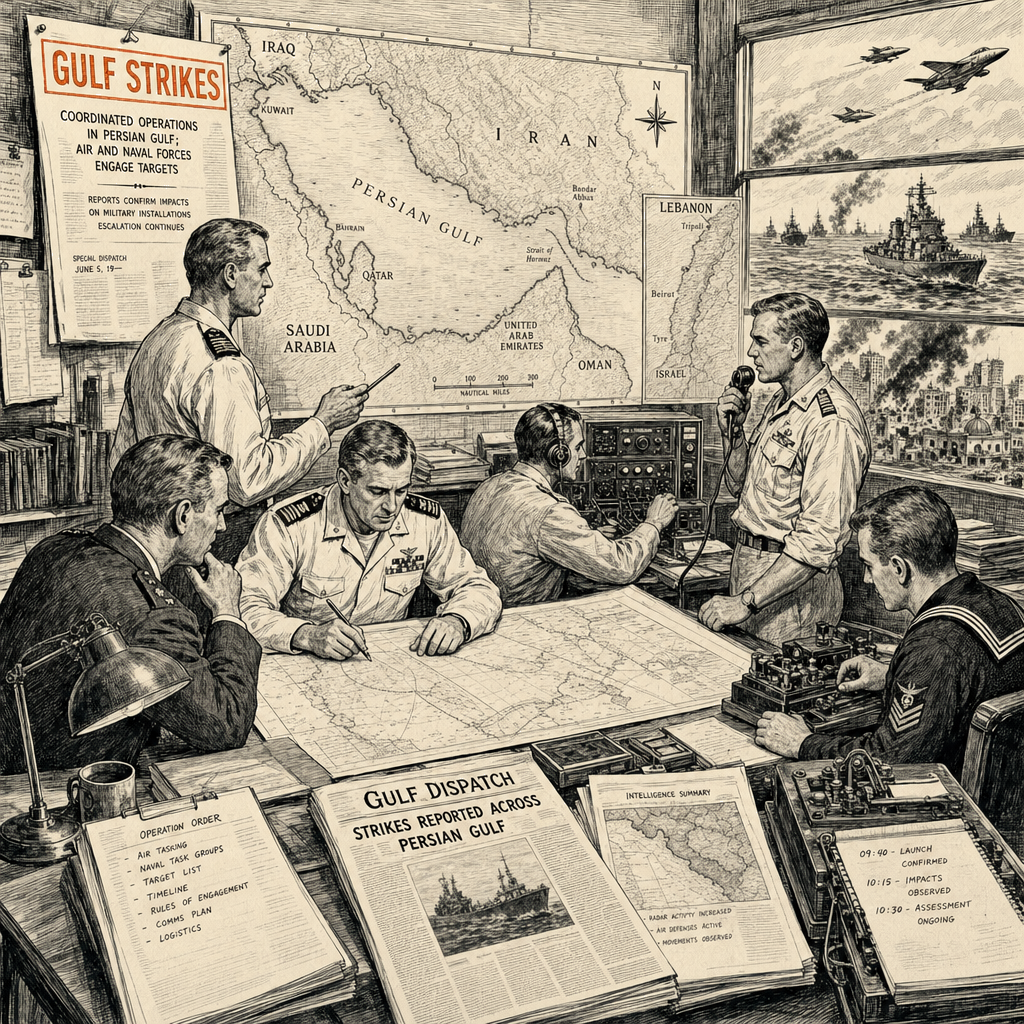
U.S. Central Command said in a statement on X that it targeted “surveillance sites, military logistics infrastructure, underground weapons storage and maritime capabilities” in Saturday’s operation. The command said it employed fighter aircraft, aerial drones and warships in addition to other assets.
“CENTCOM continues to hold Iran accountable at the Commander in Chief’s direction while fully enforcing a naval blockade against Iranian ports,” the statement said.
Iran and the United States are each enforcing blockades in the Strait of Hormuz: Iran preventing ships from passing through the waterway, and the United States blocking Iranian ships and ports. The strait is a vital passage for global oil and gas transport.
Iran’s state media reported Saturday that the country suffered damage to bridges and roads in southern Iran and that a water desalination plant in Jask was hit. A local official said about 10,000 people are facing a water shortage as a result.
Iran retaliated by striking American allies in the Gulf. It heavily attacked Kuwait, including damaging a water desalination plant vital to the desert country, which obtains 90% of its drinking water from desalination. The attack created a fire at the plant. An oil facility in Kuwait was also struck, causing injuries and “severe material losses,” Kuwait’s petroleum corporation said.
“The repeated targeting of these vital facilities reveals a systematic hostile approach targeting civilian sites and vital infrastructure that endangers the lives and safety of civilians,” the Kuwait foreign ministry said.
Jordan’s army said Saturday it had shot down 10 Iranian missiles that entered its airspace, with no casualties or damage reported.
“Air defense systems … intercepted 10 Iranian missiles that had entered Jordanian airspace and were targeting the Kingdom’s territory (which) were intercepted and shot down,” the army said in a statement.
Reza Amiri Moghadam, Iran’s ambassador to Pakistan, posted on X that the United States “interpreted [memorandum of understanding] contrary to its terms and gained control over parts of Strait Hormuz to obtain what it couldn’t in the battlefield.” He said it was “obvious that the Iranian side would not accept this arbitrary interpretation which blatantly violated the MOU.”
“Now, the U.S. has started a war contrary to the terms of MOU and international principles destroying the infrastructures,” Moghadam wrote. “The international community is expected to strongly condemn this aggressive and reckless act.”
Meanwhile, Israel ramped up its attacks on Lebanon. Lebanon’s state National News Agency reported that an Israeli drone hit Nabatieh and that Israeli warplanes struck a neighborhood in Mansouri in the coastal Tyre district, with a second pair of planes carrying out airstrikes in another part of Mansouri.
An Israeli military spokesperson said the military had attacked militants “who posed a threat” in Nabatieh but said the military was “not aware” of any Israeli attacks in Mansouri on Saturday.
Lebanese President Joseph Aoun left Saturday for Washington, D.C., to meet with President Donald Trump. He is expected to discuss the cease-fire with Israel and ways to boost security and stability. The meeting is scheduled for Tuesday.