Vance pick tip, teleprompter wagers fuel insider trading inquiries
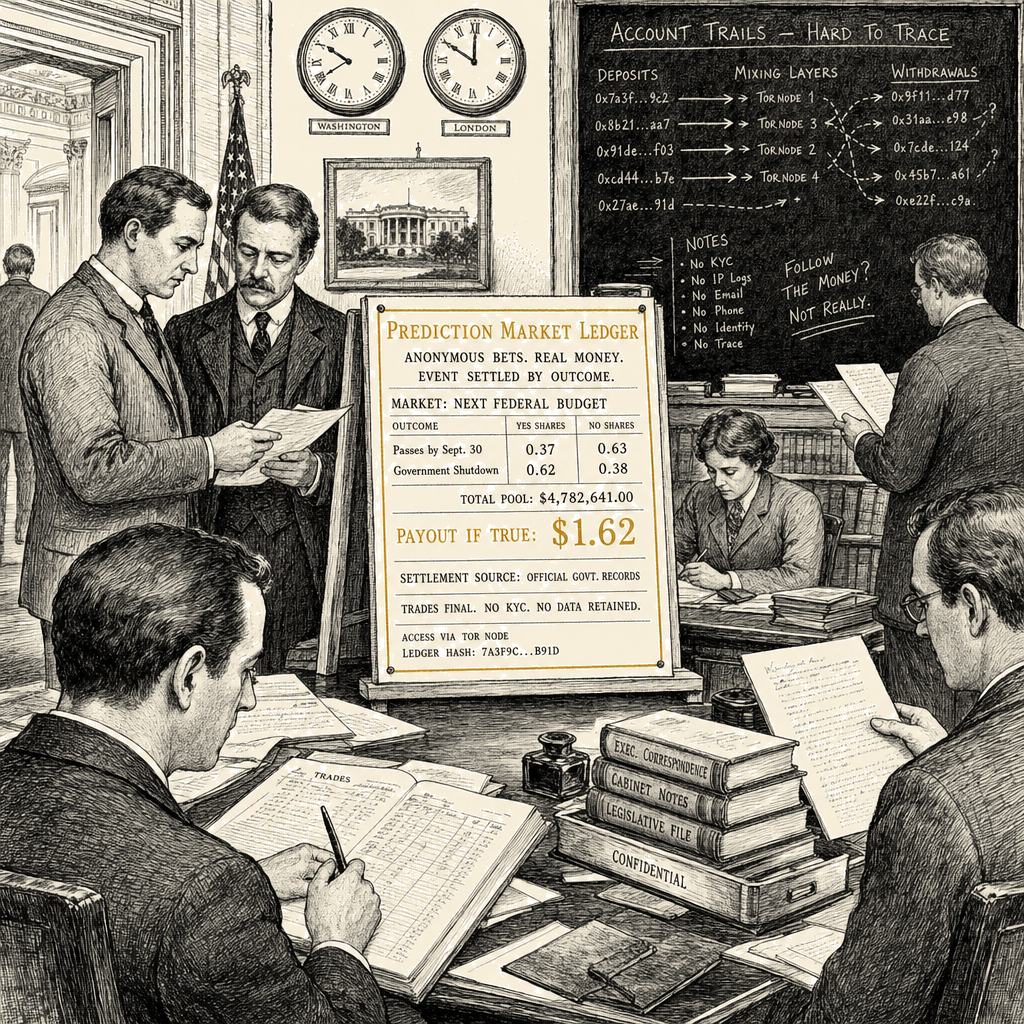
Alarm bells went off inside the White House Counsel’s Office earlier this year when anonymous Polymarket accounts first placed five-figure sums betting that President Donald Trump and Iran would agree to an initial ceasefire by the end of April, according to people familiar with the matter. Senior officials privately raised concerns that the users may have leveraged inside information to secure an easy payday on the prediction market.
White House lawyers spoke with staff, asking who from the hundreds of aides working inside the building could be making bets, the people said. These lawyers concluded it would be nearly impossible to determine whether administration officials were behind the bets because Polymarket allows users to open accounts anonymously, even though authorities have successfully traced the proceeds of those wagers. Instead, officials sent a warning shot in late March: a memo telling staff they were prohibited from using nonpublic information for financial benefit. Three anonymous Polymarket accounts later made over $600,000 correctly betting on the April ceasefire announcement, according to blockchain research firm Bubblemaps.
The White House confirmed this week that Gabriel Perez, Trump’s teleprompter operator since his first term, is under investigation by the Commodity Futures Trading Commission for making over $100,000 in wagers based on early access to presidential speeches. White House press secretary Karoline Leavitt said the White House was unaware of his bets and pointed to ethics guidelines banning employees from making them. She said Trump is furious over the notion of officials within his administration trading on inside information. Perez has been placed on unpaid leave and could not be reached for comment.
Two previously unreported election bets were placed around the 2024 presidential race based on tips that Trump would pick JD Vance as his running mate, according to people familiar with those incidents. Over lunch at the Stovall House, a members-only social club in Tampa, Rep. Anna Paulina Luna of Florida told associates in the summer of 2024 that she knew Trump would choose Vance, according to a person familiar with the conversation. The person said Luna said she had tipped off Rogan O’Handley, a popular MAGA influencer known as “DC Draino,” about Trump’s pending decision so that he could place a winning bet on Polymarket. The congresswoman teased O’Handley, the person said, for not placing a bigger wager.
Luna said she did not have knowledge of who Trump would eventually choose as his running mate. “I am honored the WSJ thinks I am telepathic but unfortunately I am not,” the congresswoman said in a statement, adding that she would “continue to champion the fight against insider trading.”
O’Handley denied receiving, trading on or discussing nonpublic information about Trump’s vice presidential pick. “Any suggestion that I traded on confidential information or discussed doing so is inaccurate,” he said in a statement. The CFTC is investigating the allegation, according to a third person familiar with the matter. Not all investigations are indicative of wrongdoing. O’Handley said he was unaware of any federal investigation and denied wrongdoing. A Luna spokesman said the congresswoman had initiated a criminal complaint with the CFTC alleging someone had made knowingly false reports to that agency.
Mark Moran, a former investment banker, said he received the inside track on Trump’s running mate choice over dinner at L’Annexe, a Georgetown cocktail bar. The information, he said in an interview, came from Jake Denton, then a research associate at the Heritage Foundation, one month before Trump’s pick became official. Based on the tip, he placed a $900 bet on Vance using the Polymarket app and made over $600 on the exchange, according to cryptocurrency records Moran provided to The Wall Street Journal. “I got a kid in the Heritage Foundation who has been leaking this to me,” he wrote to an associate, “so went all in on Vance.” Denton now works as a White House policy adviser after a stint at the Federal Trade Commission. He did not respond to requests for comment. A White House official said Denton’s private comments about Vance becoming Trump’s running mate were not based on insider knowledge.
The Senate passed a resolution in April banning lawmakers in the upper chamber, and their staff who are often privy to sensitive information, from betting on Kalshi and Polymarket. House Oversight Committee Chairman James Comer (R., Ky.) launched an investigation last month into potential insider trading. The focus includes suspicious betting activity related to U.S. and Israeli military operations in Iran, as well as U.S. actions in Venezuela, including the capture of Venezuelan President Nicolás Maduro. An oversight spokesman told the Journal that both companies are complying with the inquiry.
The Commodity Futures Trading Commission, the agency charged with regulating the prediction markets, has requested information from both Kalshi and Polymarket regarding wagers related to political and military events. Their challenge, according to the Journal report, is that insider-trading laws were not designed for prediction markets that allow bettors to wager on everything from the color of the president’s tie to the top of each party’s ticket.
Polymarket has made over 100 referrals to law enforcement, a company spokeswoman said. Kalshi has blocked dozens of campaign staffers from using the platform to bet on their own candidates, according to a company spokeswoman. “Our teams work 24/7 to monitor and flag any anomalous trading patterns, and we investigate every single one of them,” Kalshi spokeswoman Elisabeth Diana said in a statement.
Political betting on Polymarket doubled to just over $4 billion during the first three months of 2026 compared with the first quarter of 2025, according to data provided by the nonprofit Anti-Corruption Data Collective. Election-related bets account for over $325 million. The exploding popularity of prediction markets among young staffers who have access to nonpublic information has created a pervasive temptation that is growing in advance of November’s elections, the Journal reported.