Prevention services for vulnerable populations hit hardest by funding disruptions
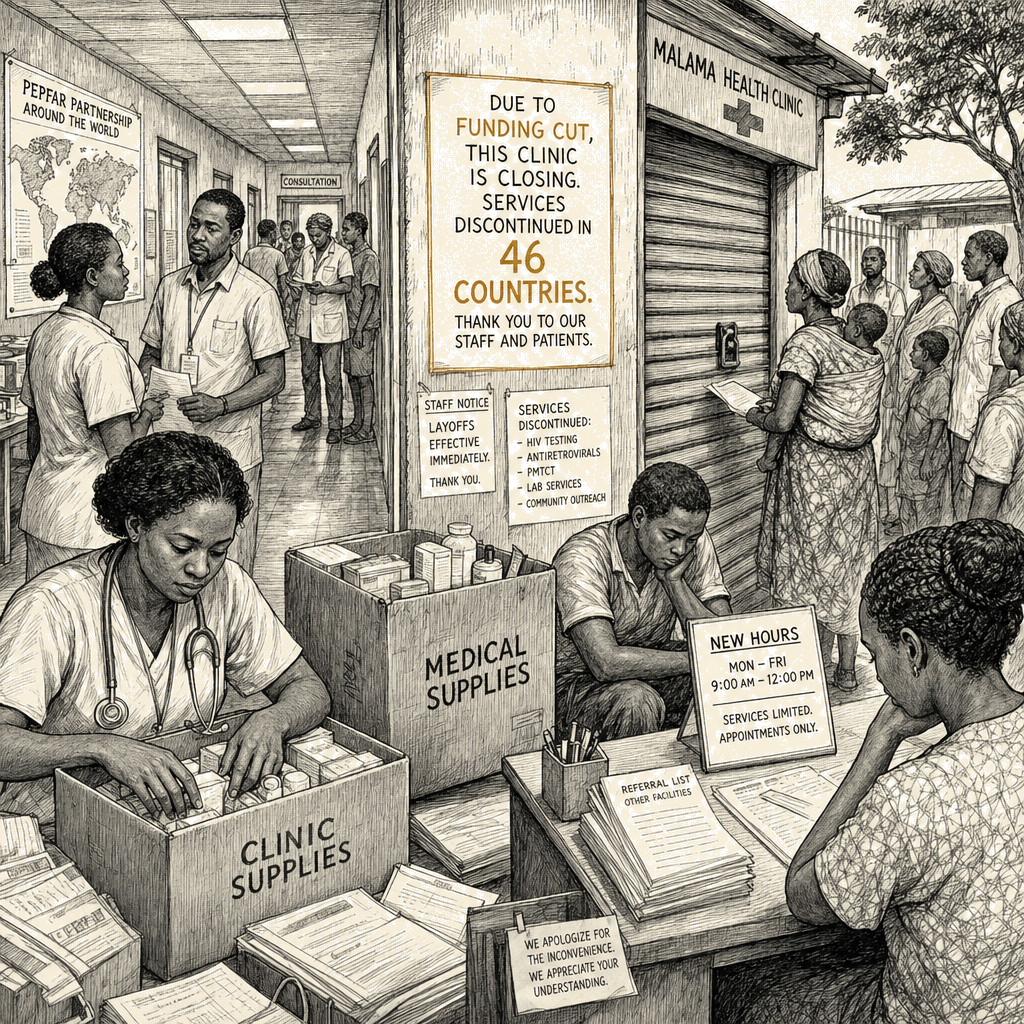
The findings, being presented next week at the 26th International AIDS Conference in Rio de Janeiro, Brazil, provide what researchers described as some of the first real-world data on the ground-level impact of the cuts.
PEPFAR, created in 2003 under President George W. Bush, is credited with saving at least 26 million lives globally. The program operates through partner organizations worldwide that provide HIV testing, prevention services such as condoms and preventive medicines, and treatment for those infected.
The Trump administration’s 2025 funding disruptions followed the dismantling of the U.S. Agency for International Development (USAID) in July 2025, which had managed more than half of PEPFAR’s grants. A waiver issued by the administration in February 2025 theoretically allowed programs providing life-saving treatment or preventing mother-to-child HIV transmission to continue, but researchers said the reality on the ground was different.
“The disruptions were very widespread,” said Elise Lankiewicz, policy associate for amfAR and co-lead author of the report. “No part of the program really escaped unscathed — and that includes areas of the program that this administration intended to protect.”
Lankiewicz told reporters that it was “incredibly hard to cut one award without there being ripple effects throughout the system.”
The survey was conducted electronically between November 2025 and April 2026. Researchers acknowledged that organizations that were most severely disrupted or still receiving U.S. funding may have been less likely to respond, meaning the findings could underestimate or overestimate the disruptions depending on which organizations were missed.
Five surveyed organizations had closed entirely, three as a direct result of losing PEPFAR funding. Researchers said that figure “is likely a significant under-count, since closed organizations would no longer have active email accounts by which to receive the survey.”
Greg Millett, a member of the study team, said in a press briefing ahead of the AIDS 2026 conference that the findings mirror earlier analyses of U.S. government data that showed severe drops in numbers of frontline health workers, HIV diagnoses, and prevention programs. “These disruptions threaten to reverse progress toward controlling the HIV epidemic,” Millett said.
The report also found that nearly 80% of respondents said they had been asked to restrict their work to comply with additional U.S. policies, including executive orders targeting diversity, equity, and inclusion initiatives, an expanded “global gag rule,” and policies affecting reproductive rights and gender-affirming care. Lankiewicz said organizations “made pretty dramatic shifts to their programming to align with these new policies,” including ending services tailored to specific populations such as sex workers and support for victims of gender-based violence.
MSI previously reported on the broader impact of U.S. aid cuts on HIV programs in sub-Saharan Africa and the administration’s decision to end PEPFAR funding for South Africa.