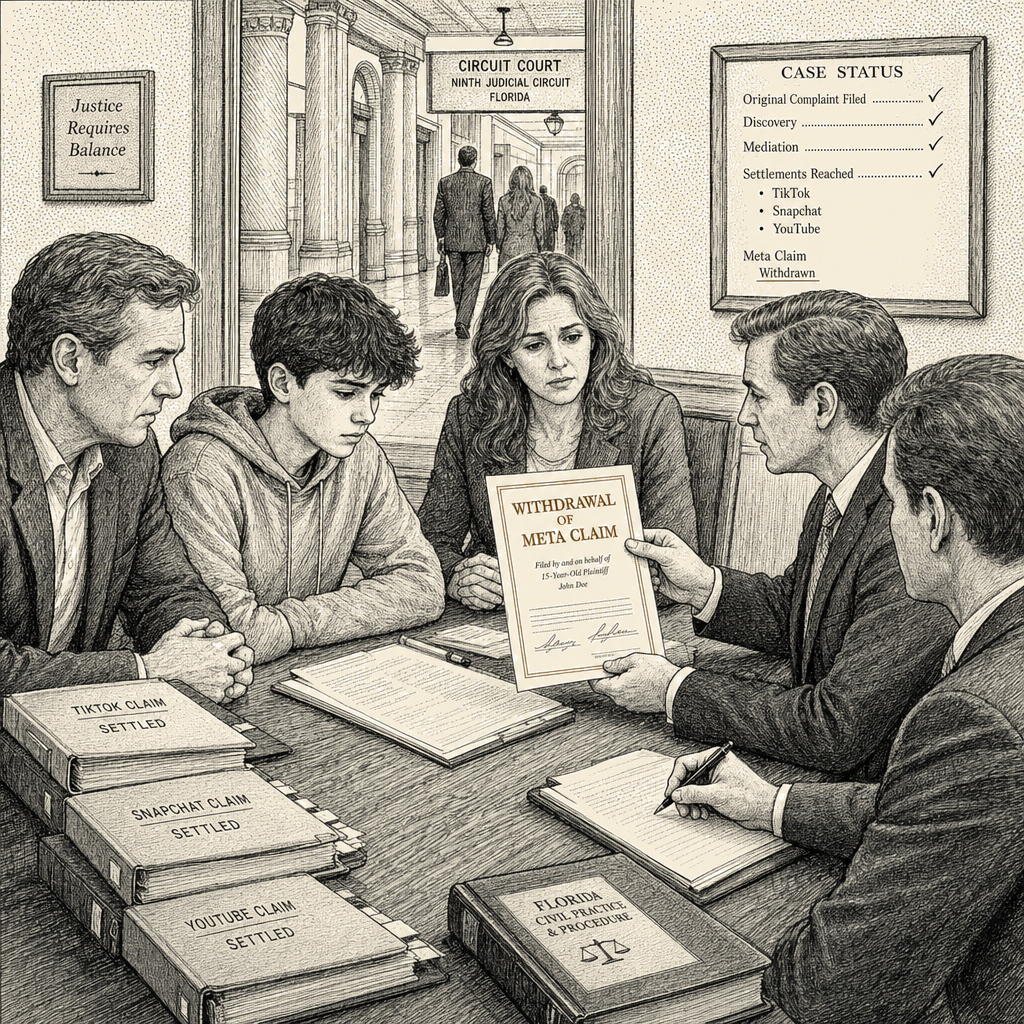
Lawyers say teen plaintiff ready to focus on recovery, therapy
The plaintiff, known in court filings by the initials R.K.C., had alleged that common social media features such as infinite scroll and autoplay drove compulsive use that became a type of addiction, causing him anxiety and sleep deprivation. His case against Meta had been scheduled to go before a Los Angeles jury next week as part of court proceedings that have already produced one landmark verdict.
“R.K.C. came into this process wanting to hold social media companies accountable and push for changes to protect young people like himself,” his attorneys, Emily Jeffcott and Rahul Ravipudi, told the BBC. They said the teen was “ready to close this chapter and focus on his recovery and engage in therapy as he aspires to have a normal life.”
A Meta spokeswoman told the BBC: “The claims never held up, and this outcome makes clear that we will not back away from defending ourselves against baseless lawsuits.” She said R.K.C. received no payment for dropping his claims.
The case is part of a multidistrict litigation in Los Angeles Superior Court that includes hundreds of similar lawsuits against social media companies over youth addiction. A small number of cases have been selected as bellwether trials to test the claims. The first such trial ended in March with a jury finding Meta’s Instagram and Google’s YouTube liable for harming a young woman’s mental health. The jury ordered $6 million in damages. Both companies have appealed that verdict.
The next bellwether trial is set to begin in October, according to court records.
In May, Meta settled for an undisclosed amount with a school district that had sued it for negatively impacting students, incurring costs related to student welfare. The school district had sought $60 million in damages. That settlement came after a New Mexico judge ordered Meta to pay $375 million for misleading users about the safety of its platforms for children.