Pentagon preps for major combat despite war cost surpassing $37B
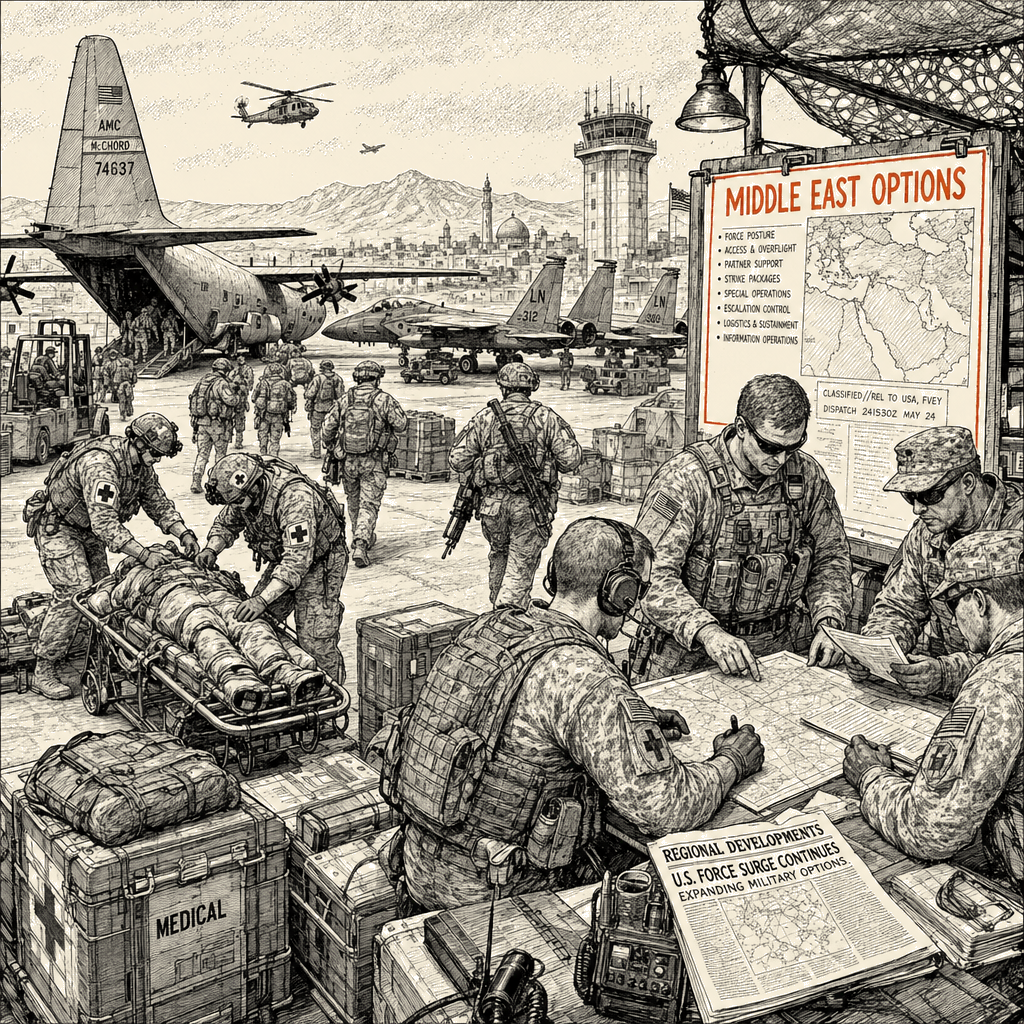
WASHINGTON — The Pentagon is surging special-operations forces, fighter jets and medical personnel toward the Middle East to provide President Trump a wider set of military options as the administration weighs expanding the five-month conflict with Iran, according to people familiar with the matter.
In the past week, special-operations forces have deployed from their U.S. bases to the region, according to flight-tracking data and U.S. officials. Squadrons of jet fighters have been staged across the Middle East, and bomber aircraft — including B-1 bombers currently positioned in the U.K. — are on high alert, one official said. Long-range bombers are preparing for potential major combat operations, according to some of the officials.
More than 150 medics have arrived at the Landstuhl Regional Medical Center in Germany in recent days, another official said. The hospital is the primary facility for treating troops wounded in Middle East combat.
The additional forces arrive as the U.S. already has tens of thousands of troops in the region. The Navy currently has 17 ships in the Middle East, including two aircraft-carrier strike groups, their 11 combined destroyers and a Marine Corps expeditionary unit, according to a naval official.
The buildup follows the deaths of three American soldiers in an Iranian attack in Jordan over the weekend. A fourth U.S. servicemember was killed in Iraq during a controlled detonation of an Iranian drone.
Retired Gen. Joseph Votel, former commander of U.S. Central Command and U.S. Special Operations Command, said the surge itself does not necessarily mean major military operations are inevitable.
“The big idea here is to give the president and the secretary the most flexibility, and the force the most options to present to them,” Votel said.
A Pentagon spokesman referred questions to U.S. Central Command, which declined to discuss details citing operational security. The White House said Trump “always has all options at his disposal.”
Trump has ramped up his rhetoric in recent days, threatening on Tuesday to order an assault on Pickaxe Mountain, where Iran is suspected of burying nuclear-enrichment centrifuges, and warning he would bomb an Iranian bridge or power plant each time Tehran attacks a vessel in the strategic Strait of Hormuz. Current and former military officials have cautioned it is not lawful to strike an adversary’s infrastructure for political purposes, the Journal previously reported.
Iran’s foreign minister, Abbas Araghchi, said on social media that “any aggression against Iran, including our infrastructure, will compel a powerful and decisive response.”
The preparations come despite concerns in Washington about the war’s endgame and its mounting cost. Defense Secretary Pete Hegseth told Congress this week that the war has cost more than $37 billion, according to congressional testimony. The conflict also continues to disrupt global oil supplies as Iran targets commercial ships in the Strait of Hormuz, through which one-fifth of the world’s oil passed before the war, and as Iran-backed Houthis threaten shipping in the Red Sea.
The House on Wednesday voted 216-214 to pass a $95 billion budget framework that includes $73 billion in additional defense and intelligence funding, a first step toward approving money the White House has requested. The measure drew concerns from some Republicans who said voting for additional funds could be interpreted as congressional approval for the war itself. Others have sought more information on costs and the Pentagon’s strategy for ending the fighting.
“I want to pay the troops. I do not want to support the war,” said Rep. Brian Fitzpatrick, a Pennsylvania Republican who voted for the measure.
The House also approved 216-212 its version of the National Defense Authorization Act, the annual policy bill that typically draws broad bipartisan support. Democrats, who largely opposed the bill, said Trump has illegally bypassed Congress in waging the Iran war.
Dana Stroul, former deputy assistant secretary of defense for the Middle East during the Biden administration, said the pattern of military buildup has historically preceded use of force.
“Every time that the Trump administration has plussed up militarily, they’ve used it,” Stroul said. “The conundrum of the moment is that there’s just no military solution here with this regime intact. You cannot eliminate every missile and every drone, and limited air power and sea power alone are insufficient to change the regime’s fundamental approach.”
Iran, which the Journal reported spent a tenuous ceasefire reconstituting weapons programs that U.S. and Israeli forces tried to destroy early in the war, has continued attacking American troops and infrastructure across the Middle East, according to U.S. officials.