Brazil pledges to stay at trade table while expanding export markets
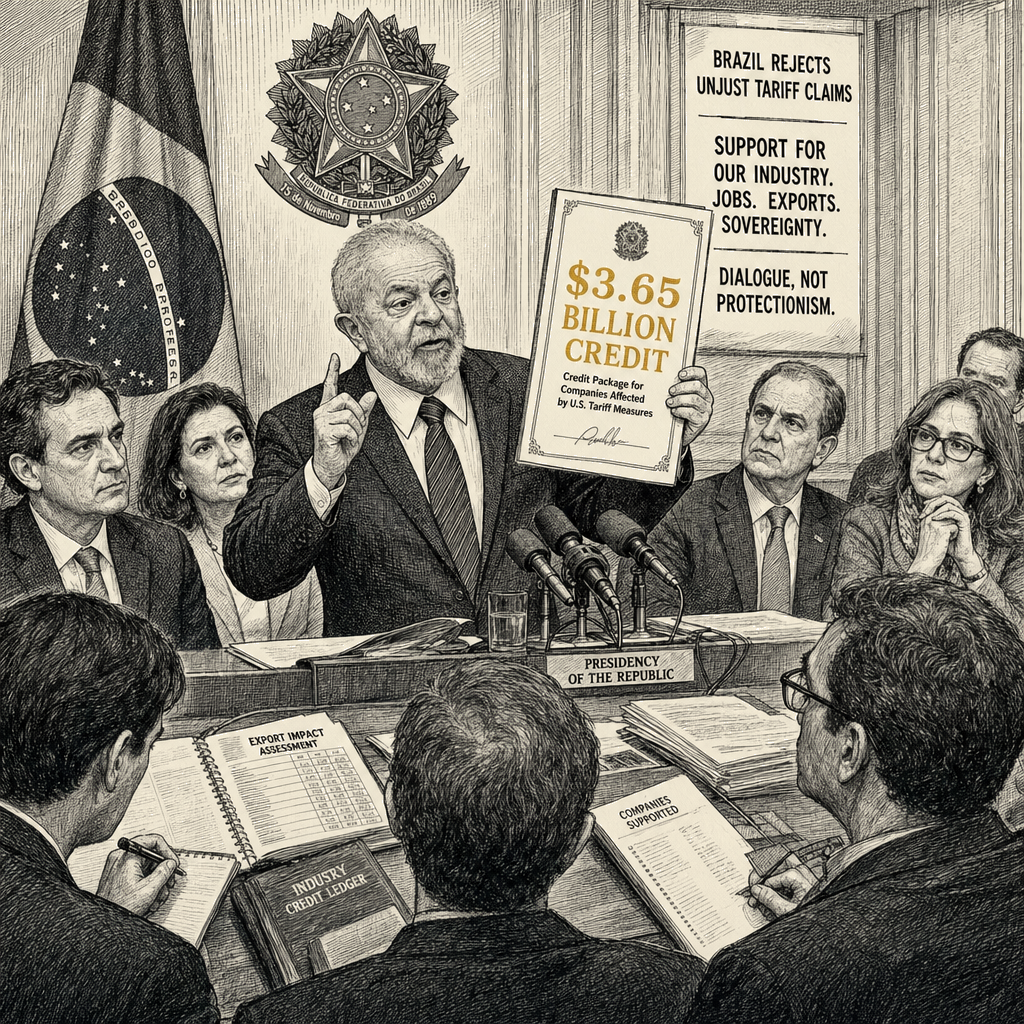
Brazilian President Luiz Inácio Lula da Silva announced a $3.65 billion credit package Wednesday for companies affected by the new 25% U.S. tariff, as he directly challenged Washington’s assertion that Brazil has been unwilling to negotiate. The financing lines, launched during the third phase of the Brasil Soberano III program, target sectors including steel, aluminum, wood, paper, plastics, sugar, footwear, fertilizers, critical minerals, and the chemical, pharmaceutical, automotive and electronics industries. According to Lula, the funds will cover working capital, productive investments, technological innovation and opening new markets.
“We are sitting at the negotiating table. We proposed that negotiating table, and we have already sent several documents and several proposals,” Lula said during the announcement. “We never found reciprocity in the discussions.” The president insisted his government will not walk away from dialogue with the United States, adding, “We are not going to leave the negotiating table. Let them be the ones to say they do not want to negotiate, because we remain at the table presenting proposals at all times.”
Lula also dismissed the idea that the higher tariffs would force Brazil to alter its trade policy, saying the country will seek new buyers to offset any losses. “We are not going to sit around crying over the products we did not sell to [the United States] because we are going to look for other buyers,” he said. He cited recent progress on the trade agreement between the Southern Common Market, or Mercosur, and the European Union as an example of how trade tensions have pushed Brazil to strengthen ties with other partners.
“We are talking with many countries so that we can make up for those losses and even earn more than we were earning before,” Lula said. “Brazil is a large country, Brazil is respected, and it has credibility in the international market.”
Lula’s remarks came after United States Trade Representative Jamieson Greer defended the new tariff before the Senate Finance Committee. Greer said that despite more than a year of negotiations, Brazil “has refused to change policies and practices that harm American workers, farmers and businesses,” according to Veja Brasil.
According to the Office of the United States Trade Representative, the tariff increase is a response to measures Washington considers contrary to its interests, including Brazilian tariffs on U.S. ethanol, policies affecting technology companies, illegal deforestation in the Amazon and insufficient enforcement of anti-corruption laws.