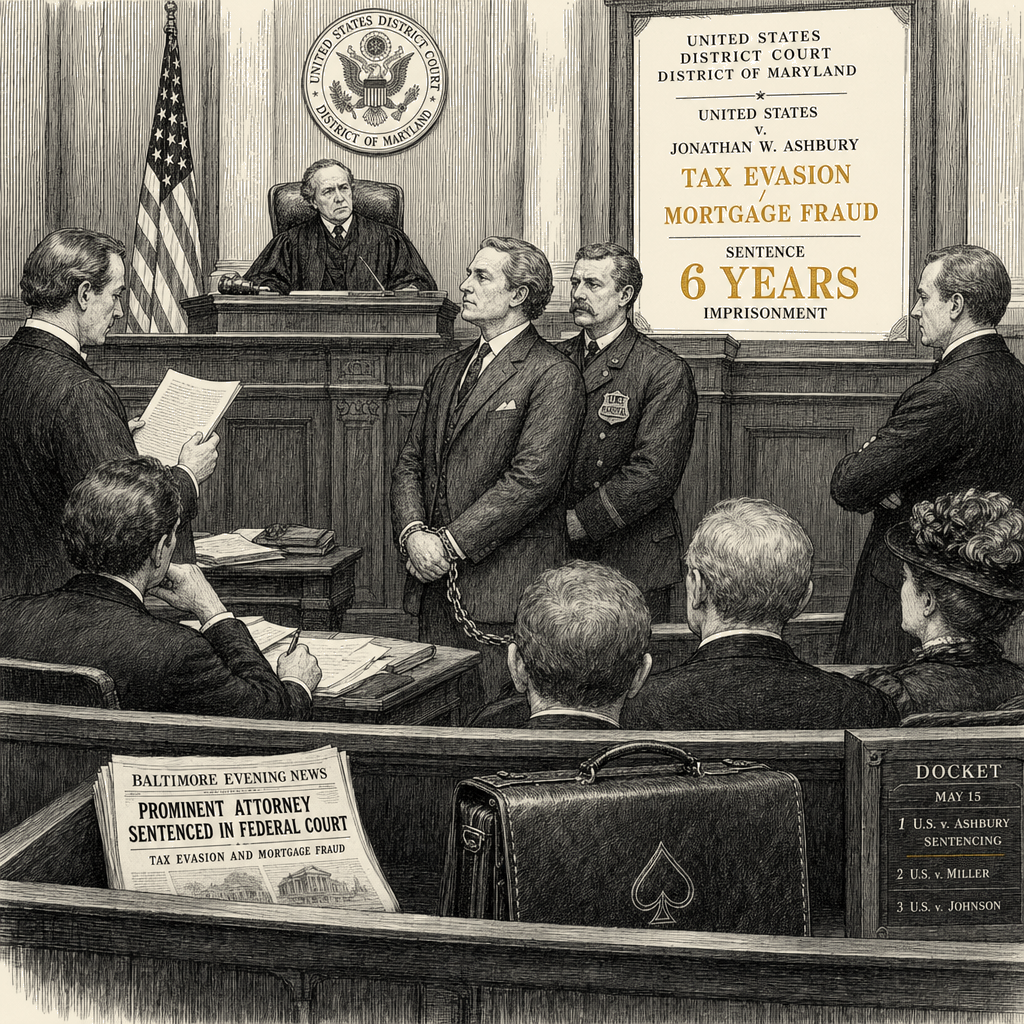
Six-year sentence for lawyer who argued 40-plus Supreme Court cases
GREENBELT, Md. — A federal judge on Friday sentenced Thomas Goldstein, the Supreme Court litigator and SCOTUSblog co-founder, to six years in prison for tax evasion and mortgage fraud, following his conviction on charges tied to millions of dollars in high-stakes poker income that he failed to disclose to authorities.
Goldstein, 56, argued more than 40 cases before the Supreme Court and co-founded SCOTUSblog, a digital publication widely read by legal practitioners and enthusiasts. During a six-week trial, prosecutors alleged he funneled poker winnings through offshore bank accounts and shaved millions off his true law firm income. A jury convicted Goldstein in February on 12 of the 16 charges he faced, including tax evasion for failing to report poker winnings, willful failure to timely pay taxes, and lying to mortgage lenders. MSI previously reported on Goldstein’s February conviction.
Judge Lydia Kay Griggsby on Friday called Goldstein’s conduct “serious and concerning, not only in terms of the nature of it but its breadth.” The judge also noted Goldstein’s mentoring and charitable work. She said SCOTUSblog was “groundbreaking and has really reshaped our legal community and how we talk about the law.”
Goldstein grew emotional as he addressed the judge ahead of sentencing. “There is no question that I have deeply disappointed people, that I have not held myself to the standards that I should be held to as somebody who’s a lawyer and a prominent lawyer, that I have caused people real pain,” he said.
While maintaining his innocence and saying he plans to appeal, Goldstein said he had put himself in a position where a jury could find him guilty. “I am going to be punished for that. I have been punished for it in one sense — in the destruction of my life, my family, my career,” he said.
At trial, Goldstein testified in his own defense. He cited a pulmonary embolism that nearly killed him as the catalyst for his intensified gambling, saying it gave him a sense of “you only live once” and drove him deeper into a world where players risked fortunes and trusted one another to pay sizable debts without formal agreements. He denied intentionally evading taxes, testifying that he disliked handling financial matters and relied on office managers and accountants.
Federal prosecutors had urged an eight-year sentence. “His motivation was singular: pure, unrelenting greed,” prosecutors wrote in a court filing, adding that his “crimes always sought to advance and maintain his exorbitant lifestyle, replete with Bentleys, globe-trotting vacations, and a $200,000 watch.”
Goldstein’s defense team argued that prison time was not appropriate and that a lengthy period of probation and restitution obligations would suffice. The “obvious reality overshadowing this case,” his lawyers said in a court filing, “is that Mr. Goldstein has a severe and longstanding gambling addiction.”
His lawyers also said his legal work contributed to the public good, because his practice largely involved advocating for plaintiffs’ lawyers, state and local governments, and “people and parties who had little access to Supreme Court practitioners.”
While prosecutors alleged Goldstein raked in roughly $50 million in poker winnings in 2016 alone, Goldstein estimated that he ultimately lost about $10 million through the peaks and valleys of his gambling.