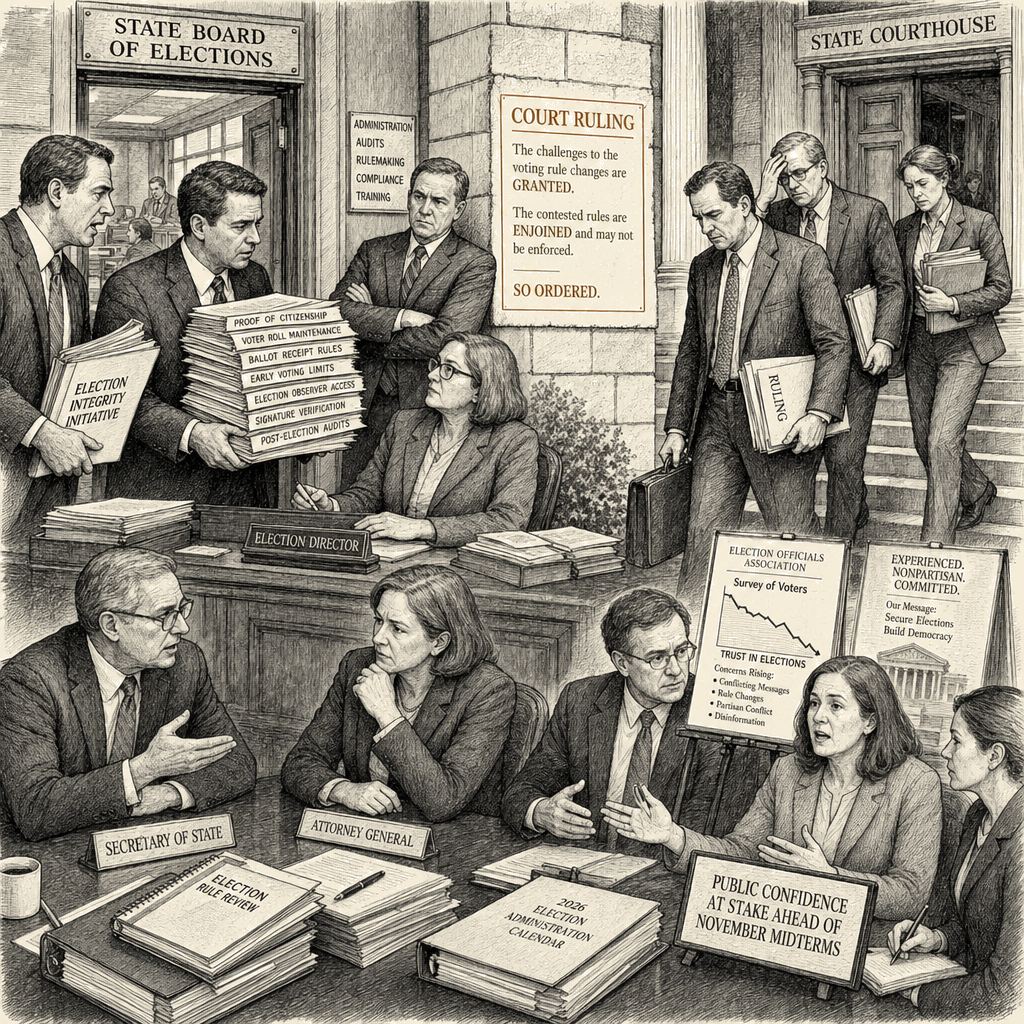
DOJ loses 15 suits as states push back on federal voting demands
Court losses mount as administration pressures states on election rules
The Trump administration is pressing a multi-front effort to pressure states to change voting rules and cede election powers to federal authorities, but faces growing resistance from US courts, state officials, and Democrats, who warn the moves are sparking “chaos” and endangering voting rights and the rule of law.
The Department of Justice has sought unredacted voter lists containing personal information from 30 states and has been rejected in 15 of those cases, according to Eileen O’Connor, who spent eight years as an attorney in the department’s voting section and now works at the Brennan Center for Justice. O’Connor said judges “openly excoriated” DOJ lawyers in one case involving a subpoena for detailed information on every election worker in Fulton County, Georgia, calling it an “arbitrary fishing expedition.”
O’Connor said the department’s strategy is “to inject chaos” into this year’s elections and “to decrease confidence in the elections and possibly lay the groundwork for possible challenges” after the vote.
The FBI took what the source described as “extraordinary steps” in Georgia, where Trump narrowly lost in 2020. The bureau seized hundreds of boxes of ballots from Fulton County earlier in 2026 and sent 200 agents in July to investigate the 2020 results and election workers.
MSI previously reported that the Trump administration was using the DOJ and FBI to tighten voting rules through coordinated federal action, including lawsuits seeking voter data from 30 states and an executive order tightening mail-in voting rules.
In a joint statement, the nation’s 24 Democratic governors responded: “It’s deeply alarming that President Trump continues to try to undermine free and fair elections. No amount of lies and conspiracy theories can change the fact that our country’s elections have repeatedly been proven to be safe and secure.”
The administration has pressed Congress to pass the Save America Act, which would sharply limit voting by mail and require proof of citizenship. The bill lacks the votes in the Senate to pass. The Federal Emergency Management Agency issued new rules last month requiring states to change how they conduct elections to avoid losing federal counter-terrorism funding from the Department of Homeland Security, according to the source. DHS Secretary Markwayne Mullin, in a press briefing, threatened local election officials with jail time if they failed to comply.
In July, top DOJ official Harmeet Dhillon threatened state election officials with criminal investigations and prosecutions if they knowingly permitted noncitizens to register to vote. Deidre Henderson, Utah’s top election official and lieutenant governor, wrote on social media that she received “another love letter this morning from the DoJ, sprinkled throughout with threats of criminal prosecution.” Dhillon also told Michigan officials that the department plans to send federal monitors to three cities, including Lansing, during the state’s August 4 primaries.
Larry Noble, a former general counsel at the Federal Election Commission who teaches at American University, said Trump’s actions — including firing members of the nonpartisan Election Assistance Commission and suggesting he is open to sending ICE agents and National Guard troops to polling places — were “a continuation of his efforts to exert control over the midterm elections.” Noble added: “It’s not clear what, if any, limits he has on how far he will go to prevent Democrats from gaining back power. I fear it’s even possible he will order actions to try to disrupt voting or vote counting during the election to avoid Republican losses.”
Barbara McQuade, a former US attorney who teaches at the University of Michigan, said Trump’s speech “revealed no new evidence and merely served to lay the groundwork for baseless claims of election fraud in November, when election outcomes will almost certainly be disastrous for a president with a dismal 37% approval rating.”