US warns Ukraine against attacking non-Russian vessels after drone strikes on tankers
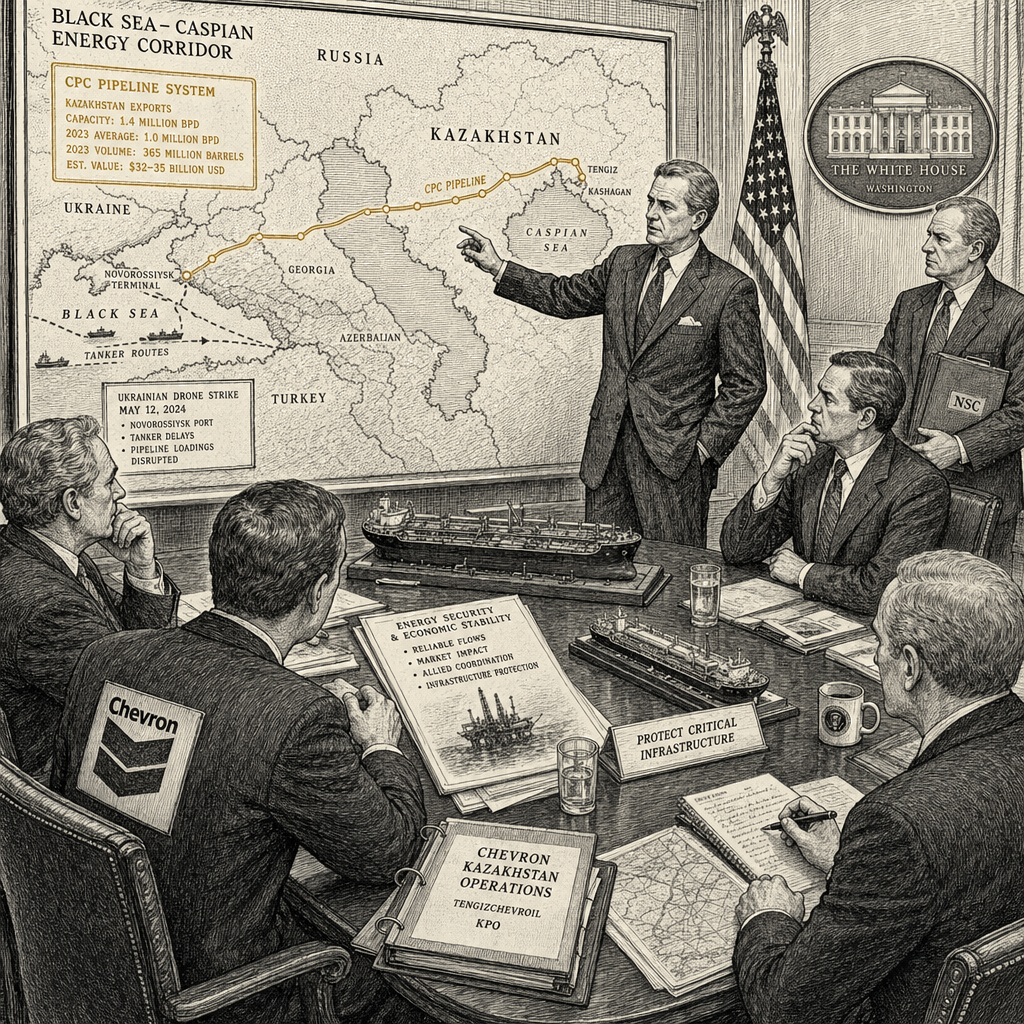
Chevron Chief Executive Mike Wirth and other energy-industry executives engaged with senior U.S. officials this week to discuss oil markets and the situation in the Black Sea, according to people familiar with the matter. A recent Ukrainian drone attack hit four tankers at the Russian export hub of Novorossiysk, restricting crude loadings from the Caspian Pipeline Consortium’s pipeline, which moves roughly 1.4 million barrels per day — about 2% of daily global oil supply — from Kazakhstan’s giant Tengiz field through Russia to the Black Sea.
Chevron holds a 15% stake in the CPC pipeline and, more critically, a 50% interest in the Tengizchevroil joint venture that operates Tengiz. The field and the pipeline were undamaged by the strike, but Kazakhstan was forced to curb production because limited storage capacity meant it could not absorb the backed-up crude. Chevron projected Tengiz would throw off $6 billion in free cash flow this year at $70 oil; Brent crude has traded well above that mark for much of the year, peaking above $118 in late March. The administration is keen to keep Chevron’s oil flowing after the recent closures of the Strait of Hormuz and Bab al-Mandeb strait briefly sent global crude prices above $100 a barrel.
Following the industry talks, a U.S. official said the Trump administration warned Ukraine not to attack non-Russian vessels in the Black Sea, calling the CPC “a vital conduit of Kazakhstan-origin energy for European markets that serves as an alternative to Russian energy supplies.” Chevron, which began work in Kazakhstan in 1993 and is seeking a contract extension past 2033, spent about $48 billion to expand Tengiz to capacity of around 1 million barrels a day, comparable to its output in the U.S. Permian Basin.
Exxon Mobil holds a 25% stake in the Tengiz joint venture; Kazakhstan’s national oil company KazMunayGas owns 20%, and Russia’s Lukoil 5%. A Tengizchevroil spokesperson said the venture is monitoring loading operations and that production and deliveries into the pipeline “may be adjusted from time to time in response to operational conditions.”
Ukraine’s strikes have been part of a broader campaign against Russia’s energy infrastructure, but analysts say the U.S. warning is likely to steer Kyiv toward other targets. “Is that the best target for [Ukraine] politically? You will upset your allies that fund your war,” said Paul Cheng, a recently retired oil-industry analyst. Meanwhile, Houthi militants attacked Saudi tankers in the Red Sea and threatened to cut off traffic through Bab al-Mandeb, and oil traffic through the Strait of Hormuz slowed again after renewed U.S. and Iranian bombing campaigns.
Chevron and Exxon are expected to report banner second-quarter earnings next week, having benefited from the crude-price surge that followed the Hormuz closure. Chevron declined to confirm or comment on the discussions with the administration, saying it engages with government officials regularly as a normal course of business. Wirth and President Trump are known to have a rapport and have previously discussed oil markets and Venezuela.