Iran conflict prolongs food cost pressure for US shoppers
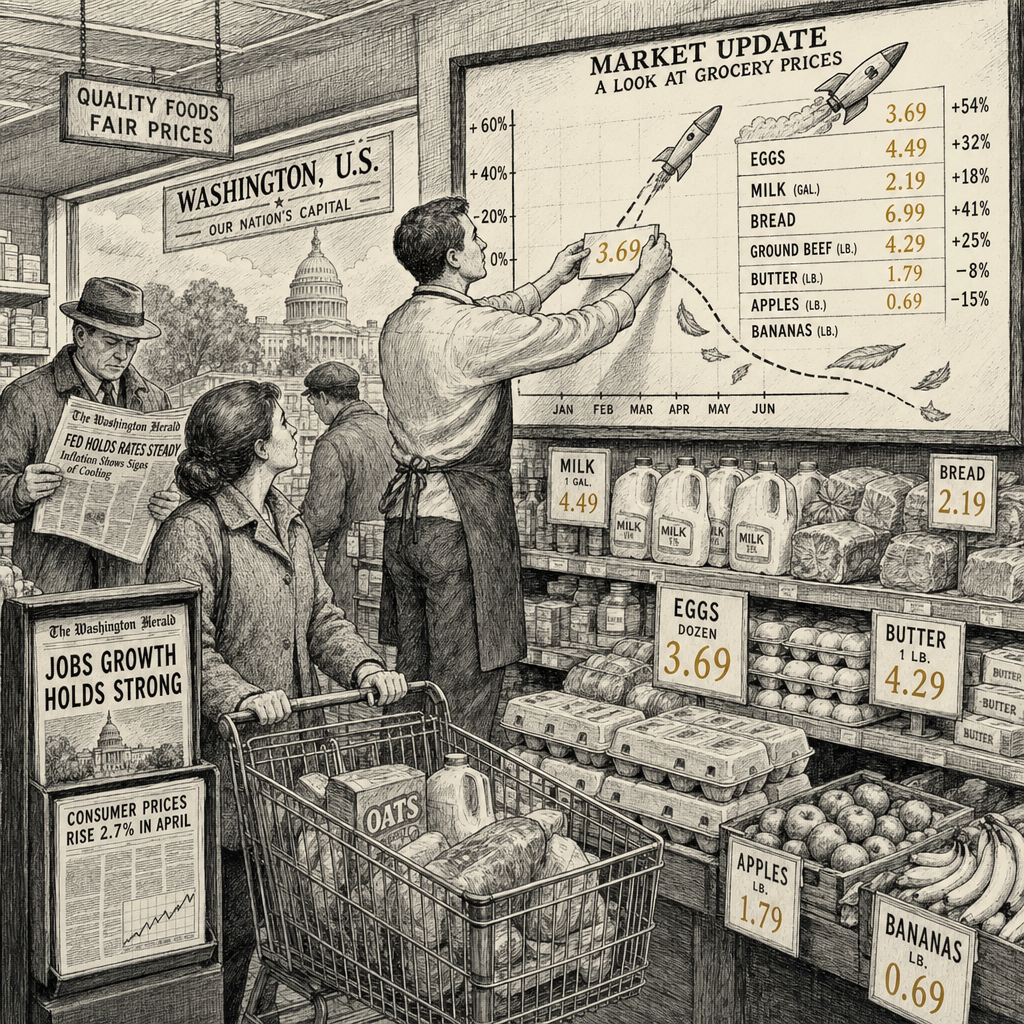
The phrase “rockets and feathers” has entered the economics lexicon to describe a stubborn reality for American shoppers: while grocery prices can spike sharply when costs increase, they decline only slowly, if at all, when input costs fall, the Associated Press reported. The pattern has left many households waiting for relief that does not arrive.
Food-at-home prices soared 11.4% in 2022, the largest annual jump in five decades, according to the AP. While the rate of food price inflation has moderated since then, the elevated price levels have not come down. An acceleration in inflation after the U.S. and Israel attacked Iran has added further upward pressure on grocery costs, the AP reported, extending the period of elevated prices.
“The public is coming to grips with, ‘Well, I’m hearing inflation has slowed, but things aren’t getting any cheaper,’” said Matt Hamory, who leads the global grocery practice at the consulting company AlixPartners. “It has to be deflation for prices to go down, and that’s very rare.”
The disconnect between slowing inflation and still-high prices has been a source of frustration for many consumers, according to the AP.
The result, according to Hamory, is that consumers should not expect grocery bills to shrink anytime soon — even if the rate of price increases continues to slow.