Girls’ inattentive symptoms often missed, delaying treatment
For decades, ADHD was considered a childhood condition that mostly affected boys, and research focused on boys, according to Julia Schechter, a clinical psychologist and co-director of the Duke Center for Girls and Women with ADHD. Schechter told NPR that in girls, the condition often appears differently. “They’re more likely to appear distracted, disorganized, kind of have their head in the clouds rather than show that overt, hyperactive or impulsive behavior that can disrupt a classroom,” she said.
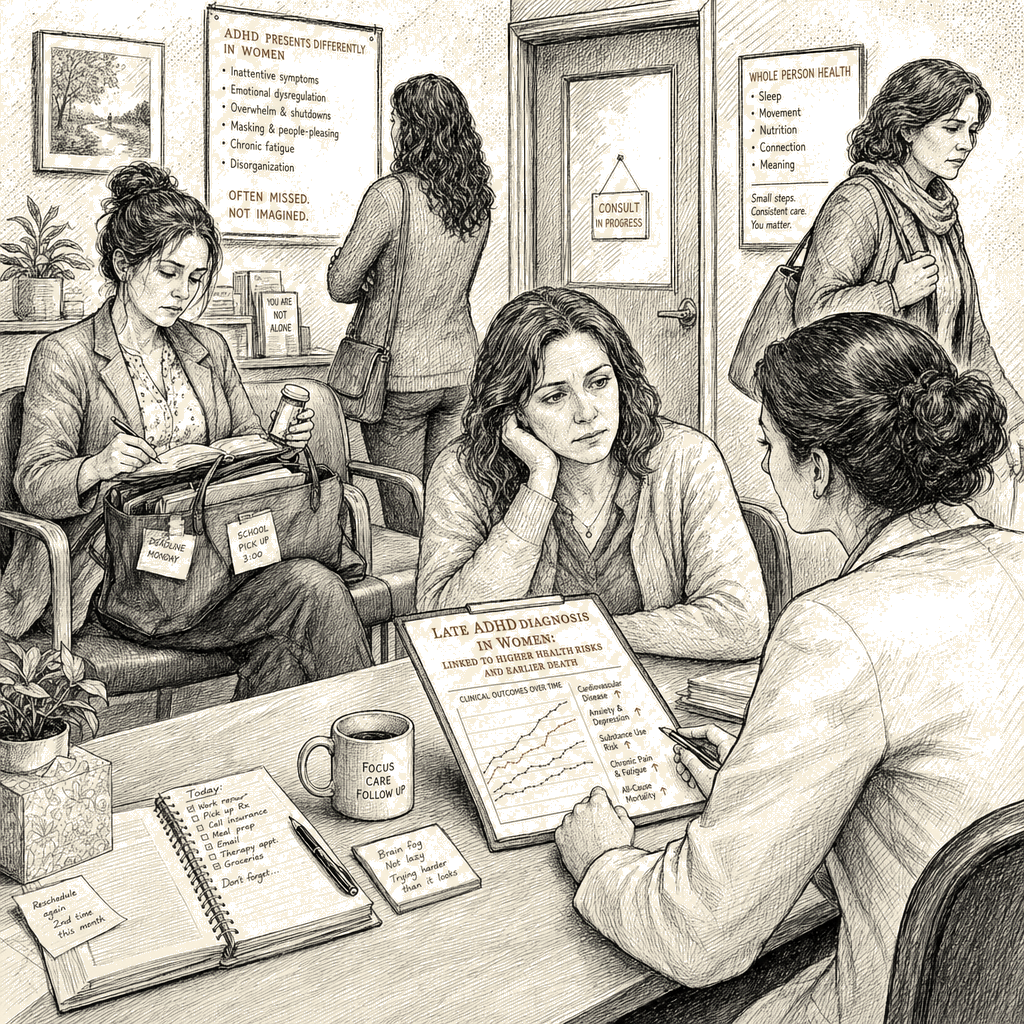
Those symptoms are easier to miss, Schechter said, and as a result, girls tend to be diagnosed years later than boys, often not until adulthood. Instead, women spend years wondering what’s wrong with them, being treated for anxiety or depression without addressing the underlying cause. “Sometimes those conditions are truly present,” Schechter said. “Other times they’re secondary to years of undiagnosed and untreated ADHD.”
The cost of missed treatment is significant. Schechter said that compared to girls and women without ADHD, those with the condition have more problems with friendships, are more likely to experience abuse by romantic partners, and more likely to have a teen pregnancy. “They’re also more likely to have feelings of worthlessness and self-harm or attempt suicide,” she said.
Dr. Patricia Quinn, a developmental pediatrician who has specialized in ADHD in women and girls for decades, said women with ADHD also face a higher incidence of obesity, eating disorders, type 2 diabetes, and cardiovascular disease. She said factors linked to ADHD — including impulsivity, trouble sleeping, difficulty maintaining healthy routines, chronic stress, and poor food choices driven by the need to seek dopamine — can contribute to these risks.
Last year, a large study from the UK found that women with ADHD die on average nearly nine years earlier than their peers without the disorder, and two years earlier than men with ADHD. Quinn said many people do not realize how serious ADHD can be. “It’s not just an excuse for ‘why I’m always late for work,’” she said. “It’s a significant problem in their lives.”
Growing recognition of gender differences in ADHD has contributed to a surge in diagnoses among adult women. As of 2023, nearly 7 million women in the U.S. had the diagnosis, according to federal data analyzed by CHADD. While boys are still diagnosed at roughly two to three times the rate of girls, those disparities even out in adulthood.
Women often spend years masking their symptoms, said Ellen Littman, a clinical psychologist who specializes in women with ADHD. But when life becomes more complex, she said, their compensation systems can crumble. “And it just reaches a critical mass point of, ‘I can’t manage all of this,’” Littman said.
Amy Reyer, who was diagnosed at age 48, described that breaking point. She was caring for two teens and aging parents while holding a demanding job. “I was holding it together, as I’d learned to do, but a lot was breaking down,” Reyer said. She said she had spent most of her life struggling with focus and anxiety, working three times as hard as her peers. “I just assumed that everything I was going to do was going to be really, really difficult – and more difficult for me,” she said. “But I didn’t know why at that time until I was diagnosed.”
Emerging evidence suggests that fluctuations in estrogen levels can exacerbate ADHD symptoms, and perimenopause may be a particularly vulnerable time. Research indicates that women with ADHD enter perimenopause years earlier than those without the disorder and experience more severe symptoms during the menopausal transition. A survey of more than 3,000 women with ADHD, conducted by neuropsychologist Jeanette Wasserstein of the Icahn School of Medicine at Mount Sinai, found that the vast majority had been diagnosed for the first time during the menopausal years. “The big, big shift was brain fog and executive functioning problems during the menopausal years,” Wasserstein said.
Treatment for ADHD in women can include medication, hormone replacement therapy for those in perimenopause, and cognitive behavioral therapy. Quinn said therapy is key “because you need to rewrite all those scripts that are going on in your head.” Littman said her practice focuses on helping women reframe their understanding of themselves “from ‘I’m a broken loser and I’m useless’ to helping them see themselves through the lens of this neurological information.”
Kate Jarvis, who was diagnosed in her late 30s, said seeking a diagnosis at any age is worth it. After feeling like she did not quite measure up for so long, treatment led to medication, therapy, and self-acceptance. “There is so much joy waiting on the other side,” she said. “There’s so much joy.”