Alaska, Maine, Michigan among key races as primaries continue
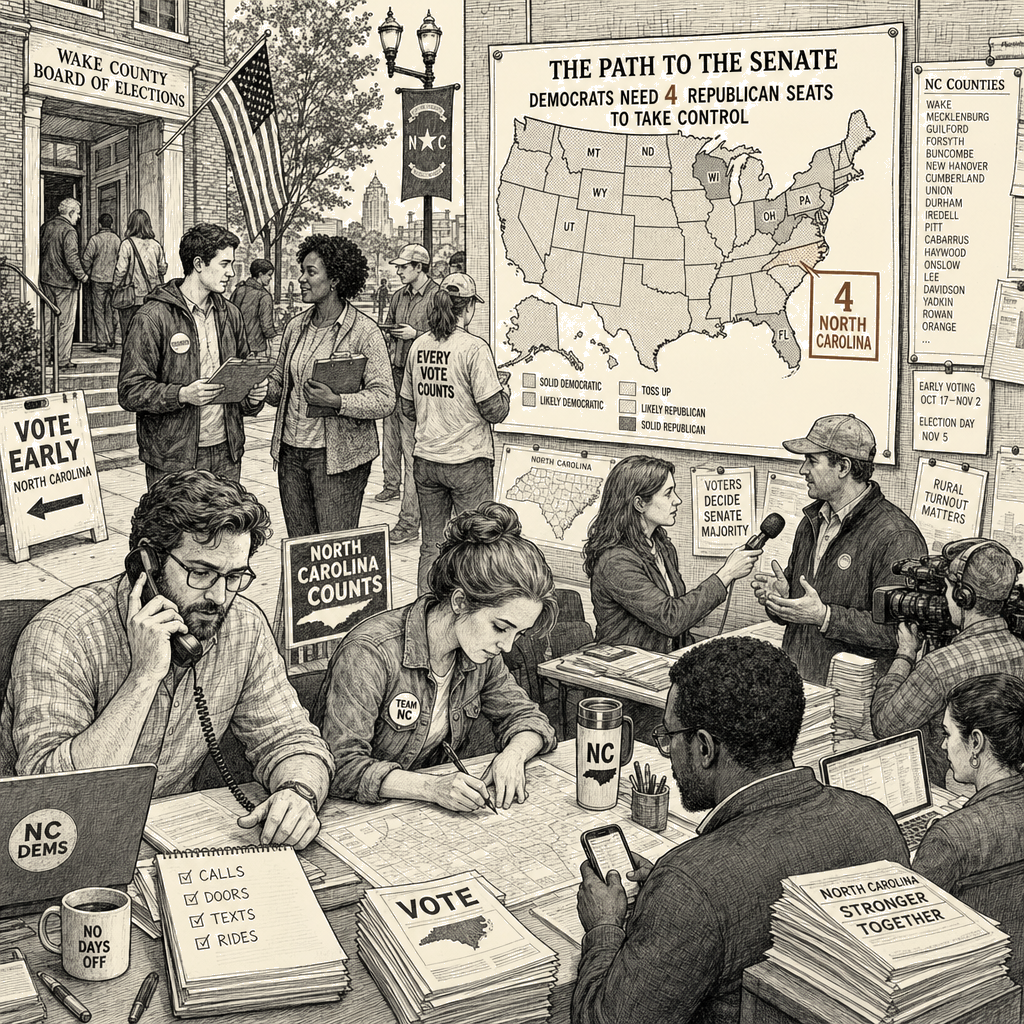
Democrats need to flip four Republican-held seats to take control of the Senate, with a Republican vice president holding the tie-breaking vote, according to NPR. Republicans say they expect to hold the majority, though they acknowledge it could be narrow.
Given history and a less-than-favorable political environment for the GOP, NPR reported that the party is bracing for Democrats to pick up between one and three seats. Neither party has easily won Senate races in states that voted for the other party’s presidential candidate, NPR noted, but Trump’s low approval rating, the war with Iran, and economic frustration could change the outlook.
NPR’s analysis, which draws on the Cook Political Report’s race ratings and conversations with political operatives, ranks the most competitive seats from most to least likely to flip.
North Carolina offers Democrats their best pickup opportunity. The retirement of Republican Sen. Thom Tillis set up an open contest between former Gov. Roy Cooper, a Democrat who won statewide twice even as Trump carried the state, and Michael Whatley, the former Republican National Committee chairman and a close Trump ally. Cooper has widespread name recognition and has consistently led Whatley in polls and fundraising, NPR reported. Republicans expressed confidence in Whatley’s fundraising ability in an expensive race and noted that voter registration numbers favor their party. Cooper would be looking to break a drought — Democrats last won a Senate race in North Carolina in 2008.
Alaska moved from a Lean Republican seat to a toss-up after a retired teacher named Dan J. Sullivan entered the race, sharing a name with Republican Sen. Dan S. Sullivan. Under Alaska’s election system, all candidates compete in a single open primary, and the top four finishers advance to a general election decided by ranked-choice voting, meaning both Sullivans could appear on the November ballot. Sen. Sullivan has failed to have his namesake removed from the ballot. Democrats believe former Rep. Mary Peltola, the first Alaska Native to join Congress in 2022, can win by hammering affordability. Republicans are betting that the state’s deep red lean will reassert itself, buoyed by the fact that Alaskans rejected Peltola in the 2024 House race. The primary is Aug. 18.
Maine’s Democratic candidate, Graham Platner, an oyster farmer and combat veteran, suspended his campaign after facing a rape allegation he denies. The Maine Democratic Party replaced him with Troy Jackson, the former state Senate president and a fifth-generation logger, who won the party’s approval at a nominating convention, NPR reported. Jackson is running on an economic populist message and supporting policies like Medicare for All. He will face Republican Sen. Susan Collins, who has a historic record of winning votes from the bluest parts of the state. Collins is the only Republican senator running in a state Trump lost in 2024. Republicans said Maine voters have confidence in Collins’ character and past record. Without Maine, NPR noted, a Democratic path to the Senate is very narrow.
In Michigan, the now-familiar establishment-versus-progressive face-off — centrist Rep. Haley Stevens versus Detroit health official Abdul El-Sayed — sharpened after state Sen. Mallory McMorrow dropped out in June. The winner will face expected Republican nominee Mike Rogers, who narrowly lost the state’s 2024 Senate race. To succeed retiring Democratic Sen. Gary Peters, El-Sayed is promising Medicare for All and abolishing Immigration and Customs Enforcement. He has endorsements from other progressive Democrats and the support of leftist Twitch streamer Hasan Piker. Stevens has endorsements from Gov. Gretchen Whitmer and Senate Minority Leader Chuck Schumer, and has outspent El-Sayed on the airwaves by at least 8 times, according to AdImpact. Republicans are relishing the long Democratic brawl, while Democrats feel confident about holding the seat. Primary: Aug. 4.
In Ohio, Democrats got the candidate they wanted: former Sen. Sherrod Brown, back for a rematch against incumbent Republican Sen. Jon Husted, who was appointed to the seat Vice President Vance vacated. Brown has built a hefty war chest. Democrats feel good about his campaign, which focuses on kitchen-table economic issues. Republicans point out that voters rejected Brown when he was up against Republican Bernie Moreno in 2024, and they will have the same concerns this election. NPR noted that Brown’s narrow loss came in a state that voted for Trump in the last three presidential elections.
In Minnesota, Democrats aren’t losing sleep over holding the seat, but the primary has become another example of the party’s internal struggle. Progressive Lt. Gov. Peggy Flanagan is racing in the primary against centrist Rep. Angie Craig. Flanagan won the Democratic-Farmer-Labor Party endorsement after Craig declined to seek it. While Craig has raised more money, Flanagan is leading in the polls. Among the Republican nominees, one with the backing of national party leaders is former NFL sportscaster Michele Tafoya. No Republican has won statewide office in Minnesota since 2006. Primary: Aug. 11.
Georgia incumbent Sen. Jon Ossoff continues to be the favorite, despite being the only Democratic senator defending a state Trump won in 2024. Republican Rep. Mike Collins, who got a last-minute endorsement from Trump before his runoff, is a big supporter of Trump’s immigration policies and is widely regarded as much less moderate than Derek Dooley, the former football coach he was running against. Ossoff has focused on the November election while Collins battled his primary. Republicans say the math favors Collins: a midterm electorate in Georgia naturally leans their way, while Ossoff needs every Democratic base voter to show up.
New Hampshire’s open seat — Sen. Jeanne Shaheen’s retirement — has both parties’ likely nominees clear. Democrats are backing Rep. Chris Pappas, while Republicans have consolidated behind former Sen. John Sununu, whose family name is a political institution in the state. Republicans say they have the upper hand because the majority of registered voters in New Hampshire are independents, followed by Republicans, and Republican Gov. Kelly Ayotte is offering support for Sununu. Their problem, NPR reported, is the president: 60% of New Hampshire residents disapprove of Trump, according to a University of New Hampshire survey. Primary: Sept. 8.
Iowa is on the list because Republican Sen. Joni Ernst’s retirement, tariffs battering the state’s soybean farmers, and the economic fallout of the Iran war have put it in play. Democratic state Rep. Josh Turek, a Paralympic gold medalist in wheelchair basketball, and Republican Rep. Ashley Hinson, a former news anchor, are both vying to succeed Ernst. Both are campaigning on issues around the agriculture industry and farmers. So far, Hinson is the early favorite, NPR reported. Iowa has moved decisively toward Republicans after backing Obama in 2008 and 2012.
Texas Attorney General Ken Paxton’s win over Sen. John Cornyn set the stage for an expensive match with Democratic state Rep. James Talarico. Paxton, endorsed by Trump days before the May runoff, won despite scandals including his wife filing for divorce on “biblical grounds” and a now-settled felony indictment for securities fraud. Democrats see in Talarico what they’ve lacked in Texas for a generation: an affordability and anti-corruption message, big crowds, national spotlight, and the ability to fundraise. The primary race was the most expensive Senate primary in U.S. history, with combined spending over $100 million. Republicans do not consider Texas a battleground and feel confident it will stay red, based on the belief that Talarico’s ideals are too far left for the state. Trump has carried Texas every time he has been on the ballot, and no Democrat has won statewide since the 1990s.