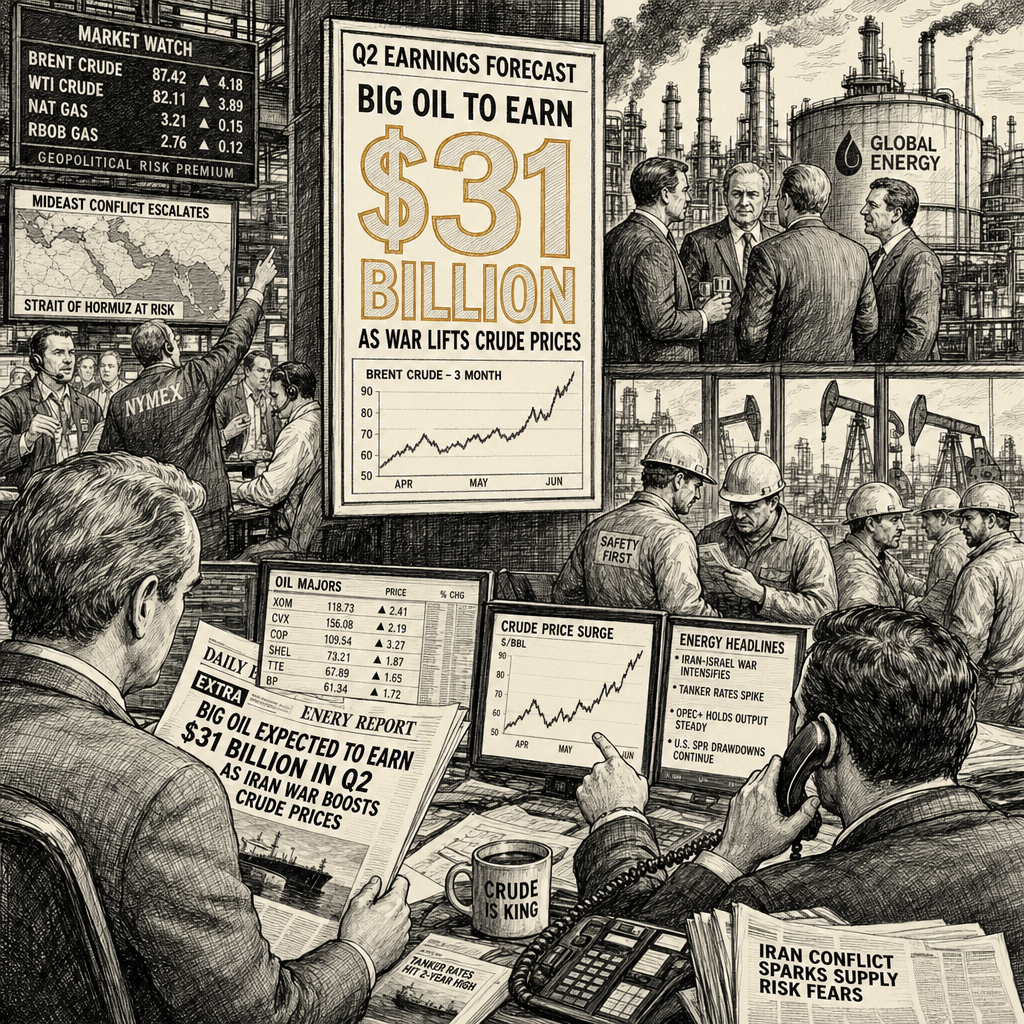
U.S. crude averaged $95 a barrel in second quarter, up from $66 before conflict
ExxonMobil, Chevron, ConocoPhillips and Occidental Petroleum are expected to report $31 billion in combined second-quarter earnings, according to FactSet estimates, up from about $12 billion in the same quarter last year. U.S. crude prices averaged $95 a barrel between March and June, compared with about $66 before the Iran war, driving the increase.
The earnings reports are expected as gasoline prices have risen above $4 a gallon and Trump last month ordered the Justice Department to investigate oil companies, naming Exxon, Chevron, Shell and BP as targets, the Journal reported.
“I don’t necessarily think the Trump administration is a friend of the profitability of oil companies,” Dan Pickering, founder of Pickering Energy Partners, told the Journal.
Republicans have expressed concern that the conflict could hurt their midterm election prospects, the Journal reported. Trump has told advisers they need to pressure gasoline retailers and oil companies to reduce prices, according to the Journal, and aides have held meetings to discuss ways to lower gas prices before the elections.
Oil companies have maintained long-standing commitments to investors to use cash for shareholder returns rather than increasing production. Chief executives do not expect prices to stay high enough beyond the conflict to justify altering their drilling plans, the Journal reported.
“Political pressure only goes so far,” Dan Eberhart, CEO of oil-field services company Canary, told the Journal. “Oil companies are economic actors.”
Some oil CEOs have said pressure on the industry could increase if the price rally continues, the Journal reported. A White House official said the administration has continued asking the oil industry to increase output.
“As the U.S. military degrades the terrorist Iranian regime’s ability to attack commercial vessels and disrupt the free flow of energy through the Strait of Hormuz, oil and gas prices will plummet back to pre-conflict levels,” White House spokeswoman Taylor Rogers said.
Oil-and-gas companies have largely resisted Trump’s alternating criticism and encouragement to increase production. Trump promised during his campaign that the industry would “drill, baby, drill.” During the 12-day war against Iran last year, he urged companies to pump more and warned against “playing into the hands of the enemy,” but companies did not increase output.
After Trump struck a ceasefire deal followed by an agreement to end the war with Iran in June, oil prices declined and executives said they were relieved. They had warned the administration for months that a prolonged closure of the Strait of Hormuz, through which one-fifth of global oil typically transits, was depleting global inventories and risked pushing prices much higher than the March peak of $118.35 a barrel.
The conflict resumed and spread to a new front, with Houthi militants beginning a naval blockade in the Red Sea, a waterway that had provided an outlet for some crude bottled up in the Strait of Hormuz.
Companies including Exxon, Chevron, ConocoPhillips and Occidental plan to absorb criticism and wait for opposition to pass, according to people familiar with their thinking. If Trump increases pressure, the industry plans to note that it has steadily increased production throughout the crisis, a person close to the industry told the Journal. The U.S. currently produces about 13.8 million barrels of oil per day, up 525,000 barrels from a year ago, largely from continued efficiency improvements.
“What you do is you talk about what you’re doing, and what they are doing is record levels of production in the U.S. right now,” Pickering said.
The American Petroleum Institute, the industry’s largest trade group, has publicly encouraged the administration to use other policy tools, the Journal reported. The group has urged the administration to extend a waiver of the Jones Act, which restricts foreign ships from transporting goods between U.S. ports, and to adjust biofuel blending mandates for refiners in order to lower gasoline prices.
Some industry leaders have expressed concern that the administration is running out of options. Some oil executives fear the administration might implement a ban on energy exports, despite Energy Secretary Chris Wright repeatedly rejecting the idea and saying it would conflict with Trump’s energy-dominance agenda.
Chevron CEO Mike Wirth said at an energy conference in May that export restrictions would constrain the market by removing supply and drive prices higher. “Things that impede markets might have political appeal, but they ultimately can make the situation worse, not better,” Wirth said.